
 Design
 App Development
 Web Engineering
 AI Services
 Cloud
 Staffing
 Startups
 Health / Fitness
 Education
 Social
 Nonprofit
 Fintech
 Construction
 Logistics
 Government
 Travel/Hospitality
 HR Software
 About Simpalm
 Our News
 Client Testimonials
 Careers
 Our Blog
 Awards
 Resources
 Information
Key Takeaways
- Fintech apps face a materially different risk profile than typical consumer apps because they combine high-value data, real-time money movement, and heavy regulatory oversight in a single product.
- Security has to be designed into the app’s architecture from the start. Retrofitting it later is more expensive and less effective.
- Identity and access management, encryption, and continuous monitoring form the operational core of a secure fintech app.
- Regulatory compliance (PCI DSS, GDPR, GLBA, SOC 2, KYC/AML) isn’t a single checkbox. Each framework governs a different part of how the app handles data.
- Most fintech security failures trace back to a handful of recurring mistakes, and each one has a clear, practical fix.
- Deciding whether to build security expertise in-house or bring in a partner with fintech experience is one of the most consequential early decisions a team makes.
_________________________________________________________________________________________
Fintech apps handle highly sensitive financial and identity data, making a single security failure capable of triggering fraud, regulatory penalties, and lasting customer distrust. The solution is not to add security controls after development, but to build security into the app’s architecture, development process, and compliance strategy from the start.
The financial impact can be equally significant. The global average cost of a data breach reached $4.44 million in 2025, while breaches in the financial sector can exceed that baseline due to regulatory penalties, fraud liability, and the sensitivity of the data involved, according to IBM’s Cost of a Data Breach Report. For a fintech business, an incident of this scale can quickly become an existential threat.
That makes security a foundational product requirement rather than a final-stage compliance exercise. This guide examines what fintech app security requires, from architecture and development practices to encryption, threat detection, and the regulatory frameworks governing how financial data is stored, processed, and shared.
| Note for Readers: We have covered fintech app security-related aspects in scenario and question-based sections to provide actionable steps. Follow along, or choose a specific question of your interest from the table of contents listed on the left side of your screen! |
What Makes FinTech App Security Different From General App Security?
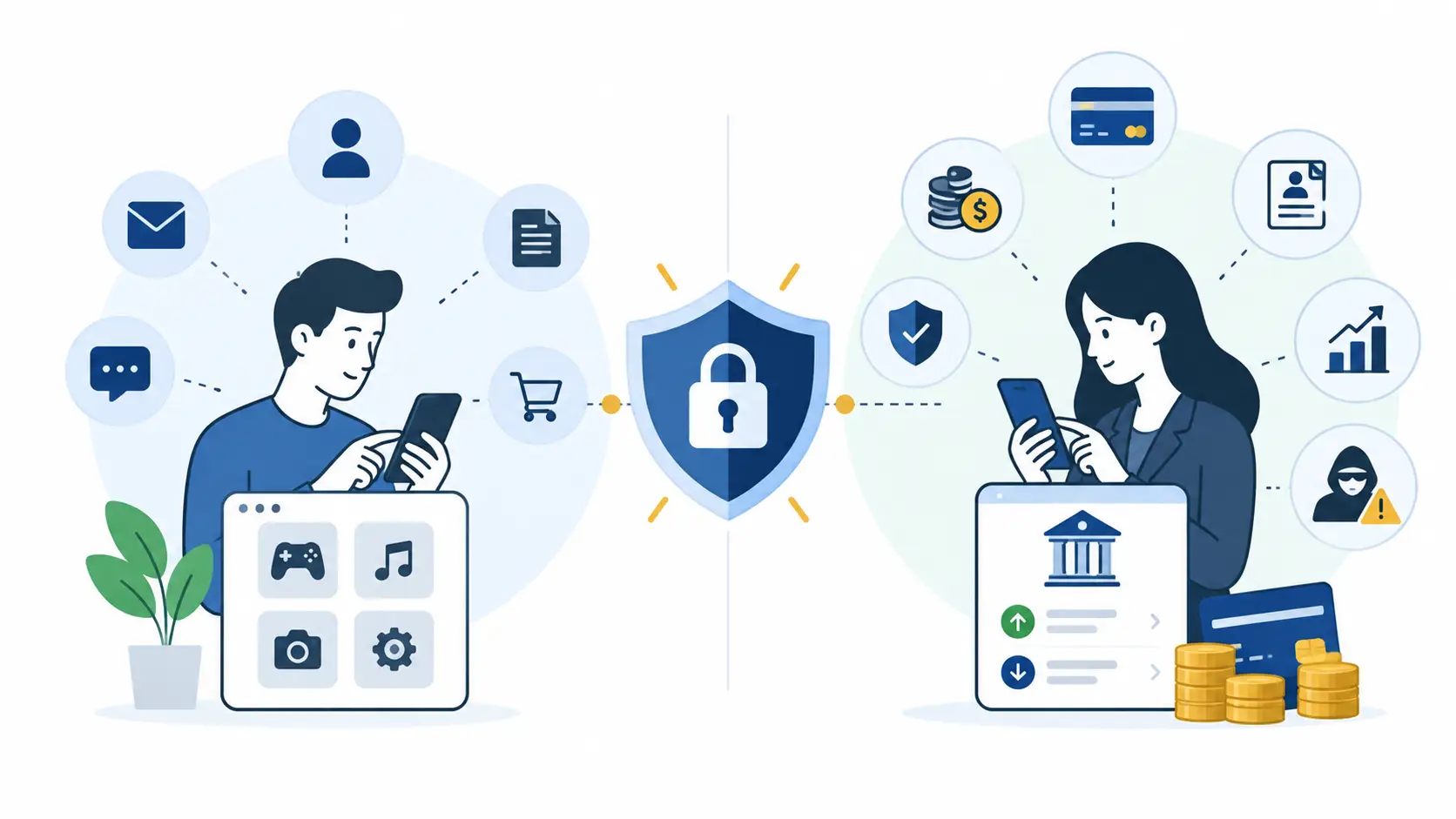
Every app that stores user data needs some baseline security. Fintech apps need considerably more, because the combination of what they hold and what they do raises the stakes on every front at once.
| Factor | Typical Consumer App | FinTech App |
| Data sensitivity | Emails, preferences, usage data | Bank details, SSNs, transaction history, identity documents |
| Real-time stakes | Service disruption, mild inconvenience | Direct financial loss, fraud, frozen funds |
| Regulatory exposure | Limited (privacy laws in some regions) | PCI DSS, GLBA, GDPR, KYC/AML, SOC 2, and more, often simultaneously |
| Attacker motivation | Data harvesting, ad fraud | Direct monetary theft, identity theft, large-scale fraud rings |
| Consequence of a breach | Reputational damage, user churn | Regulatory fines, legal liability, potential shutdown |
A fitness app that leaks a user’s step count is a privacy problem. A fintech app that leaks a routing number is a financial crime waiting to happen. That distinction should shape every security decision a team makes, from the first architecture diagram to the last pre-launch penetration test.
Which Security Risks Should Concern Your FinTech App Most?
Not every threat deserves equal attention. Understanding where fintech apps are actually attacked helps teams prioritize their limited security budget and engineering time where it matters most. Here are a few questions (covering most targeted gaps seen in attacks on fintech apps) that you can go through to assess the security posture of your fintech app:
Q1: Are Your APIs the Real Attack Surface?
Most fintech apps are thin clients sitting on top of a web of APIs: payment processors, KYC providers, banking rails, credit bureaus. Each connection is a potential entry point. Attackers increasingly target these API layers directly rather than the mobile app itself, probing for endpoints with weak authentication, missing rate limits, or overly generous data responses that expose more than the client actually needs.
Q2: How Vulnerable is Your App to Account Takeover?
Credential stuffing, where attackers test stolen username-password pairs from unrelated breaches against your login screen, remains one of the most common ways fintech accounts get compromised. Because people reuse passwords across services, a breach at a completely unrelated company can hand attackers a working password for your app.
Q3: Could a Phishing Campaign Bypass Your Technical Controls Entirely?
Phishing doesn’t attack code; it attacks people. A convincing text message or email that mimics your brand can trick a user into handing over login credentials directly, sidestepping even well-built technical defenses. Fintech brands are attractive phishing targets precisely because the payoff for attackers is immediate and financial.
Q4: What Happens When a Third-Party Vendor Gets Breached?
Fintech apps rarely operate in isolation. Payment gateways, identity verification services, and analytics SDKs all get embedded into the app or connected via API, and each one inherits a share of your risk. A vulnerability in a vendor’s system can become a backdoor into yours, even if your own code is airtight.
Q5: Is Your Mobile App Leaking Data at the Device Level?
Mobile-specific risks are easy to overlook. Sensitive screens left unprotected can be captured by screenshots or screen recording. Data cached locally without encryption is readable by anyone with access to a rooted or jailbroken device. These aren’t exotic attack vectors; they’re some of the most common findings in mobile security audits.
| A useful development approach: treat every API endpoint, every third-party SDK, and every screen displaying financial data as a potential point of failure, not just the login page. Security that only protects the front door leaves every other window unlocked. |
What Security Foundation Should You Build Before Writing Code?
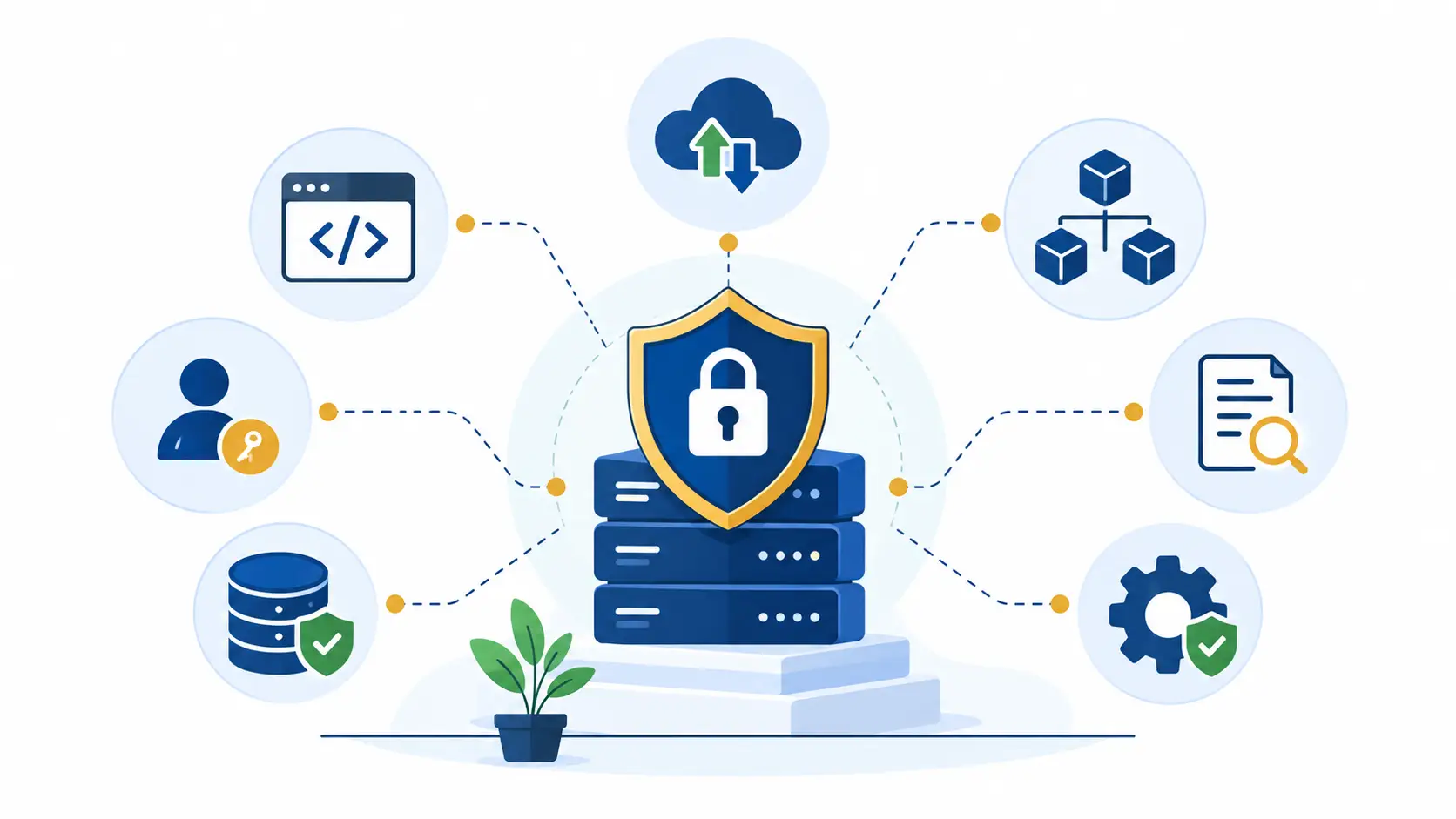
Security decisions made at the architecture stage are far cheaper to implement than those bolted on after launch. Before development begins, define how the application will be segmented, where trust boundaries exist, and how a compromise in one component will be contained.
| Security foundation | What to define before development | Why it matters |
| API gateway | Route and secure communication between the client and backend services. | Creates a controlled entry point for authentication, rate limiting, and traffic monitoring. |
| Service isolation | Separate critical services and restrict communication between them. | Limits the damage if one component is compromised. |
| Trust boundaries | Identify where data and requests move between the app, APIs, backend services, and third parties. | Helps determine where stronger authentication and validation controls are needed. |
| Threat modeling | Map likely attack paths, sensitive assets, and potential points of failure. | Allows teams to address high-risk vulnerabilities before writing production code. |
| Access controls | Define who and what can access sensitive services, data, and administrative functions. | Reduces unauthorized access and limits the impact of compromised accounts or services. |
| Third-party integrations | Establish what data each external service can access and how that access is secured. | Prevents external dependencies from becoming an uncontrolled attack surface. |
For financial products, from lending platforms to payment apps, treating these decisions as a dedicated architecture phase creates a stronger security foundation than addressing them implicitly during development.
How Do You Keep the Right Users In and Attackers Out?
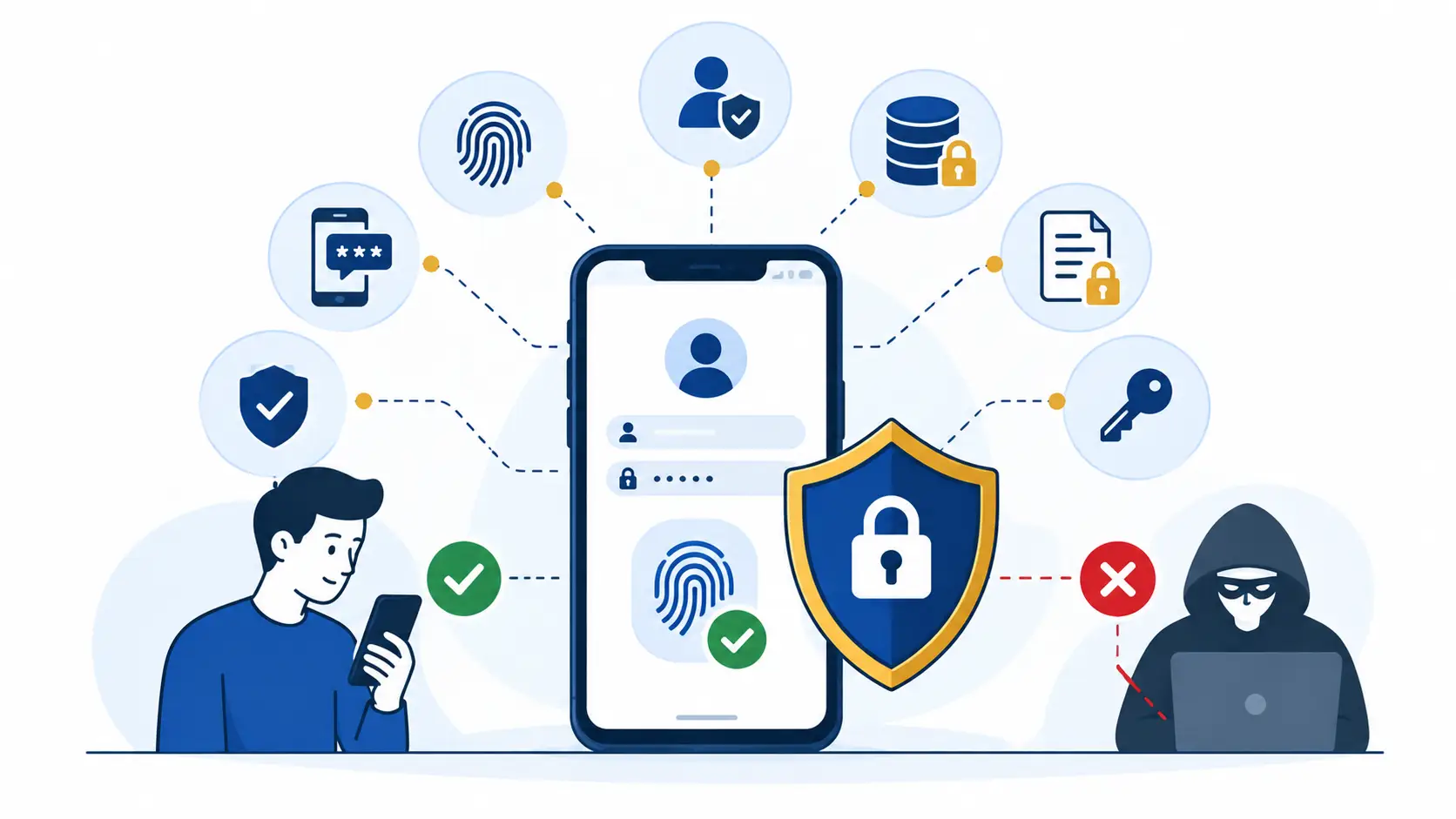
Identity has become the primary security perimeter for fintech apps. With users accessing accounts from dozens of devices and locations, strong identity and access management does more heavy lifting than almost any other single control. This is the practical core of a zero-trust approach, where no user, device, or service is trusted by default and every access request is verified against the minimum privileges it needs.
- Multi-factor authentication: Require a second verification factor, a one-time code, a push notification, or a biometric check, on top of a password for every login and for high-risk actions like adding a new payee.
- Biometric verification: Fingerprint and facial recognition reduce reliance on passwords entirely for returning users while keeping the authentication experience fast.
- Role-based access control: Internal users, whether customer support staff or engineers, should only see the data and functions their role actually requires. A support agent troubleshooting a login issue doesn’t need visibility into a user’s full transaction history.
- Continuous session verification: Don’t treat authentication as a one-time event. Monitor sessions for signs of hijacking, like a sudden change in device fingerprint or geolocation mid-session, and force re-authentication when something looks off.
- Least-privilege defaults: New accounts, integrations, and internal tools should start with the minimum access necessary and earn additional permissions deliberately, not the other way around.
How Should You Handle Encryption and Data Protection?
Encryption helps ensure that a security incident does not automatically expose sensitive financial data. Fintech teams should apply it consistently across the data lifecycle.
Key Practices Include:
- Encrypt data at rest: Protect sensitive information stored in databases, backups, and cloud storage using strong encryption.
- Encrypt data in transit: Use secure protocols such as TLS to protect data moving between mobile apps, APIs, servers, and third-party services.
- Protect data in use: Apply appropriate controls when sensitive data is actively processed, particularly in high-risk financial workflows.
- Use tokenization: Replace sensitive values such as account numbers with non-sensitive tokens that are useless without access to the protected token vault.
- Centralize key management: Store and manage encryption keys through dedicated, auditable key management systems rather than embedding them in application code or configuration files.
- Limit key access: Apply strict access controls, rotation policies, and audit trails to reduce the risk of compromised encryption keys.
For fintech products such as digital wallets, encryption, tokenization, and key management should be treated as core security requirements rather than separate compliance tasks.
What Does “Secure by Design” Look Like in Development?
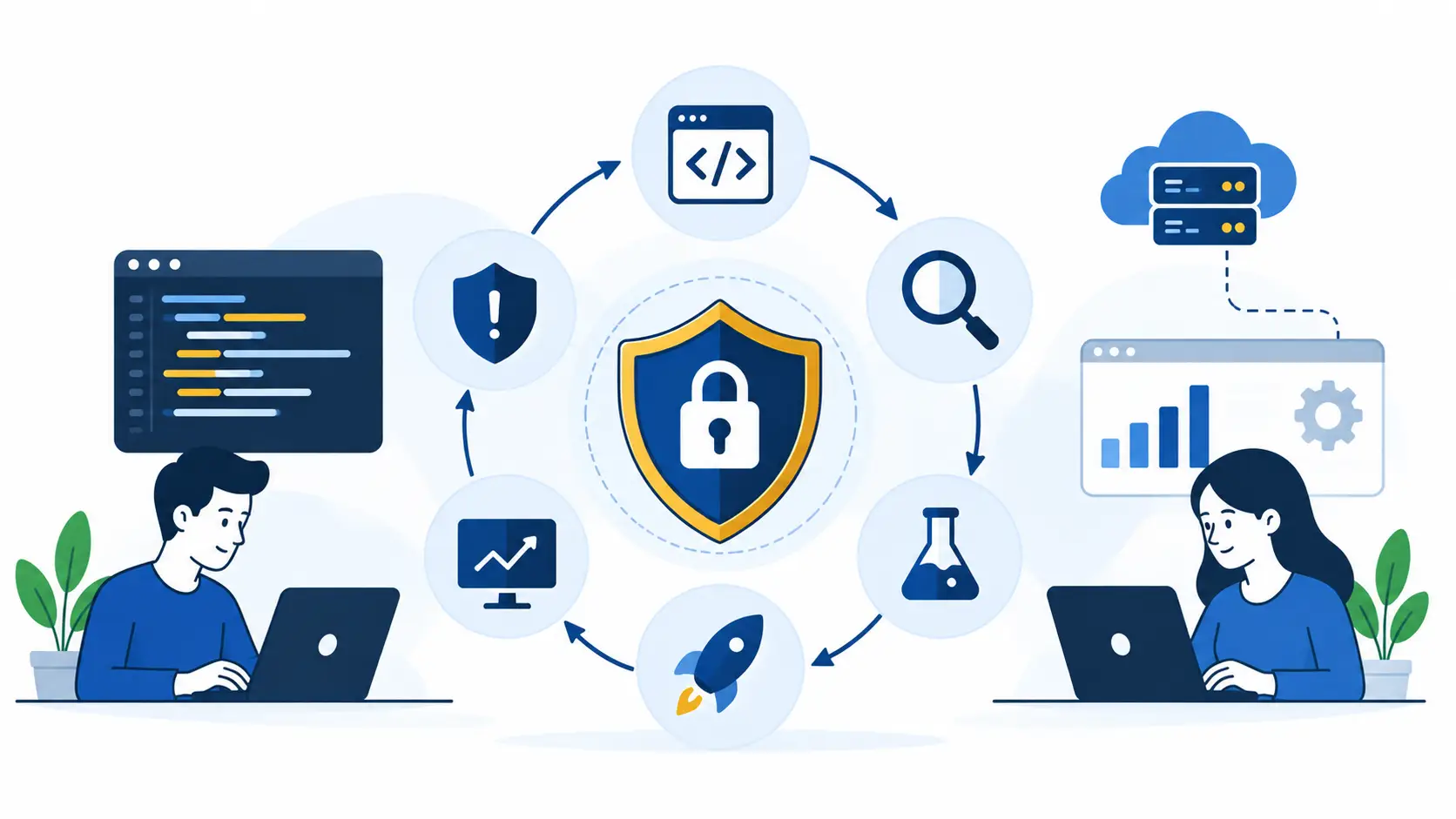
Security checks performed only at the end of development are expensive and often too late. DevSecOps embeds security into the development pipeline so vulnerabilities are identified and addressed before they reach production.
Key Practices Include:
- Scan code continuously: Run automated static and dynamic security scans during development and on every commit or pull request.
- Check dependencies: Monitor third-party libraries and packages for known vulnerabilities before they are included in production builds.
- Test in isolated environments: Validate new features in sandboxed environments without exposing production data or systems.
- Secure APIs and admin interfaces: Apply authentication, authorization, input validation, and rate limiting to web-based dashboards, APIs, and other backend entry points.
- Use web application security practices: Extend the same security controls to admin panels, dashboards, and APIs because they introduce attack surfaces beyond the mobile application.
How Do You Catch Threats Before They Become Breaches?
Prevention alone is never sufficient. Fintech teams also need continuous visibility into what is happening across their systems so they can detect suspicious activity early and contain incidents before they escalate.
Focus on these key detection and response measures:
- Centralize security logs: Aggregate logs from authentication systems, APIs, databases, payment services, and cloud infrastructure into a centralized logging platform. This gives security teams a unified view of suspicious activity.
- Monitor for abnormal behavior: Set alerts for patterns such as repeated failed login attempts, unusual transaction volumes, sudden privilege changes, unexpected API requests, or access from unfamiliar locations and devices.
- Use real-time fraud detection: Apply AI and machine learning models to transaction and behavioral data to identify anomalies across millions of events. Models can flag unusual spending patterns, account takeovers, or transaction behavior that may be difficult to detect manually.
- Correlate events across systems: A single suspicious event may not indicate an attack. Correlating authentication, API, transaction, and infrastructure logs can reveal attack patterns that would otherwise remain hidden.
- Define alert severity and escalation rules: Not every alert requires the same response. Categorize events by severity and establish clear thresholds for when security teams should investigate, block activity, or escalate an incident.
- Maintain an incident response plan: Document who is responsible for investigation, containment, communication, recovery, and regulatory reporting. Teams should know exactly what to do during the first hours of a suspected breach.
- Test the response process regularly: Run incident simulations and tabletop exercises to identify gaps in detection, escalation, communication, and recovery before a real incident exposes them.
The goal is not simply to detect more alerts. It is to detect meaningful threats early, respond consistently, and reduce the time between suspicious activity and containment.
Which Regulations Actually Apply to Your FinTech App?
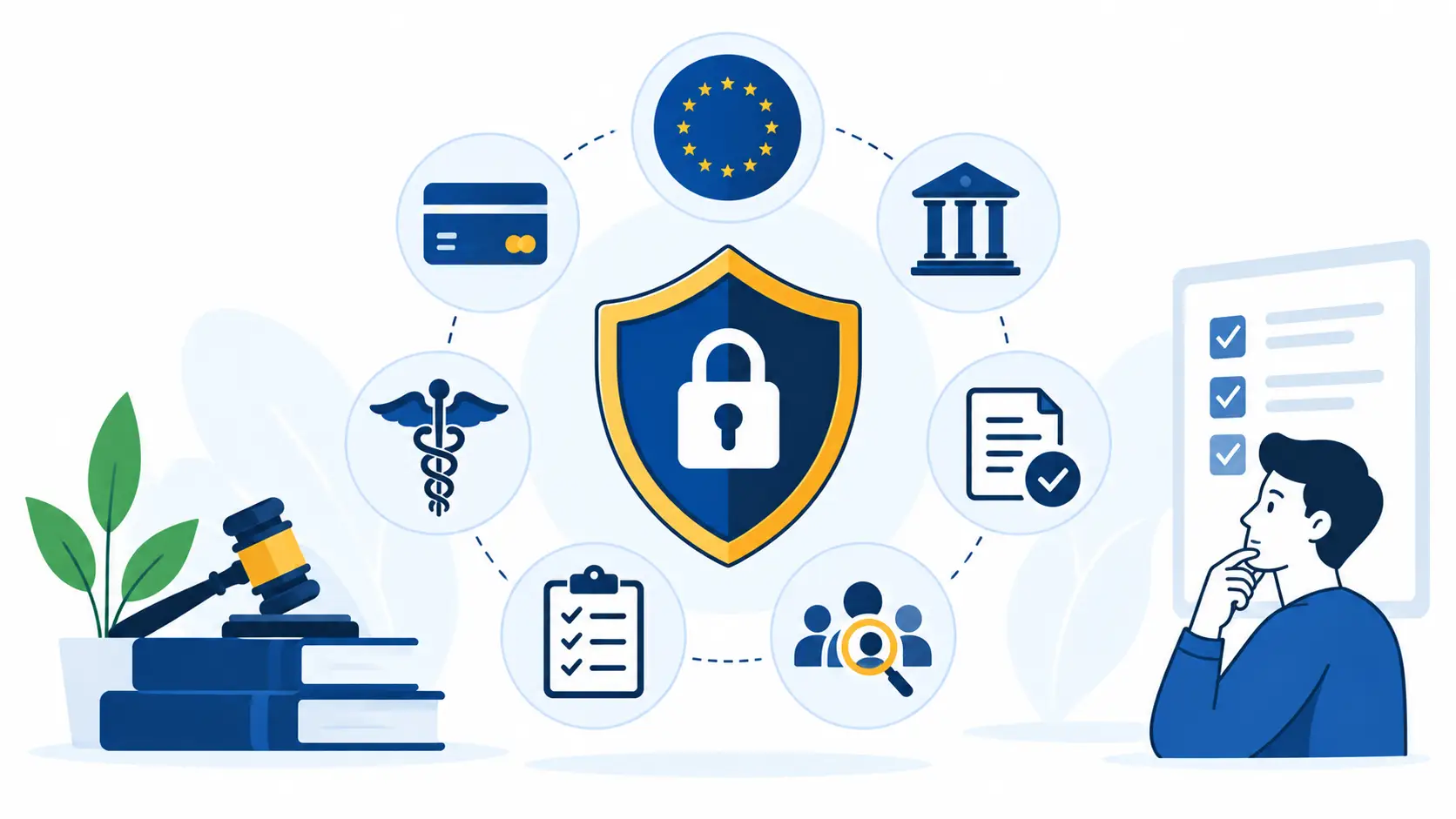
Fintech regulation gets treated too often as a wall of acronyms to memorize rather than a set of concrete requirements that shape how an app actually gets built. Each framework governs a different slice of the product.
| Framework | What It Actually Requires |
| PCI DSS | If your app touches payment card data, you must encrypt cardholder data, restrict access on a need-to-know basis, and undergo regular vulnerability scanning and network testing |
| GDPR | Applies if you handle EU residents’ data; requires explicit consent for data use, the right for users to request deletion, and breach notification within 72 hours |
| GLBA / FTC Safeguards Rule | US financial institutions must maintain a written information security program and conduct regular risk assessments |
| SOC 2 | An independent audit standard verifying that your controls around security, availability, and confidentiality actually function as documented |
| KYC / AML | Requires verifying user identity at onboarding and monitoring transactions for patterns consistent with money laundering or fraud |
The full PCI Security Standards Council documentation is worth reviewing directly for any team handling card data, since requirements are periodically updated and the details matter for audit readiness. Some fintech products, particularly those touching crypto custody or exchange functionality, face additional licensing requirements that vary significantly by state and country, which is worth confirming with legal counsel early rather than after the app is built. For the wider picture of how regulation differs across markets and what enforcement looks like in 2026, see our guide to fintech challenges and solutions.
What Are the Most Common FinTech Security Mistakes?
Most fintech security incidents don’t stem from exotic zero-day exploits. They trace back to a small set of recurring, preventable mistakes.
01. Mistake: Treating security as a post-launch feature
Fix: Build security requirements into the initial product spec and architecture review, not as a checklist item added after the MVP ships. Retrofitting encryption or access controls into an existing codebase is significantly more expensive and error-prone than designing them in from the start.
02. Mistake: Under-vetting third-party vendors and SDKs
Fix: Require security assessments before integrating any payment processor, KYC provider, or analytics SDK, and continue monitoring those integrations after launch rather than treating vetting as a one-time gate.
03. Mistake: Ignoring mobile-specific attack surface
Fix: Apply platform-level protections like screen capture prevention on sensitive screens, encrypted local storage, and root/jailbreak detection as standard practice, not optional hardening.
04. Mistake: Running security audits infrequently, or not at all
Fix: Schedule regular penetration testing and code audits on a fixed cadence, ideally quarterly for actively developed apps, rather than waiting for a compliance deadline to force the issue.
05. Mistake: Over-collecting and over-retaining user data
Fix: Only collect data the app genuinely needs, and set clear retention policies that delete data once it’s no longer required. Data you don’t hold can’t be stolen from you.
Should You Build Security In-House or Partner With a Development Team?
This decision shapes almost everything downstream, from timeline to budget to how confidently you can answer a regulator’s questions during an audit.
Building security expertise entirely in-house makes sense for teams with the budget to hire dedicated security engineers and the time to let that expertise mature before launch. It’s a real, if resource-intensive, path for well-capitalized fintechs planning a long product roadmap.
However, for most mid-sized fintech teams and startups, partnering with a development team that has already built and secured financial applications shortens the learning curve considerably. An experienced partner brings pre-built patterns for encryption, compliance documentation, and secure architecture that would otherwise take months to develop from scratch, and they’ve usually already made (and fixed) the mistakes a first-time fintech team is likely to make. Simpalm’s fintech development team works with founders and product leaders to build security and compliance into financial apps from day one rather than treating it as a retrofit.
Final Thoughts
Security in fintech isn’t a box to check before launch; it’s an ongoing practice. Security posture evolves as new attack techniques emerge, regulations shift, and a growing user base introduces exposure that didn’t exist at launch. The fintech companies that earn lasting trust aren’t the ones that were never targeted by malicious attacks; instead, they’re the ones that built systems resilient enough to detect, contain, and recover from the incidents that inevitably happen.
That resilience starts with decisions made before launch day, such as how the architecture is designed, how identity is verified, how data is encrypted, and how quickly the team can respond when something looks wrong. If you get those foundations right, then security stops being a cost center and starts being what it actually is, a competitive advantage that customers feel every time they trust your fintech app with their financial assets.
Frequently Asked Questions
Q1. What makes fintech apps a bigger target than other kinds of apps?
Ans. Fintech apps combine three things attackers value most: high-value personal and financial data, direct access to real money, and users who trust the app enough to act quickly on its prompts. That combination makes fintech products disproportionately attractive compared to apps handling lower-stakes data like social media posts or fitness tracking. Attackers also know that a single successful breach can yield both stolen data and direct financial gain, which increases the incentive to target financial platforms specifically rather than opportunistically.
Q2. How much does it cost to build security into a fintech app from the start?
Ans. There’s no single number, since cost depends heavily on the app’s complexity, the regulatory frameworks it needs to satisfy, and whether the team is building in-house or working with an experienced partner. What’s consistent across projects is that building security in from the start costs meaningfully less than retrofitting it later, since architectural decisions around encryption, access control, and API security become far more expensive to change once a codebase and user base already exist.
Q3. What’s the practical difference between PCI DSS and SOC 2?
Ans. PCI DSS is specifically about protecting payment card data and applies to any organization that stores, processes, or transmits cardholder information, with concrete technical requirements around encryption and access control. SOC 2 is broader and less prescriptive; it’s an independent audit that verifies your organization’s controls around security, availability, and confidentiality actually work as documented, regardless of whether payment cards are involved. Many fintech apps end up needing both, since PCI DSS covers card-specific handling while SOC 2 demonstrates broader operational trustworthiness to enterprise partners and investors.
Q4. Do small fintech startups really need enterprise-grade security from day one?
Ans. Yes, though the implementation can scale with the team’s resources. A small team doesn’t need the same security headcount as a large bank, but the underlying principles, encrypting sensitive data, verifying identity properly, and monitoring for anomalies, apply regardless of company size. Regulators and users don’t apply a smaller standard to smaller companies, and a breach at an early-stage startup can be even more damaging than one at an established institution simply because there’s less trust and capital to absorb the fallout.
Q5. How often should a fintech app undergo a security audit?
Ans. Most actively developed fintech apps benefit from a full penetration test and code audit on a quarterly basis, with lighter automated scans running continuously as part of the development pipeline. Apps that are relatively static after launch can sometimes extend that cadence to semi-annually, but any significant feature release, new integration, or change to how sensitive data is handled should trigger an additional review rather than waiting for the next scheduled audit.