 Design
 App Development
 Web Engineering
 AI Services
 Cloud
 Staffing
 Startups
 Health / Fitness
 Education
 Social
 Nonprofit
 Fintech
 Construction
 Logistics
 Government
 Travel/Hospitality
 HR Software
 About Simpalm
 Our News
 Client Testimonials
 Careers
 Our Blog
 Awards
 Resources
 Information
Key Takeaways
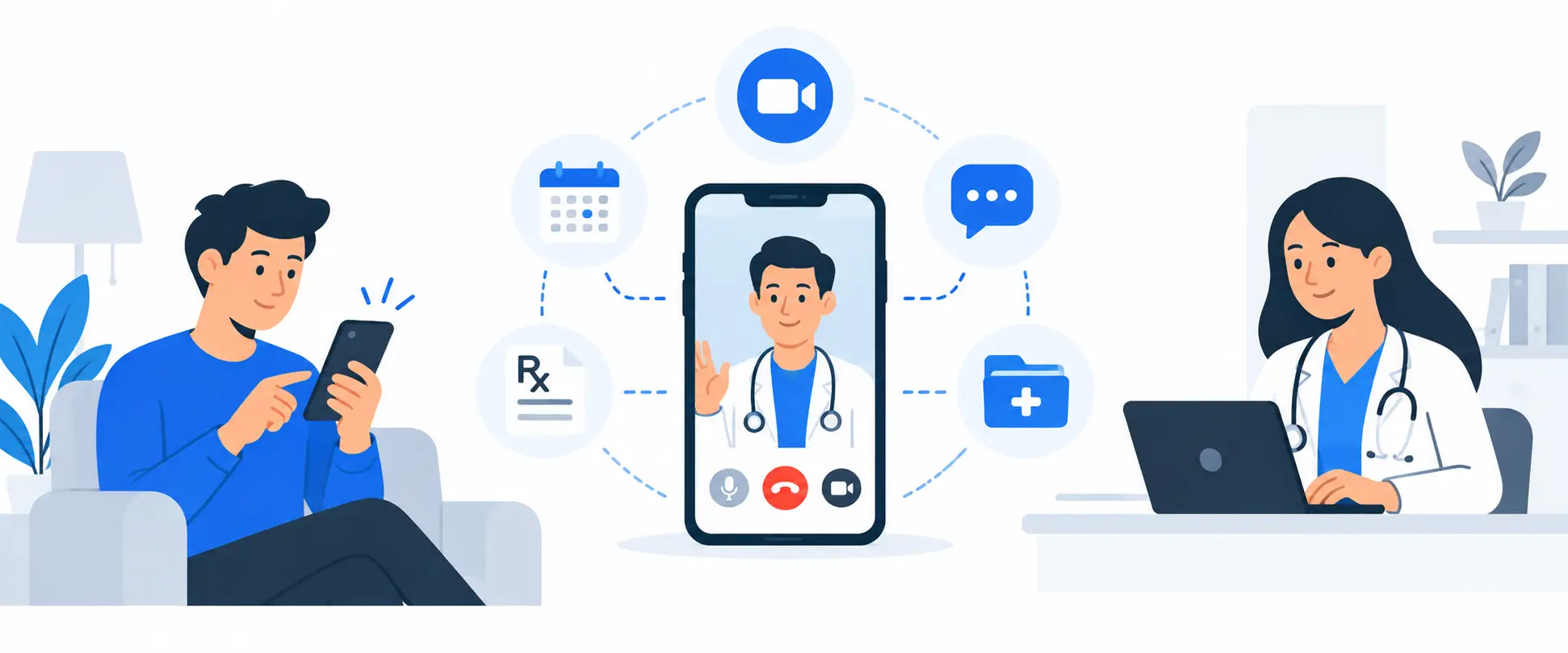
- Doctor-on-demand apps provide patients with faster access to licensed doctors through video, chat, or audio consultations without requiring an in-person visit.
- A successful doctor-on-demand platform must combine patient convenience with strong doctor and admin workflows, including doctor matching, reliable consultations, digital prescriptions, scheduling, credentialing, and real-time visit monitoring.
- Physician licensing and credentialing are core requirements for multi-state doctor-on-demand platforms, requiring license verification, primary-source credential checks, malpractice coverage, and ongoing monitoring to ensure doctors can legally treat patients in their location.
- Healthcare compliance must be built into the platform architecture from the beginning, with requirements such as HIPAA, GDPR where applicable, state telehealth laws, audit logging, encryption, and secure EHR integrations.
_________________________________________________________________________________________
A patient with a sore throat at 9 p.m. should not have to wait three days for an appointment or drive to an urgent care clinic to find out they need antibiotics. That expectation, instant access to a licensed doctor from a phone, is no longer a convenience feature. It is becoming the baseline patients hold healthcare businesses to, and it is reshaping how hospitals, insurers, and health tech companies think about care delivery.
The numbers back up the shift. The global telehealth market is projected to grow from $87.7 billion in 2026 to $187.5 billion by 2033, and doctor adoption has moved from a pandemic-era workaround to standard practice, with 71.4% of physicians reporting they used telehealth in 2024. Doctor on-demand app development sits at the center of that shift, connecting patients to licensed doctors through video, chat, or audio in minutes rather than days.
But building one of these apps involves more than wiring up a video call. It means solving for physician licensing across states, credentialing verification, insurance and payment logic, and compliance requirements that touch nearly every screen in the product. This guide walks through the decisions that actually determine whether a doctor-on-demand platform succeeds, from choosing a build path to what to measure after launch.
Which Doctor On-Demand Model Fits Your Business?
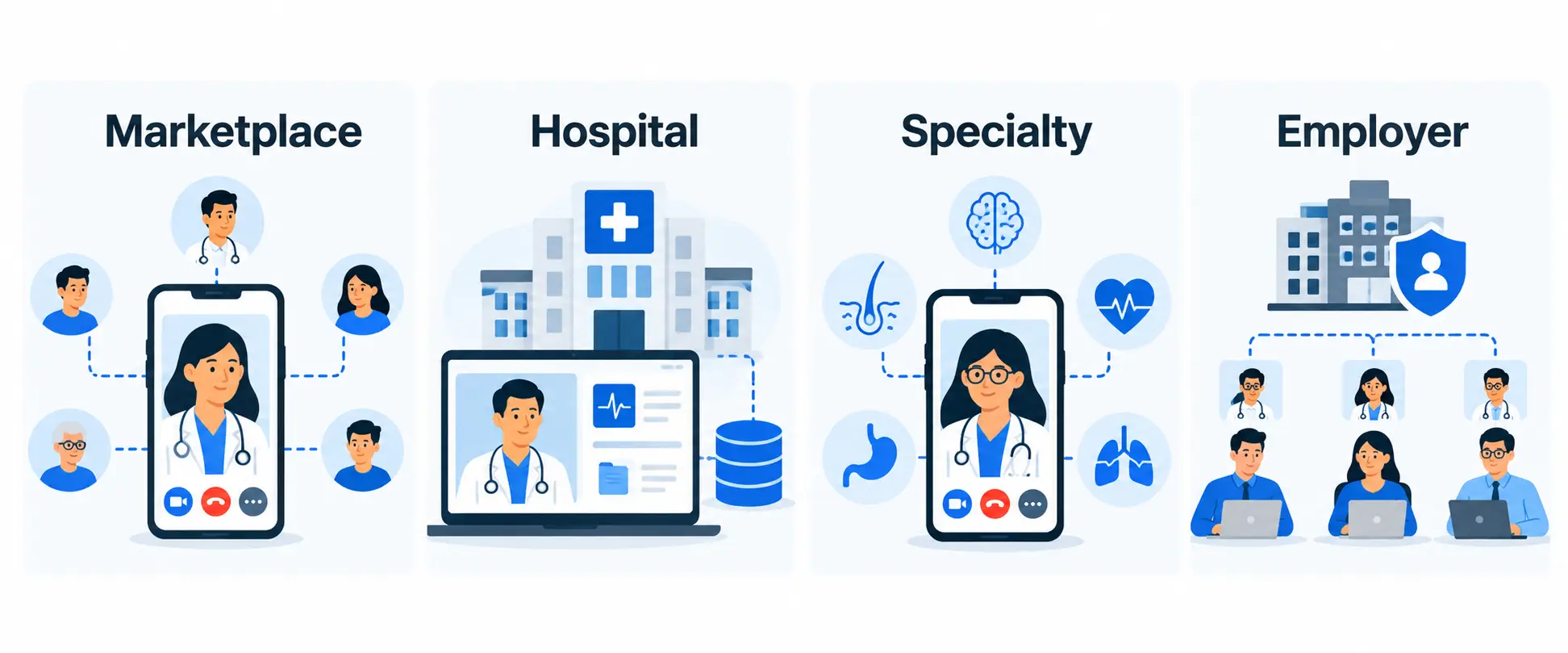
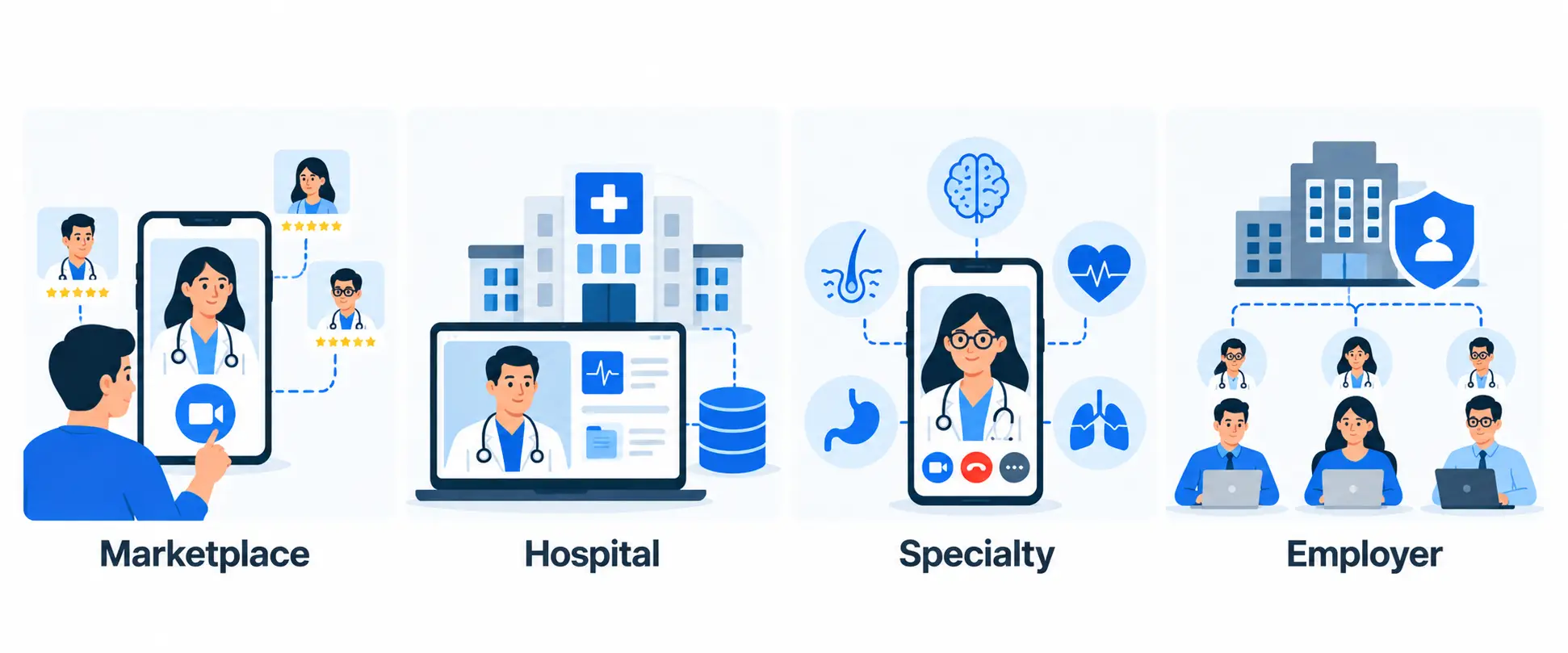
The right feature set and architecture depend on who you are serving and how the platform generates revenue. Most doctor-on-demand apps fall into one of a few core models, and mixing assumptions across them is a common source of scope creep.
- Marketplace consultation apps: Connect independent doctors with the general public on a pay-per-visit or subscription basis, similar to how a booking platform works, with the operator taking a commission on each visit.
Common Examples: Zocdoc, Doctor.com - Hospital-owned virtual care extensions: Extend an existing hospital or health system’s care model into a digital channel, usually tied directly into the organization’s own electronic health records and existing patient base.
Common Examples: Johns Hopkins Medicine, Mayo Clinic, Cleveland Clinic - Specialty-first consultation platforms: Focus on a single specialty such as dermatology, psychiatry, or urgent care, allowing deeper feature investment in that specialty’s specific workflow instead of building generic tools for every use case.
Common Examples: Talkspace, Hims & Hers, Dermio - Employer and insurer-sponsored platforms: Offer virtual visits as a covered benefit, requiring tight integration with insurance eligibility checks, claims submission, and often a private network of contracted doctors rather than an open marketplace.
Common Examples: Teladoc Health, Aetna Virtual Care, Included Health
Each of these models changes core decisions like whether doctors are employees or independent contractors, how insurance billing is handled, and how deeply the app needs to connect with a hospital’s existing systems, similar to the integration questions that come up in chronic care management software when a platform needs to plug into ongoing patient records rather than standalone visits.
Key Features of Doctor On-Demand Apps Driving Growth
Among the core features, what actually matters is what makes each user group choose the app over the alternative, whether that alternative is a competitor’s app or simply calling the doctor’s office.
For Patients
Patients are comparing this experience against the ease of other apps on their phone, not against the friction of a traditional doctor’s office. If the app is harder to use than booking a table at a restaurant, adoption suffers.
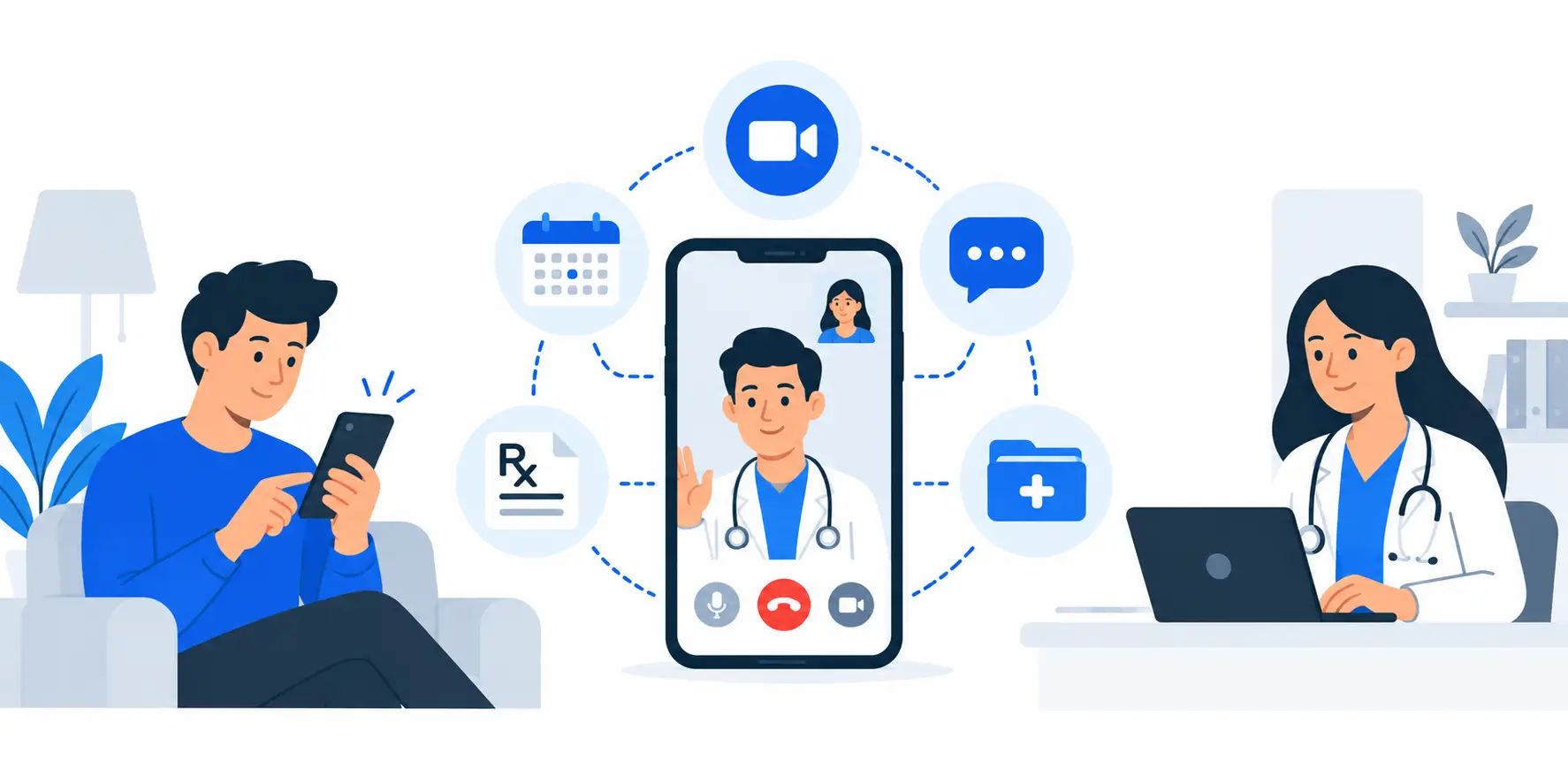
- Fast doctor matching: Filters for specialty, language, availability, and patient ratings so a match happens in seconds, not after scrolling through dozens of profiles.
- Reliable video and chat: Clear audio and video with a fallback to chat if the connection drops, since a failed call during a real symptom check destroys trust immediately.
- Digital prescriptions: Prescriptions that route directly to the patient’s preferred pharmacy without requiring a separate phone call or printout.
- Visible pricing and insurance status: Upfront cost or copay information before the visit starts, since surprise billing is one of the fastest ways to lose a patient permanently.
- Simple follow-up access: A clear path back to the same doctor or visit history for follow-up questions, rather than starting from zero each time.
For Doctors and Physicians
Doctors will not use a platform that adds friction to their day, no matter how polished the patient side looks. The doctor-facing experience determines whether providers stay active on the platform or quietly stop logging in.
- Fast chart access: Patient history, prior visit notes, and medications visible before the call starts, not looked up mid-conversation.
- Simple documentation tools: Clinical note templates that take seconds to complete rather than a general-purpose text box.
- Flexible scheduling controls: The ability to set and adjust availability in real time, including blocking off time without contacting an admin.
- Transparent earnings tracking: Clear visibility into completed visits and payment status, especially important for independent contractors on a marketplace model.
For Administrators
The admin panel rarely gets attention in early planning, but it is where staff will spend the most cumulative hours once the platform is live.
- Real-time visit monitoring: A live view of active and queued consultations to catch bottlenecks before patients start abandoning the queue.
- Credentialing status tracking: A dashboard showing which doctors are fully verified, expiring soon, or missing documentation.
- Dispute and refund handling: Built-in tools to resolve billing disputes without exporting data to a spreadsheet.
What Does the Development Process Look Like?
A structured process keeps a doctor-on-demand build from stalling on compliance surprises discovered late in development.
- Discovery and business model definition: Map out the delivery model, target users, and revenue structure before any design work starts.
- Compliance and licensure planning: Define which states and regulations the platform needs to support, since this directly shapes the data model.
- UX and clinical workflow design: Build separate, role-specific flows for patients, doctors, and admins rather than one generic interface.
- Core development and EHR integration: Build the application in parallel with the integration layer connecting to health records, payment processors, and pharmacy networks.
- Security and compliance testing: Run penetration testing and compliance audits before launch, not as an afterthought once features are complete.
- Launch and provider onboarding: Bring doctors onto the platform with credentialing fully verified before patients can book with them.
- Post-launch monitoring and iteration: Track adoption and operational metrics closely in the first few months to catch friction points early.
Recommended Technology Stack for Developing Doctor On-Demand App
The right stack depends on scale and compliance requirements, but most enterprise-grade doctor-on-demand apps converge on a similar set of proven tools rather than experimenting with unproven infrastructure in a healthcare context.
| Layer | Common Technologies |
| Frontend | React Native or Flutter for cross-platform mobile, React or Next.js for web |
| Backend | Node.js, Python with Django or FastAPI, or Java with Spring Boot |
| Video and Communication | WebRTC, paired with Twilio Video or Agora for scale |
| Database | PostgreSQL for structured records, MongoDB for flexible data, Redis for caching |
| Cloud Infrastructure | AWS, Microsoft Azure, or Google Cloud, all with HIPAA-eligible services |
| Compliance and Integration | FHIR and HL7 interfaces, credential verification APIs, payment gateways |
Compliance and Security Standards For Doctor On-Demand App
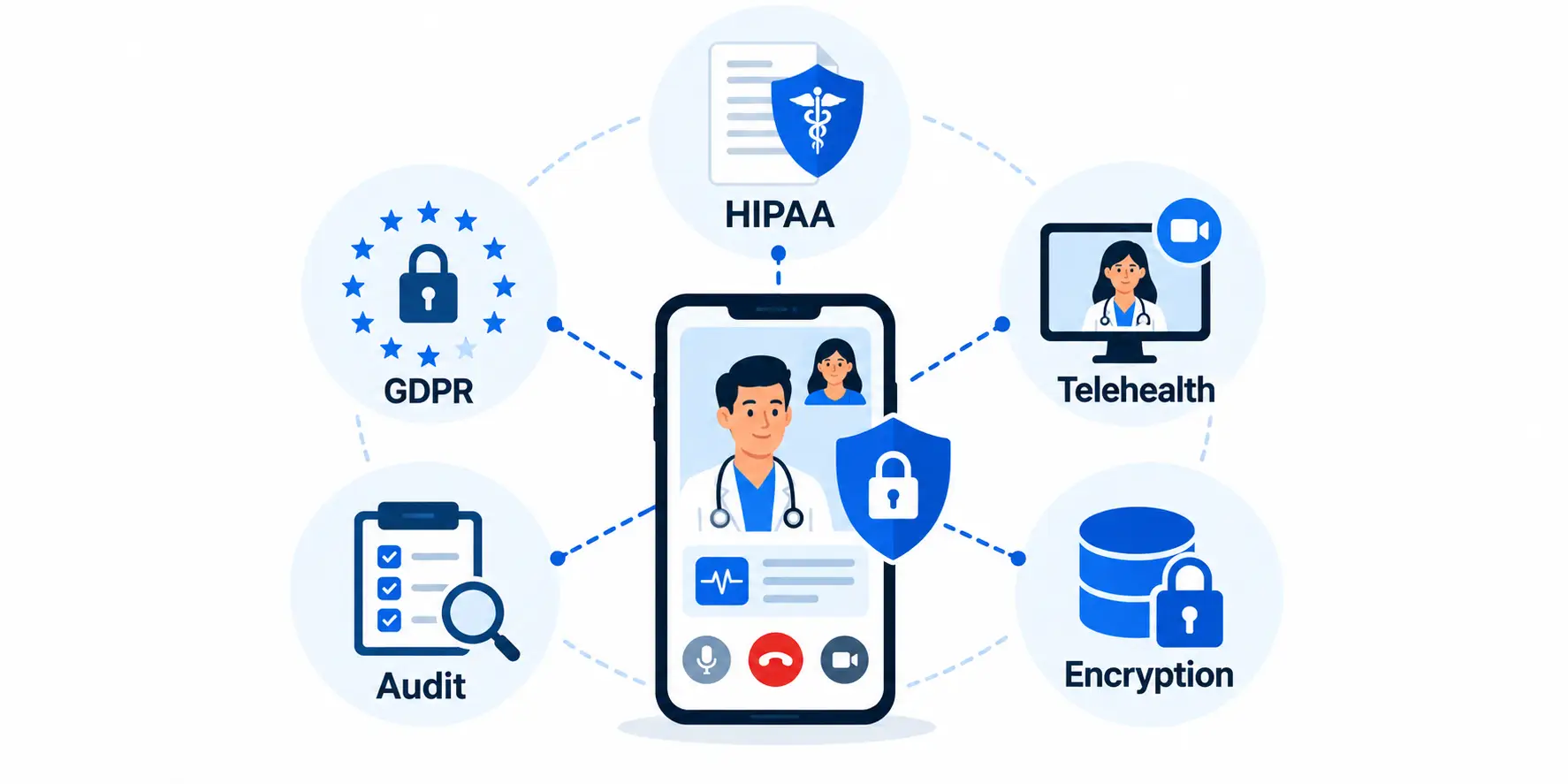
Compliance in doctor-on-demand app development is not a single checkbox. It touches how data is stored, who can access it, and how the platform proves it did the right thing if something goes wrong.
- HIPAA: Governs how patient health information is stored, transmitted, and shared in the United States, requiring encryption, access controls, and signed agreements with any vendor that touches patient data.
- GDPR: Applies if the platform serves patients in the European Union, requiring explicit consent for data collection and giving patients the right to access or delete their records.
- State telehealth laws: Beyond federal rules, many states have their own requirements around informed consent for virtual visits and what services can legally be delivered remotely.
- Audit logging: Every access to patient data should be logged and reviewable, since this is often the first thing regulators and auditors ask for after any incident.
- Encryption in transit and at rest: Data should be unreadable to anyone who intercepts it, whether it is moving between the app and server or sitting in the database.
How Do You Handle Physician Licensing and Credentialing at Scale?
This is the part of doctor-on-demand app development that catches most first-time builders off guard. A physician licensed in one state generally cannot legally treat a patient who is physically located in a different state unless they hold a license there too, or the states involved participate in a licensure compact. This single rule shapes the entire doctor-matching logic of the app.
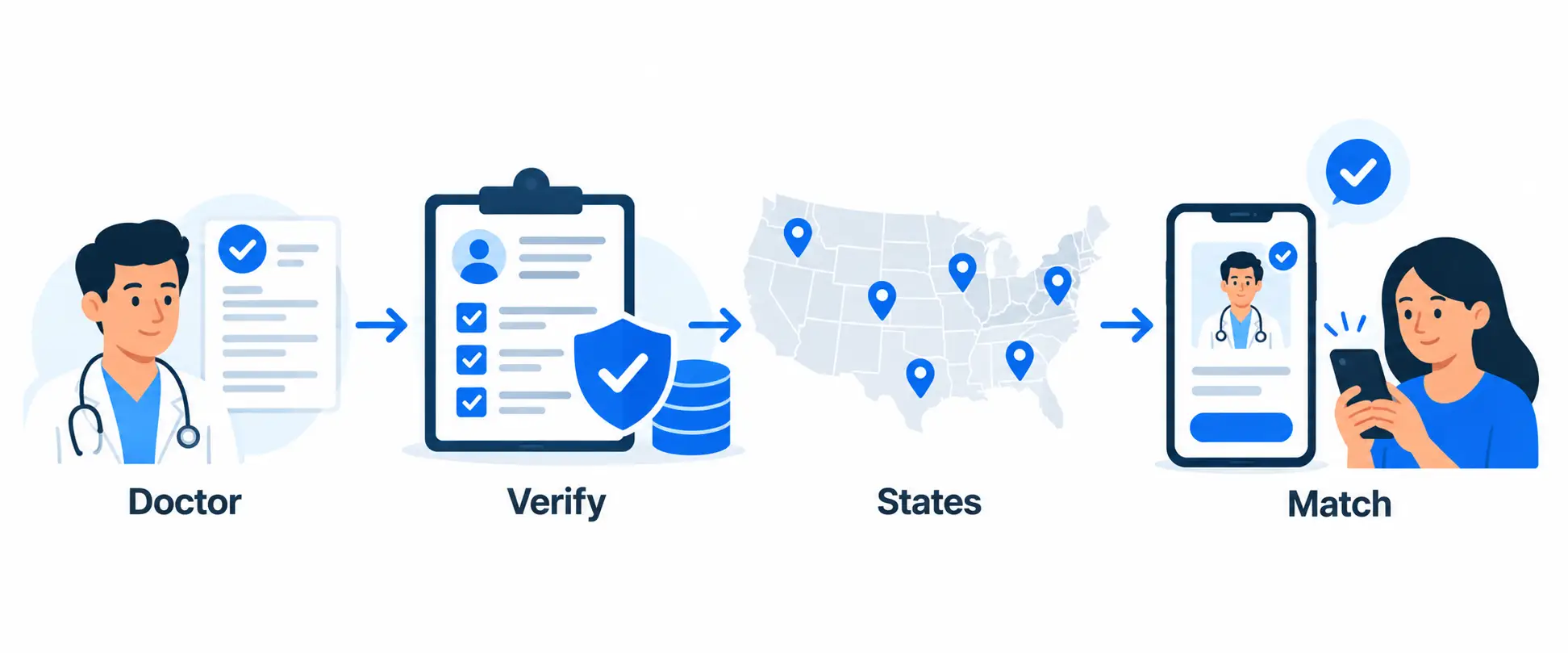
The Interstate Medical Licensure Compact lets physicians secure licenses across member states through a streamlined process rather than applying individually to each one, which is why most enterprise doctor-on-demand platforms build compact status directly into their doctor database and matching algorithm. A patient in a non-compact state may only be shown doctors licensed specifically in that state, which changes both the user experience and the size of the available provider pool by region.
| Requirement | What It Involves |
| State licensure verification | Confirming active, unrestricted licenses in every state a physician will treat patients from |
| Primary source verification | Verifying credentials directly with issuing bodies rather than trusting self-reported data |
| Malpractice coverage confirmation | Ensuring active coverage that extends to telehealth visits specifically |
| Ongoing monitoring | Continuous checks for license expirations, board actions, or sanctions, not just a one-time check at onboarding |
Building this into the platform from day one, rather than retrofitting it later, avoids a scenario where a physician’s license lapses mid-quarter and the system keeps routing patients to them anyway. Enterprise platforms typically integrate with credential verification services rather than tracking this manually, since manual tracking does not scale past a handful of providers.
What are the Common Pitfalls while Building Doctor On-Demand App?
Most doctor-on-demand builds run into a predictable set of problems. Knowing them in advance is far cheaper than discovering them after launch.
- Mobile-specific security gaps – Many teams focus compliance effort on the server and overlook the mobile client itself. Patient data cached insecurely on a device, session tokens that never expire, or API keys hard-coded into the app binary are common weaknesses that a HIPAA checklist alone will not catch. Solution: Run mobile-specific security testing separate from backend testing, including checks for insecure local storage, certificate pinning, and session timeout enforcement, especially on shared devices used in clinical settings.
- EHR integration complexity – Hospitals often run multiple record systems with inconsistent data formats, and connecting a new doctor-on-demand app to all of them creates real technical friction. Solution: Build a dedicated integration layer using FHIR and HL7 standards rather than writing one-off connections to each system individually.
- Cross-state licensure enforcement – Without careful design, it becomes easy for the app to accidentally match a patient with a physician who is not licensed in the patient’s actual location. Solution: Tie doctor availability directly to verified state licensure data and location detection, rather than relying on the doctor to self-report where they are allowed to practice.
- Scheduling no-shows and gaps – Both patients and doctors drop off if scheduling feels unreliable, whether from double-booking or unclear wait times. Solution: Build real-time queue visibility and automated reminders, and give doctors the ability to adjust availability instantly rather than through a manual request process.
How Much Does Development Cost?
Cost varies significantly based on how many states the platform supports, how deep the EHR integrations run, and whether AI features are part of the initial build.
| Platform Tier | Estimated Cost | Typical Timeline |
| MVP with Core Features | $20,000 to $45,000 | 3 to 4 months |
| Mid-Level Platform | $45,000 to $65,000 | 5 to 8 months |
| Enterprise Multi-State Platform | $65,000+ | 8 to 14 months |
The biggest cost driver beyond feature count is usually the depth of licensure and credentialing infrastructure, since building real-time verification across dozens of state boards is far more involved than a simple video-calling feature.
How Do You Monetize the App?
Most successful platforms combine more than one revenue model rather than relying on a single source of income.
- Pay-per-consultation: Patients pay a flat fee per visit, which works well for marketplace apps without existing insurance relationships.
- Subscription plans: Patients pay monthly for unlimited or discounted visits, which builds predictable recurring revenue and encourages repeat use.
- Commission-based marketplace fees: The platform takes a percentage of each visit conducted by independent doctors on the network.
- Enterprise licensing: Hospitals and insurers pay an annual or multi-year fee to run the platform under their own brand.
- Insurance reimbursement: The platform bills insurance directly for eligible visits, which increases patient volume but adds significant billing complexity.
What Should You Track After Launch?
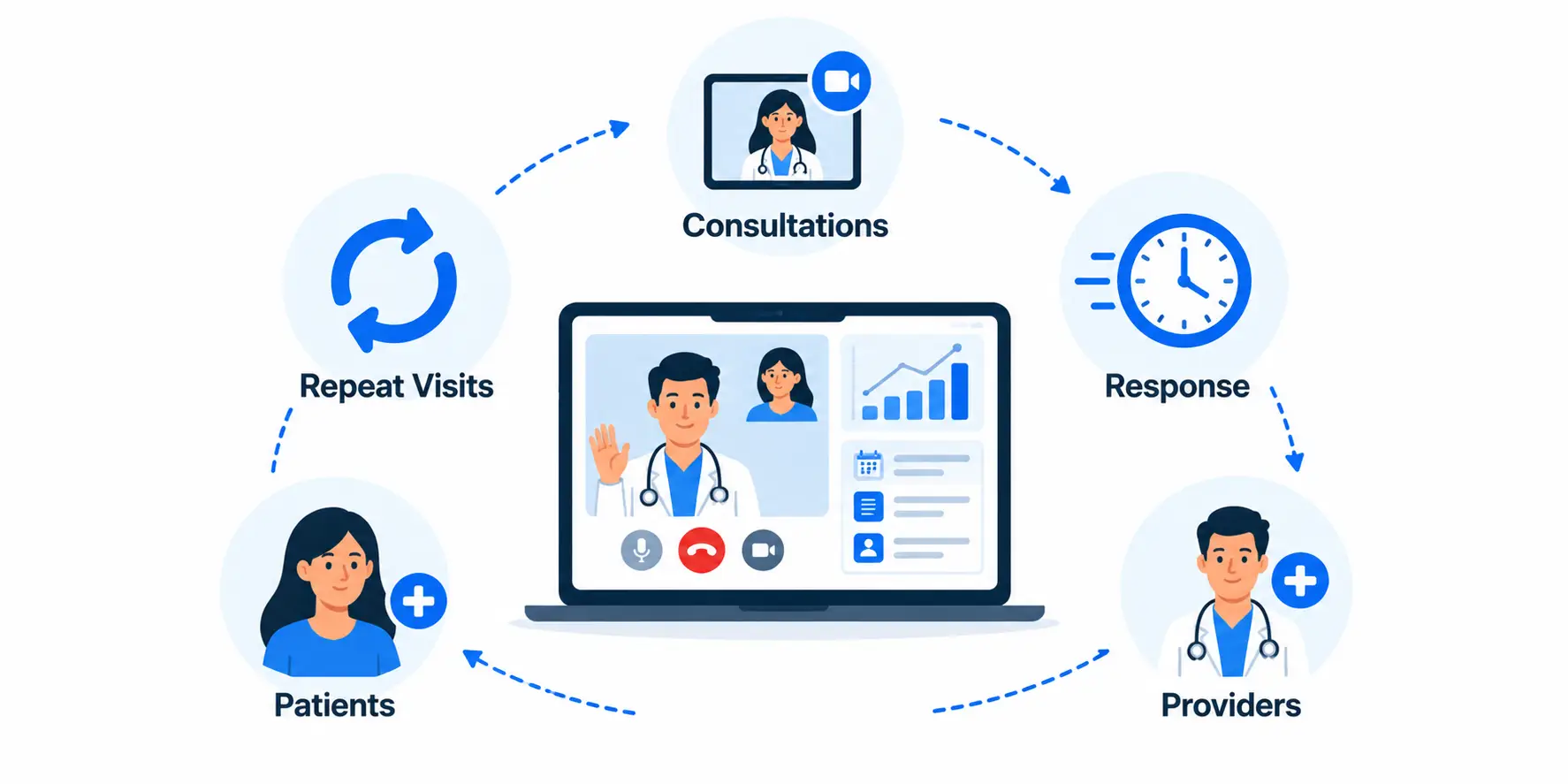
Launching the app is the starting line, not the finish line. A small set of operational metrics tells you far more than download counts about whether the platform is actually working.
| Metric | Why It Matters |
| Consultation completion rate | Shows how often booked visits actually happen versus being abandoned or cancelled |
| Average time to first response | Measures how quickly a patient connects with a doctor after requesting a visit |
| Provider utilization rate | Reveals whether doctor supply matches patient demand by specialty and time of day |
| Patient no-show rate | Highlights scheduling or reminder issues that need fixing |
| Repeat visit rate | Indicates whether patients trust the platform enough to return for future care |
Final Thoughts
Doctor on-demand app development succeeds or fails less on video quality and more on the operational details most guides skip past: getting licensure right, making the doctor experience frictionless enough that doctors keep logging in, and building compliance into the architecture rather than bolting it on before launch. The businesses that get real traction are the ones that treat doctor supply and credentialing as core product work, not a legal afterthought handled outside the engineering team.
If you are scoping a doctor-on-demand platform and want a clear-eyed view of licensing complexity, integration scope, and realistic cost before committing budget, Simpalm’s team has worked across healthcare app development projects that needed to get compliance and clinical workflow right from day one. A short conversation upfront can save months of rework later.
Frequently Asked Questions
Q1. How long does it take to build a doctor-on-demand app?
Ans. Timelines depend heavily on how many states the platform needs to support and how deep the EHR integrations go. A basic single-state MVP can launch in three to four months, while a multi-state enterprise platform with full credentialing infrastructure and deep hospital integrations typically takes eight to fourteen months. The licensure and credentialing work is often the long pole in the schedule, not the app development itself.
Q2. Do I need a licensed doctor network before building the app, or can I build the app first?
Ans. It is far more efficient to start recruiting and credentialing doctors in parallel with development rather than waiting until the app is finished. Credentialing alone can take weeks per physician, and launching with an empty or thin provider network is one of the fastest ways to lose early patient trust. Most successful launches have a core group of verified doctors ready before the app goes live.
Q3. Can a doctor-on-demand app work across all fifty states from day one?
Ans. Technically yes, but practically it depends on how many doctors you can credential in each state or how many hold licenses through the Interstate Medical Licensure Compact. Many businesses launch in a smaller set of states where they have strong doctor coverage, then expand licensure and provider recruitment into new states over time rather than trying to cover the entire country at once.
Q4. What is the difference between building for a marketplace model versus a hospital-owned platform?
Ans. A marketplace model connects independent doctors with the general public and usually monetizes through commissions or subscriptions, which means the app needs strong doctor onboarding and credentialing tools built for scale. A hospital-owned platform typically serves an existing patient base, integrates tightly with the hospital’s own electronic health records, and focuses more on extending existing care relationships than acquiring new patients from scratch.
Q5. How much of the budget should go toward compliance and security versus features?
Ans. There is no fixed percentage, but compliance and security work, including credential verification infrastructure, audit logging, and mobile-specific security testing, often accounts for a meaningful share of total development cost on enterprise builds. Treating this as core product work rather than a separate compliance line item tends to produce a more stable platform and avoids expensive retrofitting after launch.
Q6. What is the biggest reason doctor-on-demand apps fail after launch?
Ans. Provider supply problems are the most common cause. If patients open the app and cannot find an available doctor quickly, or if doctors stop logging in because the platform adds friction to their day, the whole product loses momentum regardless of how polished the patient-facing design is. Tracking provider utilization and time-to-first-response from the first week after launch helps catch this early enough to fix it.