
 Design
 App Development
 Web Engineering
 AI Services
 Cloud
Cloud Staffing
 Startups
 Health / Fitness
 Education
 Social
 Nonprofit
 Fintech
 Construction
 Logistics
 Government
 Travel/Hospitality
 HR Software
 About Simpalm
 Our News
 Client Testimonials
 Careers
 Our Blog
 Awards
 Resources
 Information
Key Takeaways
- Mobile roofing apps streamline scheduling, communication, material tracking and compliance, reducing everyday operational chaos for roofers.
- They help roofing companies stay visible to customers through updates, reminders and transparent progress tracking, improving long‑term retention.
- Essential features include AR measurements, GPS routing, digital estimates, customer portals, e‑signatures, compliance reporting and offline access.
- Advanced capabilities like AI voice notes, workflow automation and integrations with QuickBooks/CRM significantly boost efficiency and accuracy.
- Although development costs vary, roofing apps deliver strong ROI through faster payments, higher efficiency, better customer experience and a competitive edge.
________________________________________________________________________________________
If you are a roofing contractor juggling multiple projects in different neighbourhoods, here is a busy day- a field service agent is waiting for material delivery, another is halfway through a repair and a client is calling to ask for an update. Add to this past customers forgetting your company’s name after a successful project. Traditionally you would be buried in phone calls, and documentation, but with a mobile app, you can turn all this chaos into clarity.
Mobile apps are essential for roofers as it provides them a centralized platform to manage projects, crews, material and customer communication.
These apps also offer something more valuable- long term customer relationships. Typically a roofing business has long cycles sometimes stretching over 20 years and this leads to customer attrition. A mobile app can keep you on the client’s radar for shorter service opportunities like gutter cleaning, storm checks, repairs and flashing maintenance.
This blog highlights the importance of mobile apps for roofers, must have features that should be included and key steps to build the app.
The Roofing Industry Landscape, Challenges and a Shift Towards Mobile-first Solutions
If you talk to roofers today, they will narrate the same problem- the work is tough but managing the business side is even tougher. The roofing industry is competitive and mid sized companies, and startups try to keep up with customer expectations. Customers want faster communication, and a clear proof that the job is done properly.
Roofing is not just about climbing ladders and fixing problems. The real challenge lies in keeping everything organized and running smoothly.
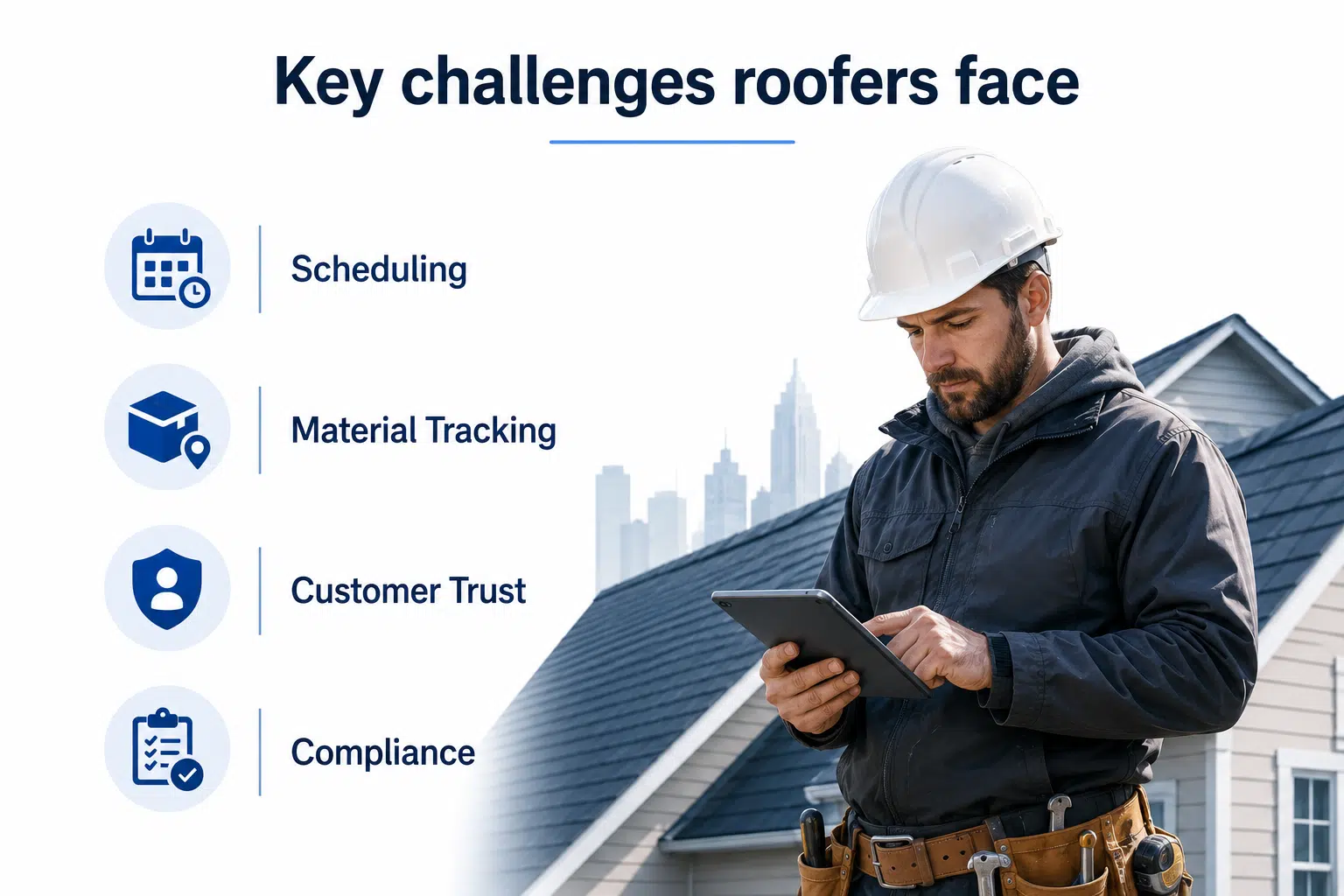
Here are 4 challenges faced by roofers.
- Scheduling conflicts– One unexpected rainstorm or late delivery can throw off the entire week’s plan. Jobs overlap, crews end up waiting for the weather to get better and customers get frustrated.
- Customer trust issues– Clients want to feel that their roof is in safe hands. With unclear updates or lack of visibility, customers will lose trust and it will be hard to win repeat business.
- Material tracking struggles– Roofing projects depend on timely supply of material. Poor tracking or a small miscount can lead to material wastage, project delays and shifting timelines.
- Compliance pressure– Safety rules are strict in roofing business and there must be proper documentation on compliance. In such cases, missing a checklist or forgetting a log of documentation can put the company at risk. Many roofers still depend on hand written notes, paper contracts and endless phone calls which is a slow and error-prone process. This traditional way of working makes the roofing business look outdated as compared to competitors who have adopted digital transformation
The Shift Towards Mobile-First Solutions
Roofers are increasingly leaning towards mobile apps. 75% of contractors are already running on cloud based project management instead of paper heavy workflows.
The advantage is that everything lives in one place including job schedules, safety checklists, material availability and customer updates. For a roofer, this means less time chasing paperwork and more time on the roof. A mobile app for roofing helps field agents move towards a proactive, streamlined service that fosters customer loyalty.
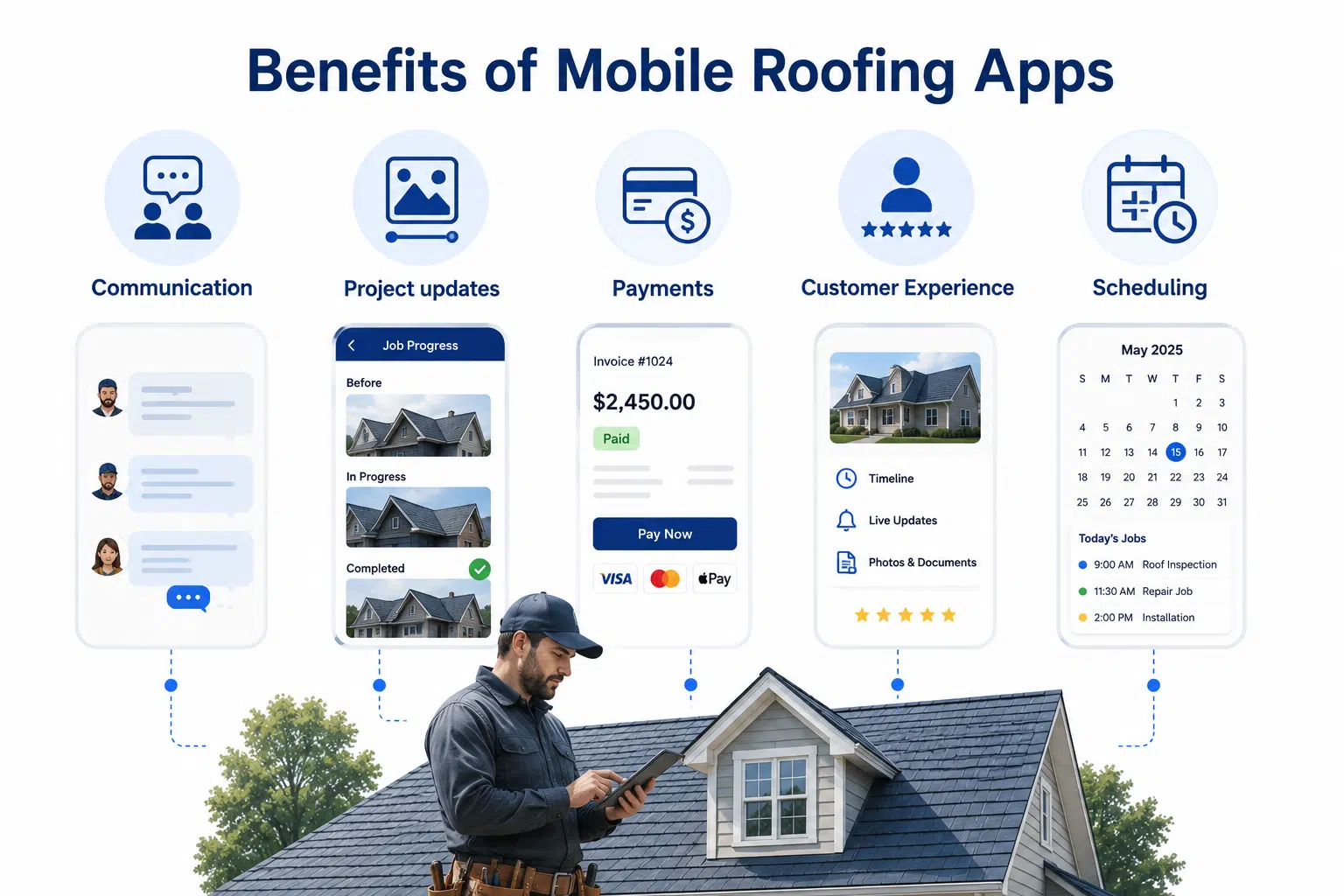
Benefits of Mobile Roofing Apps for Field Service Workers
For roofers, the main job is to stay connected, efficient and organized while managing multiple tasks. Mobile apps bring all the moving parts together, making life easy for the field workers and delivering a seamless customer experience.
Streamlined Communication Between Managers, Roofers and Clients
Communication is often the biggest challenge in roofing jobs as managers need updates, roofers need instructions and clients want to know about job progress. A mobile roofing app keeps everyone on the same page.
Use case-Imagine a manager scheduling a repair job through the app. The field worker gets an instant notification and the client receives a message that the crew is on the way. This allows no missed calls or confusion and just smooth coordination.
Real-Time Project Updates and Progress Tracking
Major roofing jobs can take days and sometimes even weeks to complete. Clients don’t want to feel left in the dark. With mobile apps, crews can upload photos, videos and work progress directly from the site.
Use case-During a roof replacement, a field agent takes photos of before and after the job and uploads those on the site. The client sees the progress real time, and the manager can track completion without waiting for a phone call from the roofer.
Simplified Invoicing and Payment Collection
Earlier collecting payments for roofing jobs meant chasing checks or waiting weeks for bank transfers. Mobile apps make the process quick and hassle-free.
Use case-Once a repair work is completed, the field worker generates an invoice right in the app. The client pays easily with a card or digital wallet. This helps to settle the account immediately, without an extended waiting period.
Improved Customer Experience Through Transparency
When roofing work starts, customers want to know about the job details like progress or expected timeline for completion. A mobile app makes the whole process transparent by providing them the timeline, updates and digital documentation. This transparency builds trust and leads to repeat business.
Use case- A homeowner worried about storm damage logs in to the app to see progress photos and estimated completion time. This level of transparency builds trust in them as they need not call the roofer or the company for updates.
Enhanced Scheduling and Dispatch
A scheduling gone wrong in the roofing business is when things fall apart as jobs overlap, roofers get double booked or they do not have the exact map locations. Mobile apps fix this issue by syncing calendars and optimizing routes for service agents.
Use case-A dispatcher uses GPS integration to assign the closest crew to an urgent leaking roof repair. The field agent gets direction instantly saving time and fuel, while keeping customers happy with their quick response.
11 Must Have Features of a Mobile App for Roofers
A roofing app isn’t just another piece of software, it is a toolbox in the pocket of field workers.With the right app features, it can cut hours of manual work, reduce mistakes and make your customers gain confidence in your service.
Here are the essential features that every roofer must have in their mobile app
Measurement Accuracy
As a crew member on the roof, you need not climb up with tape measures or guess dimensions. With AR sensors you can point your phone at a roof and get slope, area and size instantly. It is a faster, cheaper process and ensures that your estimates are accurate.
Material and Cost Tracking
Running out of material halfway through the job is a nightmare for the roofing crew. A good mobile app tracks materials in real time, and ties them to costs. You know exactly what’s on hand and what needs ordering before it is too late.
Scheduling and Calendar Integration
Manual scheduling leads roofing jobs to overlap and field agents are double booked. Calendar integration helps to keep everyone from managers to roofers and clients aligned. This helps the job to start and finish on time without the usual chaos.
GPS and Route Optimization
The more time a roofing crew spends on the road the more is the money loss. With GPS enabled mobile apps, dispatchers can send the nearest crew to a job and give workers the fastest route. This indicates less fuel loss for roofers and quicker responses for customers.
Work Progress Visibility
Clients love seeing work progress and with a photo or drone footage you can easily show them the work done without climbing a ladder. Drone enabled workflows can also identify hidden damage and document warranty requirements. Using this feature you can measure steep or complex roof setups without risks. Roofers can also take pictures of the job before the job is started and after the job is completed to provide detailed reports and documentations to their customers.
Digital Estimates and Proposals
Speed matters when it comes to winning bids in the roofing business. Mobile apps for roofing help generate polished proposals instantly. Your customers can review the proposals and approve those on spot. This helps to close deals quickly.
Push Notifications and Alerts
Roofing projects consist of multiple moving parts. With push notifications you can send a message directly to the customer’s lock screen. Using reminders for gutter cleaning and maintenance you remain on top of the mind of customers without the need for endless phone calls.
Reporting and Compliance
Safety rules in roofing projects are strict and clear documentation is non-negotiable.With apps, roofers can easily log in safety checks, and complete compliance forms. This indicates that everything was done following safety guidelines.
Customer Portal
Along with roofers and managers, customers need to check warranty documents, project progress, and invoices anytime. A customer portal helps build trust. It also reduces anxious phone calls and makes the customer feel in control.
E signatures and Contracts
Paper contracts and forms are a thing of the past. With digital contracts and e signatures, clients can approve agreements instantly. This reduces delays and allows crews to get started with their work or log completion without any manual intervention.
Offline Access
Roofing jobs don’t always happen in places with strong internet connectivity. Whether you are on a remote site or with spotty coverage, offline access ensures that the app still works. You can log in safety checks, view schedules or materials availability without the fear of losing connection.
Advanced Trends in Mobile Apps For Roofing Business
Roofing apps are not just about scheduling tasks and generating invoices anymore. AI-powered apps have evolved into powerful platforms that redefine how roofers work and retain long-term customer relationships. The latest innovations go beyond basic features helping roofers save time, improve accuracy and win more jobs.
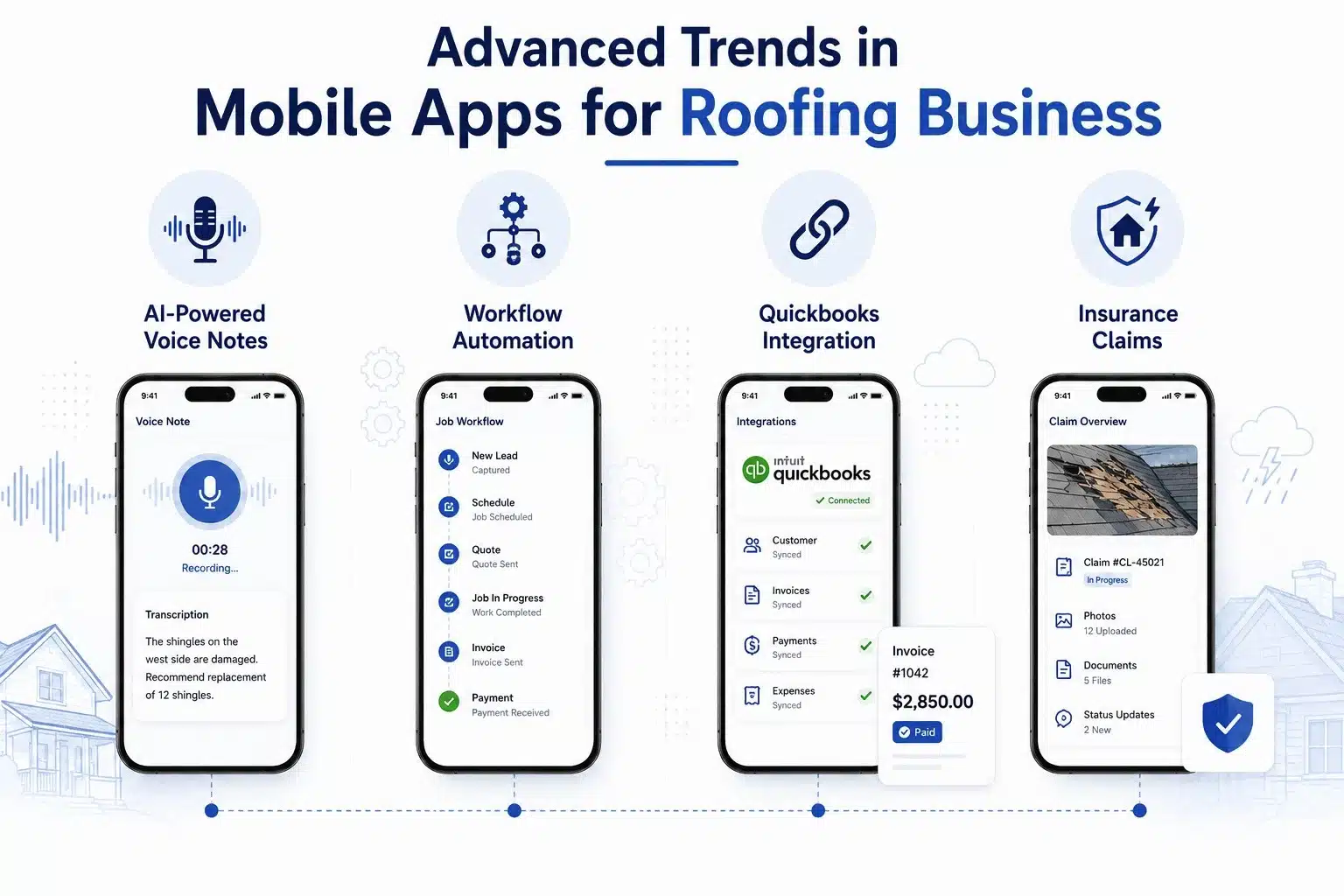
Here are some exciting trends:
AI-powered Voice Notes and Documentation
Roofers spend a lot of time on job sites and typing notes isn’t always practical. AI-powered voice features let workers record quick voice memos that are automatically transcribed into documents.
Workflow Automation From Lead to Payment
Modern mobile apps automate the entire journey and roofers need not juggle multiple tools.This includes automating the workflow from lead capturing to scheduling, quoting, completing the job to collecting payment.
Integration with Quickbooks, CRM and Aerial Measurement Tools
Roofing businesses often rely on external tools for accounting, customer management and measurement. Advanced mobile apps integrated directly with third party apps reduce double entry and errors.
Insurance Restoration Roofing Support for Storm-Driven Businesses
After storms, roofing companies handle insurance claims and restoration projects. Mobile apps simplify this process with claim documentation, photo evidence storage and direct communication with insurers.
How to Build a Mobile App For Roofing Companies?
Building a mobile app for users includes solving real-world problems that enhance productivity of roofers, streamlines workflows and enables repeat revenue. Given below is a structured approach that is practical, easy to use and scalable.
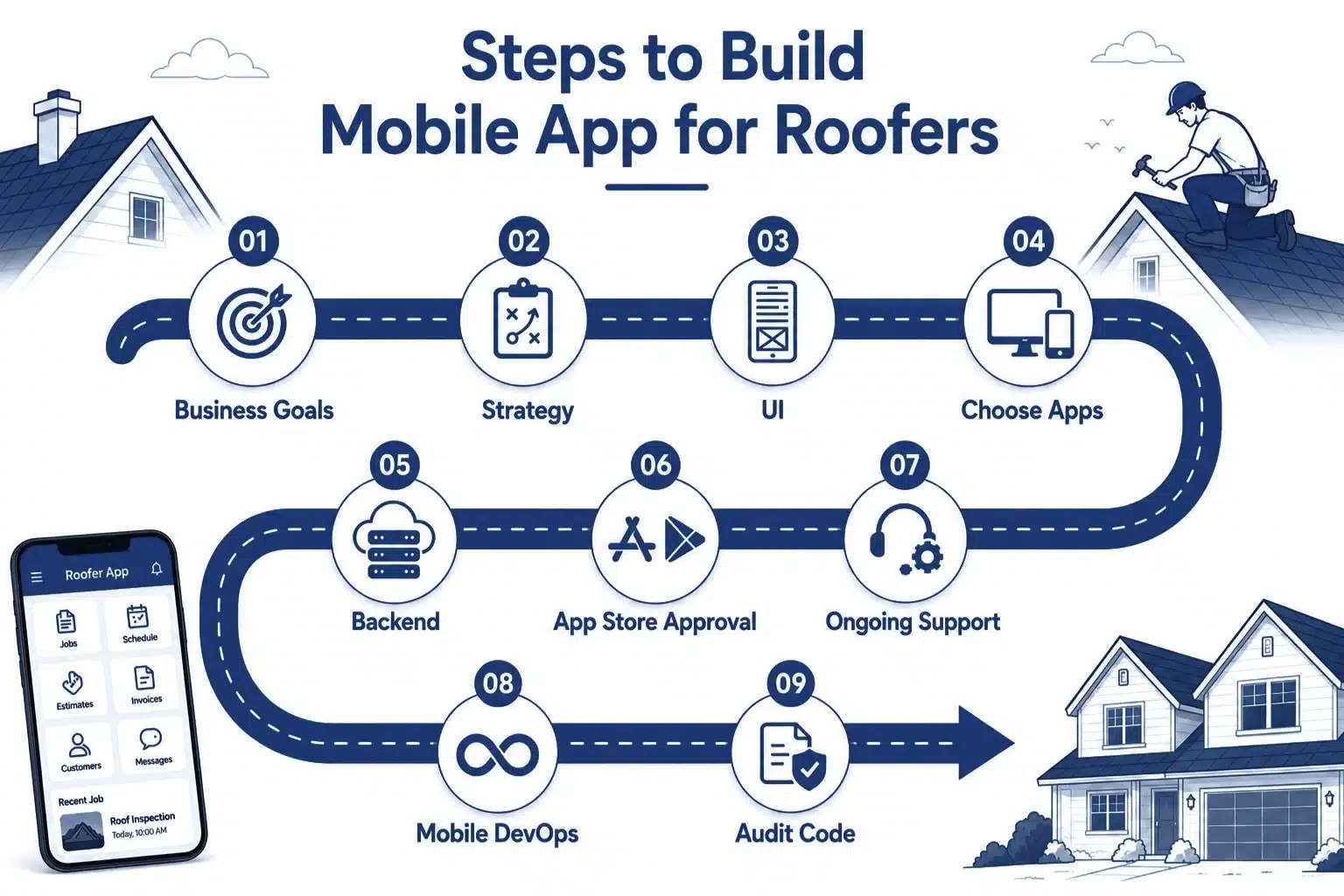
Define Business Goals and Pain Points
Start by asking “what problems are we solving”? For roofers this can be missed appointments, slow invoicing and poor customer updates. Understanding the user requirements helps to build a working blueprint of the app.
Turn Ideas into Strategy
For creating a robust strategy, brainstorm features and workflows that directly impact user needs. This is where you map how the app will function and align it with the company’s growth strategy.
Design User Friendly Interface
Roofers and field agents need a simple, intuitive screen. A clean design helps to upload photos, check schedules or send invoices without technical headaches. With a user-friendly design, the app meets business goals and also drives adoption.
Choose Between Custom Apps and User Friendly Solutions
Decide whether you need an off the shelf solution or want to build a custom app for your business. Custom apps offer flexibility and enable branding while off-the-shelf options are faster and cheaper to deploy. Tailoring the apps to your business needs ensures high performance and boosts customer retention.
Build a Strong Backend that Can Scale
The backend is the skeleton of the app, handling data storage, user authentication,APIs and business logic.Backend can be custom built or integrated with third party apps for scalable performance.
Get Hassle-Free Approval on App Store
Once the app is built, it has to be submitted to the Apple App store and Google play. This includes meeting guidelines, preparing descriptions and ensuring that the app passes the review process. A reliable mobile app development service will ensure that the app adheres to specific guidelines and gets approved in a single attempt.
Get Ongoing Support and Maintenance
Launching a mobile app for a roofing company is just the beginning of the journey. To keep the app relevant in the long run, regular updates, feature improvements and bug fixes are necessary. Periodic maintenance and quick resolution of issues keeps app performance at its peak.
Use Mobile DevOps for Faster Updates
Continuous deployment and integration pipelines helps to push updates quickly without disrupting users. This ensures that the app is scalable and evolves rapidly with changing business needs. Mobile DevOps reduces disruptions and fosters team collaboration.
Audit Your Code to Stay Compliant
To ensure the mobile app for roofers runs smoothly, regular code reviews and audits are non-negotiable. An award winning Android app development agency makes sure that the app stays compliant and aligns with industry standards.
Cost Considerations for Mobile App Development
When roofing companies think about building a mobile app, the first question is- how much will the app cost? There is no “one size fits all” answer to this. Costs depend on what you want the app to do, what are the complexities or whether you want the app for Android or iOS or both. Roofing companies need to plan strategically so that the investment pays off and there is customer retention.
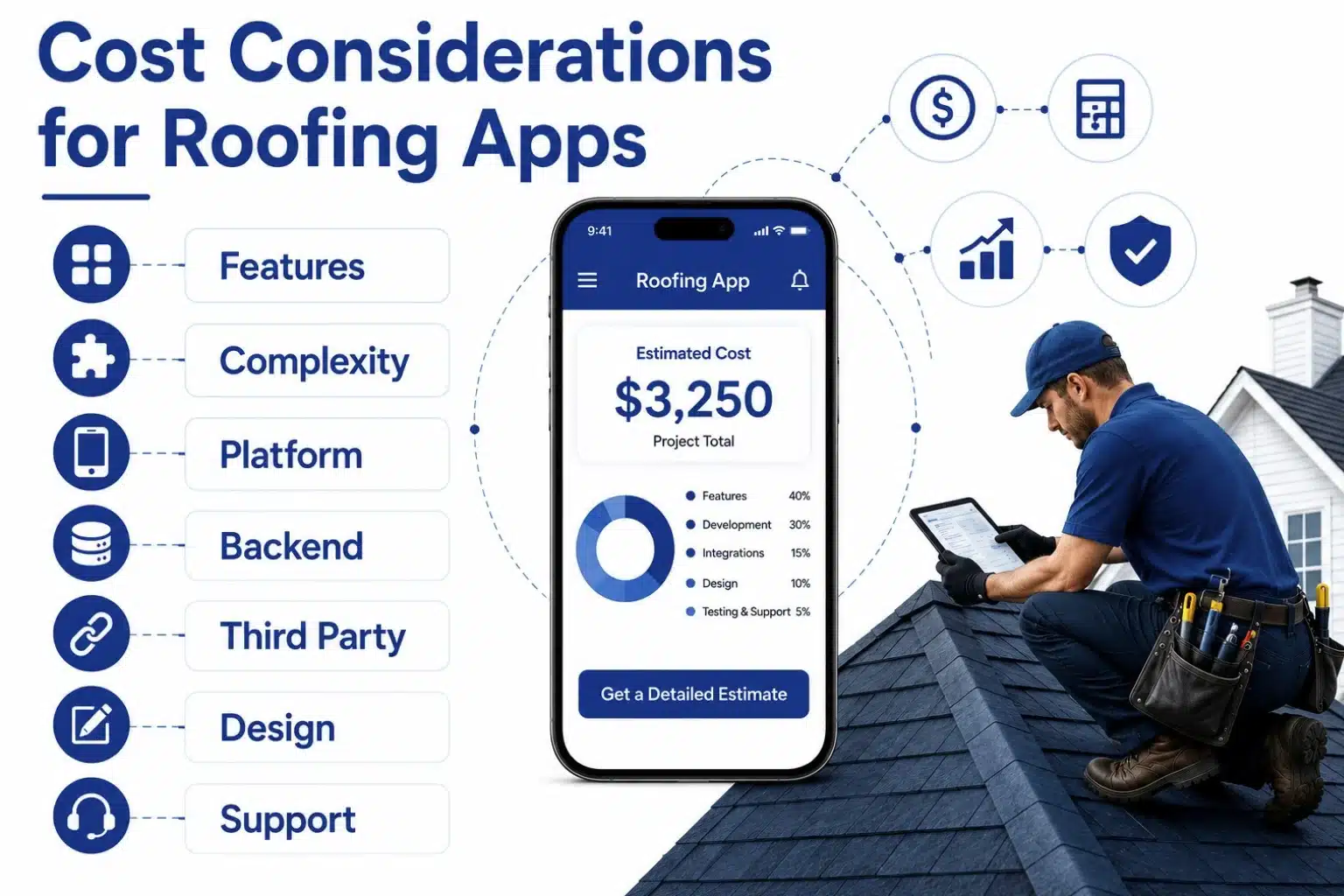
Top factors that affect the development cost of mobile apps
- Features– The more advanced features you add, (like AR measurement or offline access) the higher the cost gets.
- Complexity– A simple scheduling app is cheaper than a full platform with dashboards, GPS routing and integrations.
- Platform Choice– Building for iOS or Android is less expensive. Cross platform mobile apps cost more but reach a wider audience.
- Backend Development- A strong backend with APIs, authentication and integrations adds to the budget.
- Third Party Integrations- Payment gateways, aerial measurement tools or compliance systems require extra development effort.
- Design Quality– A polished UI/UX takes more design hours but it ensures that roofers and customers can navigate through the app seamlessly.
- Support and Maintenance– Ongoing updates, bug fixes and OS compatibility checks are recurring costs that keep the app reliable.
Here is a realistic breakdown of what roofing apps cost and how long do they take to build
| App Type | Cost | Timeline |
|---|---|---|
| Basic Mobile App | $10K-$25K | 4-6 weeks |
| Mid-sized Roofer App | $30K-$100K | 12-14 weeks |
| Large scale Roofer App | $100K+ | 6-9 months |
Is the Investment in Mobile App for Roofers Worth it?
Spending thousands of dollars in building a mobile app may sound steep, but roofing companies using it accurately see returns quickly.
- Efficiency Gains– Digital scheduling and AR measurements save hours every week.
- Customer Retention– Mobile app for roofers keeps clients engaged with push notifications or reminders reducing the “silent gap” between jobs.
- Faster Payments– Integrated payment gateways mean invoices are settled instantly improving cash flow.
- Competitive Edge– A modern app helps roofers win more contracts.
- Scalability– Apps grow with business supporting more crews and projects without admin overhead.
The Bottom Line
Roofing companies need more than ladders and shingles- they need smart systems that keep everything running smoothly. A mobile app for roofers takes away the everyday headaches like scheduling mix ups, slow invoicing or poor customer communication. With advanced features and AI integration, roofing companies can create streamlined and stress free workflows.
A mobile app built right helps crews save time, create happy customers and boost business.One of the biggest challenges of roofing companies is to stay visible to the customers after a roofing job is complete. A mobile app closes this gap by keeping the communication with the customer alive with push notifications and reminders. In today’s evolving landscape this relevance is what makes the roofing companies gain an edge over the competition.
Frequently Asked Questions
Q1. Why should roofing companies invest in a mobile app?
A mobile app helps roofers cut down on scheduling chaos, track materials in real time, improve customer communication, and build long‑term loyalty. It turns everyday headaches into streamlined workflows.
Q2. What are the must‑have features of a roofing app?
Key features include AR‑based measurement accuracy, material and cost tracking, GPS route optimization, photo/video uploads, digital contracts, push notifications, compliance reporting, customer portals, and offline access.
Q3. How do mobile apps improve customer relationships?
Apps keep customers engaged even after a project is complete by offering updates, reminders, and transparent progress tracking. This closes the “silent gap” and encourages repeat business.
Q4. How much does it cost to build a roofing app?
Costs vary depending on features and complexity. A basic app starts around $9,999 and takes 4–6 weeks, while cross-platform apps can exceed $14,000 and take 3-5 months.
Q5. What ROI can roofing companies expect from mobile apps?
The return comes through efficiency gains, faster payments, stronger customer retention, and a competitive edge. Apps save hours every week, keep clients connected, and help roofers win more contracts.