
 Design
 App Development
 Web Engineering
 AI Services
 Cloud
Cloud Staffing
 Startups
 Health / Fitness
 Education
 Social
 Nonprofit
 Fintech
 Construction
 Logistics
 Government
 Travel/Hospitality
 HR Software
 About Simpalm
 Our News
 Client Testimonials
 Careers
 Our Blog
 Awards
 Resources
 Information
Key Takeaways
- A construction company’s website is the first place where clients form an opinion, making clarity, trust and professionalism important from the first click.
- Modern buyers move through a predictable path-homepage, services, projects. This means that the website must load quickly,feel organized and show proof of past work.
- Strong local SEO and well-structured service pages help clients find the business easily.
- New trends like AI personalization, AR/VR previews and interactive tools shape customer expectations and offer a more engaging experience.
- A construction website must evolve continuously, stay updated, secure, mobile-friendly and aligned with real user behavior to remain competitive.
_________________________________________________________________________________________
The competition in construction has become fierce than before and every company tries to project itself as the best. In such a scenario the clients try to look for other signals and a relevant and credible website becomes the major deciding factor.
A construction industry website is the first place where prospects visit before they go to your office or the site. This is where they get the first impression of your company by trying to understand what you do, how you work and whether they can trust you with a project. It is estimated that achieving a fully digitized construction industry could unlock massive annual savings ranging between US$0.7 trillion and US$1.2 trillion globally.
In 2026, clients are extremely tech-savvy and before they contact your construction company, they will check three or four contractors online, look at photos, scan service pages and try to get a sense of how trustworthy your company feels. If your website loads slowly, looks dated or hides important information, they will move to your rival.
This guide talks about the best practices of building a construction website that feels stable, dependable and makes a strong first impression.
Modern Construction Buyer Behavior That Size Up Business Online
How Clients Evaluate Your Website?
Most visitors browse construction websites in a predictable way. They start from the homepage and navigate through services and reach the projects page. If any of these pages feel confusing or the information feels incomplete, they back out.
They look for clarity on the homepage. This includes what you build, where you cater to and whether you look credible. Once that box is checked, they move on to the services page to see whether they handle the type of work you are looking for. If that looks promising they directly go to the client testimonials and case studies that verify your claim. The visuals add to this as those communicate the trust and workmanship of your business.
As most of this browsing happens on mobile devices, on the go, your website must be optimized for the smaller screen. Slow pages or cluttered layout makes your site clumsy and frustrates users.
What Prospects Need Immediately?
When a prospect lands on your construction website, they need quick answers to the following questions:
01. Can you handle my project?
Clear services and capability statements help them understand your strengths without digging around.
02. Have you done this before?
Real project evidence like photos, videos and testimonials from the clients, timeline and challenges solved gives them the confidence to contact you.
03. How easy it is to reach you?
A visible phone number, a clear form and or a “schedule a meeting” button makes the next steps easy.
When the visitors find clear answers to these questions on your website, they stay on to avail your services. If the answers are murky, they move on to your rival website.
Benefits to Look from Your Construction Website
A strong website supports your business in ways that affect how clients perceive you, how easily they can reach you and how confidently they choose you over other similar businesses. A well developed website acts as the digital extension of your business that works round the clock.
Here’s how:
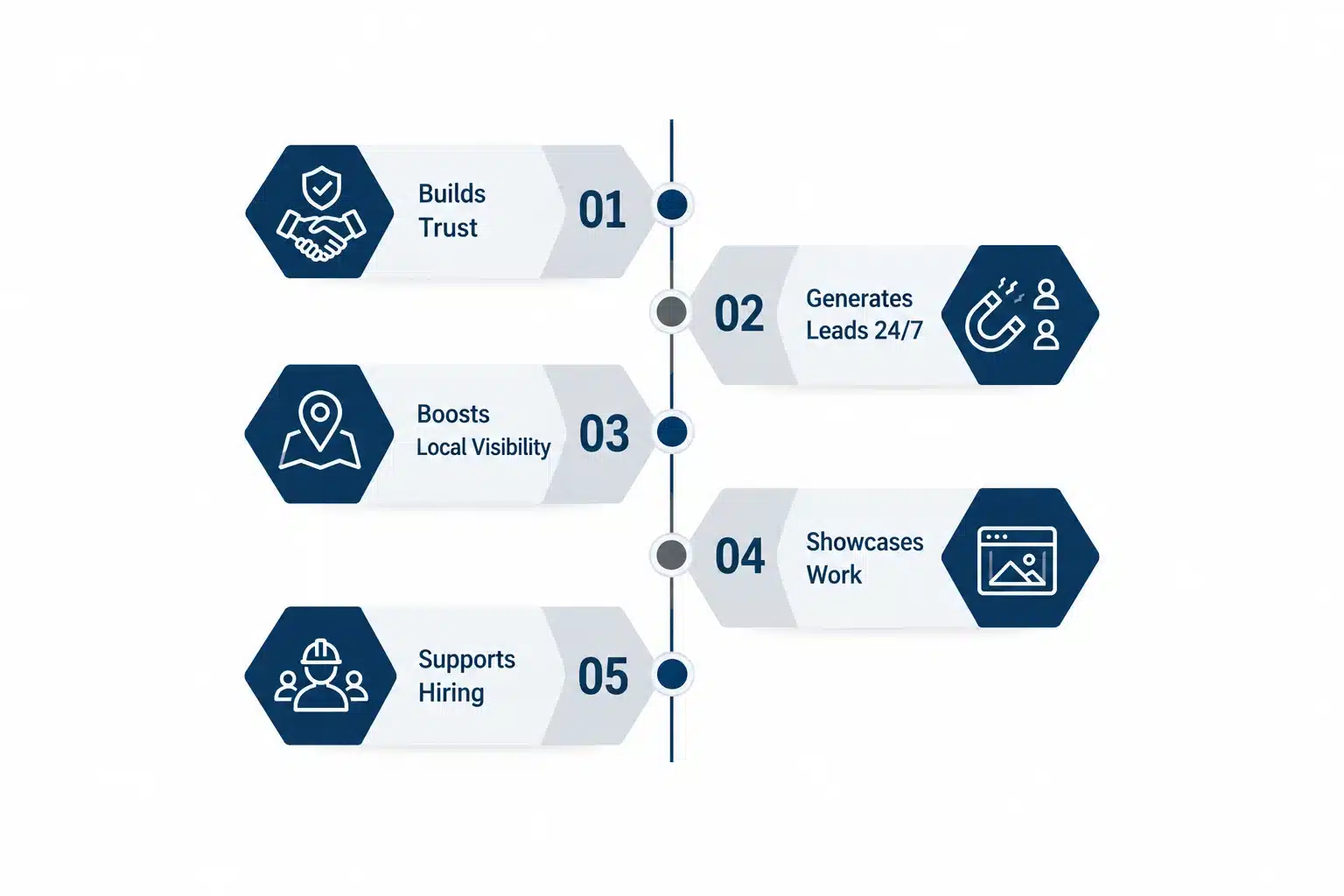
Builds Trust-
- Show professionalism through clear designs and messaging.
- Highlight certifications, safety standards and compliance.
- Display real project evidence to prove capability.
Generates Leads 24/7-
- Quote request forms that capture enquiries all day.
- Chatbots that answer basic questions instantly.
- Scheduling tools that make booking easier.
Boosts Local Visibility-
- Helps you rank for searches like “best contractor near me”.
- Strengthens your Google business profile.
- Improves visibility in local maps and service listings.
Showcases Work-
- Create a high-quality project portfolio that showcases your expertise.
- Embed before/after visuals to make improvements clear.
- Add descriptions that explain challenges and outcomes.
Supports Hiring-
- Make your company look stable and professional to job seekers.
- Show the scale and quality of your work.
- Attract skilled workers who want to join a reputable team.
Also Read: How Much Does it Cost to Build a Website? (Complete Guide)
Best Practices for Building a Robust Construction Website
Construction website design and development often involves best practices to make the site trustworthy, secure and scalable. When a potential customer visits your site, he/she is trying to make a quick judgement whether you are reliable and they can make a decision. The following steps help them act and take the next steps naturally.
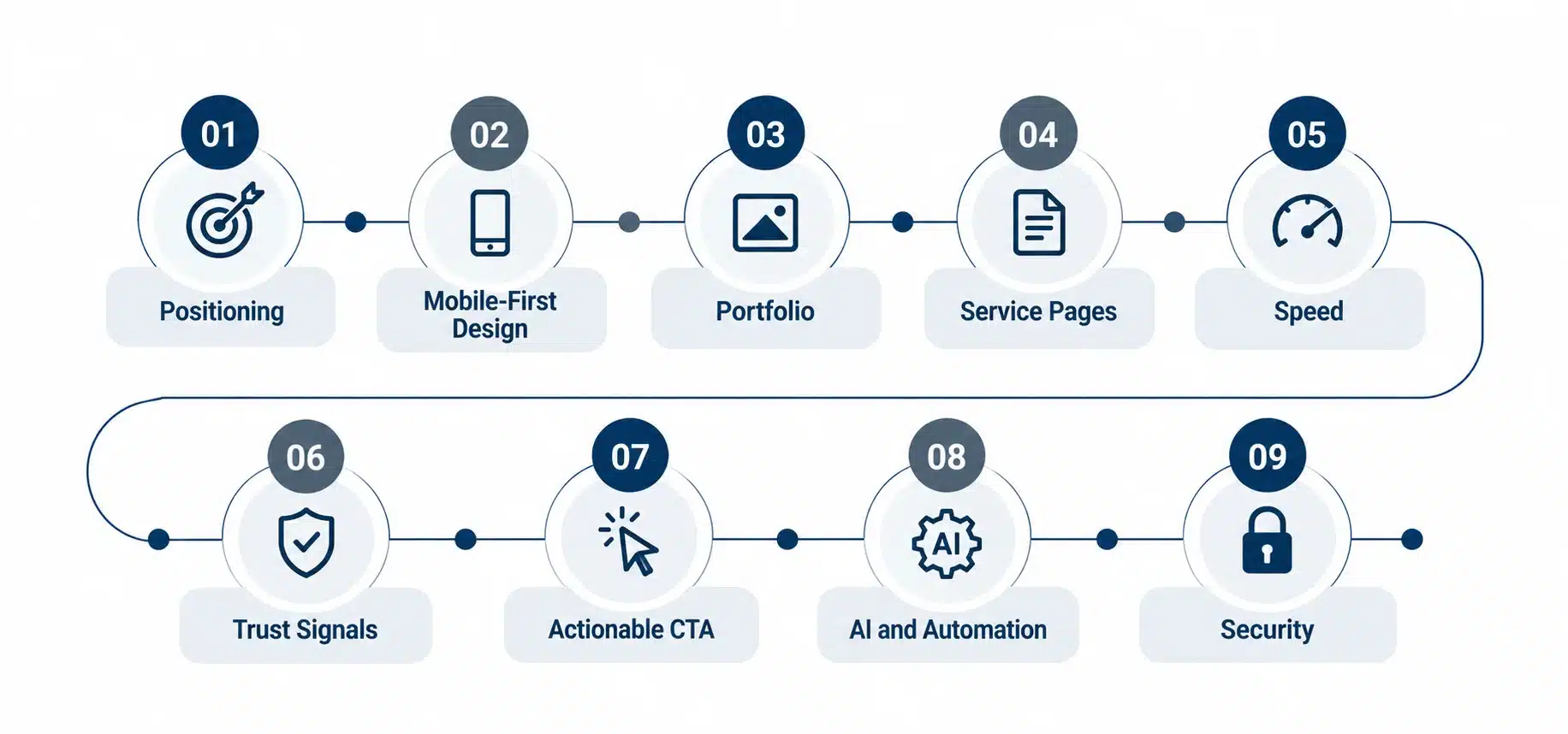
01. Start With Clear Positioning
Your homepage must tell visitors who you are, what you do and where you operate from. People don’t want to dig around multiple pages to understand the basics. Clear brand positioning helps them to decide whether your company fits their needs. When the messaging is direct and specific, it reduces confusion and makes your business feel organized.
02. Prioritize Mobile-First Design
Most people browse for contractor websites on their phones. This means that your site needs to load quickly, look clean and is easy to navigate on smaller screens. Mobile-first design is also about making sure that buttons are easy to tap, pages are not cluttered and the text is readable. When your website works flawlessly on mobile devices, it prevents users from bouncing.
03. Build a High-Impact Portfolio
Your portfolio is a deciding factor for your business growth. Clients want to see the kind of work you do and whether it aligns with their goals. A strong portfolio gives a clear sense of your capabilities, shows the kinds of projects you handle and the workmanship you have. Present your projects in a clear way so that builds confidence in your clients and help them foresee a positive collaboration with you.
04. Create Dedicated Service Pages
Each major service offered by your company must have a dedicated page. This makes your services easy to navigate and assist visitors in finding what they are looking for. It also improves your local search result visibility as search engines understand what you offer. Clear service pages give you the space to explain processes, clarify what is included and address common queries without overwhelming the visitors.
05. Optimize for Speed
A slow website feels dated and unprofessional. People expect pages to load quickly especially when they are browsing on their mobile phones. Keep your site lightweight as speed affects both user experience and search rankings. When your pages load instantly, users feel motivated to stay, explore and connect with you.
06. Add Strong Trust Signals
The construction industry is a high-stakes business and clients look for reassurance on your site even before they contact you in person. Trust signals make them feel that you are reliable, qualified and safe. These trust signals can reflect in your certifications, safety training, insurance
information and professional memberships you hold. When these details are easy to locate on your website, it feels like an established brand.
07.Use Clear, Actionable CTAs
Embed clear CTAs in your site wherever relevant. Visitors shouldn’t have to guess the next steps when they arrive at your website. Clear calls to actions will guide them to contacting you, scheduling a visit or requesting more information. When your CTAs are direct, and simple, the process feels more approachable. It also reduces friction between the construction company and the clients.
08.Integrate AI and Automation
Automation makes work easier for your team by letting go of the extra workload on them. Tools like chatbots, CRM workflows and automated lead intake makes your site more responsive. It also ensures that enquiries are captured, sorted and followed upon even when teams are busy with field work. This keeps the pipeline moving and also creates a better experience for your prospects.
09.Strengthen Security
Most clients share personal details when they contact you. These details could be addresses, phone numbers, or project information. This contains sensitive data and the website needs to protect that data. Strong security measures like SSL, secure forms and access control gives your website an edge as secure, professional and reliable.
Complete Framework for Building a High-Performing Construction Website
A modern construction website design must balance trust, clarity and technical strength. The below framework brings together all the important elements that help the construction website stand out in 2026.
Homepage Best Practices
Your homepage is the first place where visitors get their first impression about their business. It is where they get to know who you are, what you do and why they should trust you. A good homepage should feel organized, have a modern look and can be easily understood, even by mobile users.
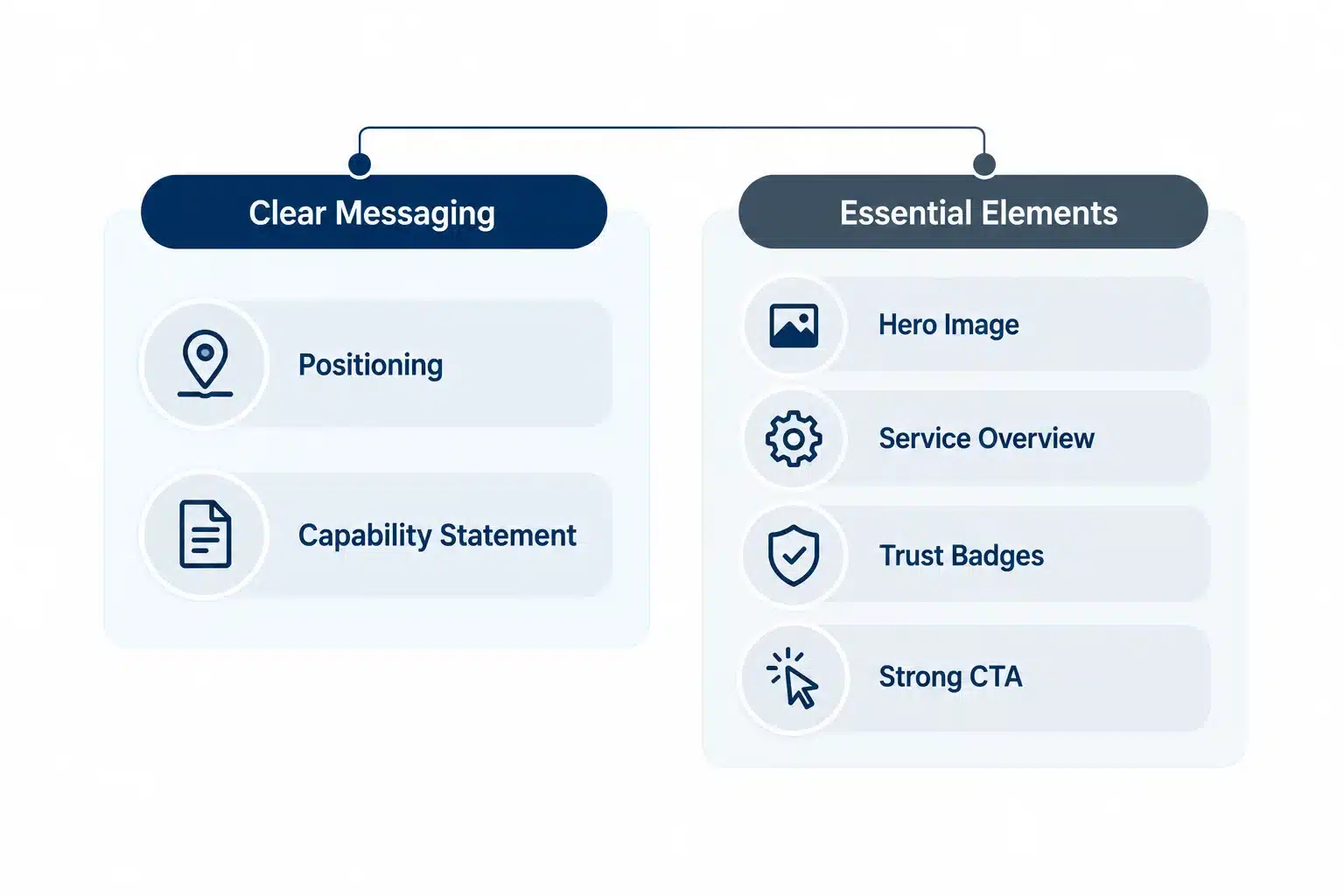
Clear Messaging
Location and Specialization -State your location and speciality upfront so that visitors can instantly understand whether you serve their area and handle their kind of projects.
Example: “Commercial remodelling in Phoenix, AZ”.
Capability Statement-Create a short and direct statement that will help visitors grasp the scale and scope of projects handled by you.
Example – “We build office interiors and retail spaces in Maryland”.
Essential Elements
Hero Image – Craft a strong visual that sets the tone of the website and showcases your expertise immediately.
Example: Use a clean and quality photo of a recently completed commercial space.
Service Overview – Create a list of services that will help visitors understand your core offerings.
Example: “Commercial construction”; “Renovations”.
Trust Badges – Display all certifications and memberships to validate your credibility.
Example: “OSHA certification or BBB accreditation”.
Strong CTA – Use clear calls to action to guide visitors who are looking to connect with your construction company.
Example: “Schedule a visit” or “Request a quote”.
UX Enhancements
Scannable Sections – Break content into clean and well-labeled blocks to help visitors absorb information better. Most people skim before they read the entire content so clear sections will help them understand your services, see your work and find what they need easily.
Example: “About’, “Services”, “Resources”.
Sticky Header – Make the navigation bar visible at all times with a sticky header. This will be visible even when they scroll down the page and make your site feel polished and reduce roadblocks for users who want to reach out quickly.
Example: Use a “Request a Quote” sticky header visible at all times.
Mobile-First Layout – Keep the layout mobile-friendly to help visitors who are browsing on smaller screens. Include tap-friendly buttons, readable text, and simple navigation without pinching or zooming.
Example: Large buttons, clean text and ample white spaces.
Also Read: What CMS do DC Based Organizations Like for Web Development?
Service Pages Built for Local SEO
Service pages are the backbone of construction website design and development. They help visitors understand exactly what you offer and they also help search engines evaluate where you should rank. When each service has its own page, it becomes easy for visitors to navigate your site and search engines to locate your site.
Why do they matter?
Dedicated service pages make it easy for visitors to find a specific service they are looking for. Instead of searching through different pages, they can directly jump to the page that is most relevant for them and explain the service in more detail.
Search engines reward websites that organize the services clearly. When each service has its own page, Google can match that page to local search results easily.
What to Include?
- Description- A clear overview helps visitors to understand the service you provide and whether it matches their needs.
- Process- Build confidence by outlining the steps as clients want to know what to expect and how you work.
- Tools and Technologies- List the tools and software you use to show professionalism and innovative capabilities.
- Local keywords- Include the names of city or region to help your page show up for local searches.
- FAQs- Answer the mostly asked common questions to reduce friction and save time for both you and your clients.
Technical SEO
- Schema Markup-Structured data helps Google understand your content better and this improves how your page shows in search results.
- Voice Search-Optimize for spoken queries especially when your audience uses platforms like Siri, Alexa, or Google Assistant.
- Trust Building Elements-Construction is a big investment and clients want reassurance before they reach out. Build your website in a way that they feel safe, confident and comfortable in reaching out to you.
Here are a few things that elevates the trust factor:
- Certifications and Compliance- Certifications like OSHA, ISO or similar show that you follow industry standards and take safety seriously.
- Social Proof- Real client feedback and testimonials builds confidence as it shows how you performed in the past.
- Google Reviews- These show your ratings and help visitors develop trust in you as a reputed company.
- Case Studies- Case studies are overview of your projects and these help visitors align their project needs with the work you delivered.
Modern Design and UX Trends for Construction Company Websites
In 2026, website design is moving towards simplicity, accessibility and interactive elements that help visitors understand your work faster. The website must feel clean, easy to use and built for clients who prioritize clarity.
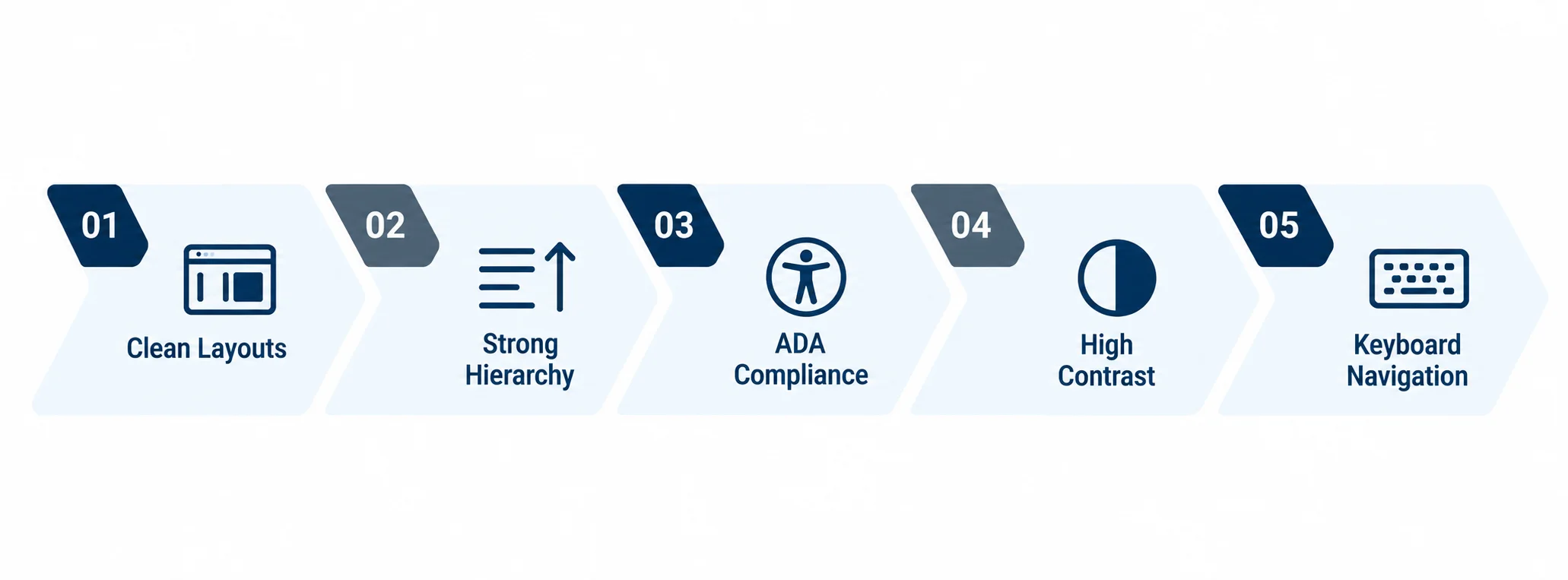
Clean Layouts – A minimalist layout removes unnecessary clutter so visitors can focus on your work, services and values. It also makes your brand look professional and organized.
Example- Keep ample white space and simple sections. Make real project photos stand out.
Strong Hierarchy – Use clear hierarchy to guide the visitor’s eye. Make the headings, subheadings and predictable structure clean so visitors can understand everything without reading every minute detail. This is helpful for busy clients who are comparing multiple websites at once.
Example – Large titles with small supporting text lead the reader down the page.
ADA Compliance – Make your website work for everyone including people with disabilities. This shows your company’s professionalism and inclusivity. Follow clean design principles so all users can understand what you are trying to convey.
Example – Create text alternatives for images so screen readers can describe those.
High Contrast – Good contrast makes text easy to read especially on mobile screens.Visitors stay longer when your content is readable without effort.
Example – Dark text on a light background provides clarity.
Keyboard Navigation – Some visitors rely on keyboard navigation instead of mouse. Easy navigation makes the site more usable and signals that you prioritize usability.
Example – Tab-friendly navigation lets users move through links easily.
Also Read: Web Design vs UIUX Design: The Main Difference
Technical Foundations: CMS, Hosting and Security
A construction website is as strong as the tech stack behind it. Good technical foundations keep the site reliable, stable and secure, all of which influences how clients perceive your business.
- CMS Choices– WordPress is the most popular CMS as it is flexible, easy to update and supported by a host of plugins.
- Custom Platforms– Custom platforms offer more control and are tailored to your exact needs but they require more maintenance and technical support.
- High-Performance Servers– Good hosting keeps your site fast, responsive and modern.
- CDN– A CDN distributes your content across multiple servers, so it loads quickly no matter where the visitor is located. This is helpful for nationwide contractors.
- Daily Backups– Backups protect your data from accidental loss, hacking or technical issues. You can restore your site quickly if something breaks.
- SSL– SSL encrypts your site and protects user data. Without this browsers show “not secure”.
- Malware Scanning– Regular scanning helps to identify harmful code before it becomes an issue later.
- Secure Forms– Encrypted forms protect user information like phone numbers, addresses and project details.
- Zero-Trust Practices– Limiting backend access reduces risks and keeps your site safe from internal mistakes and unauthorized access.
Lead Generation and Conversion Optimization
Your website must feel easy for prospects to understand and simple for teams to manage. When someone is interested they should be easily able to contact you without filling up endless information. And once they reach out the process must be seamless so that no lead slips through the cracks.
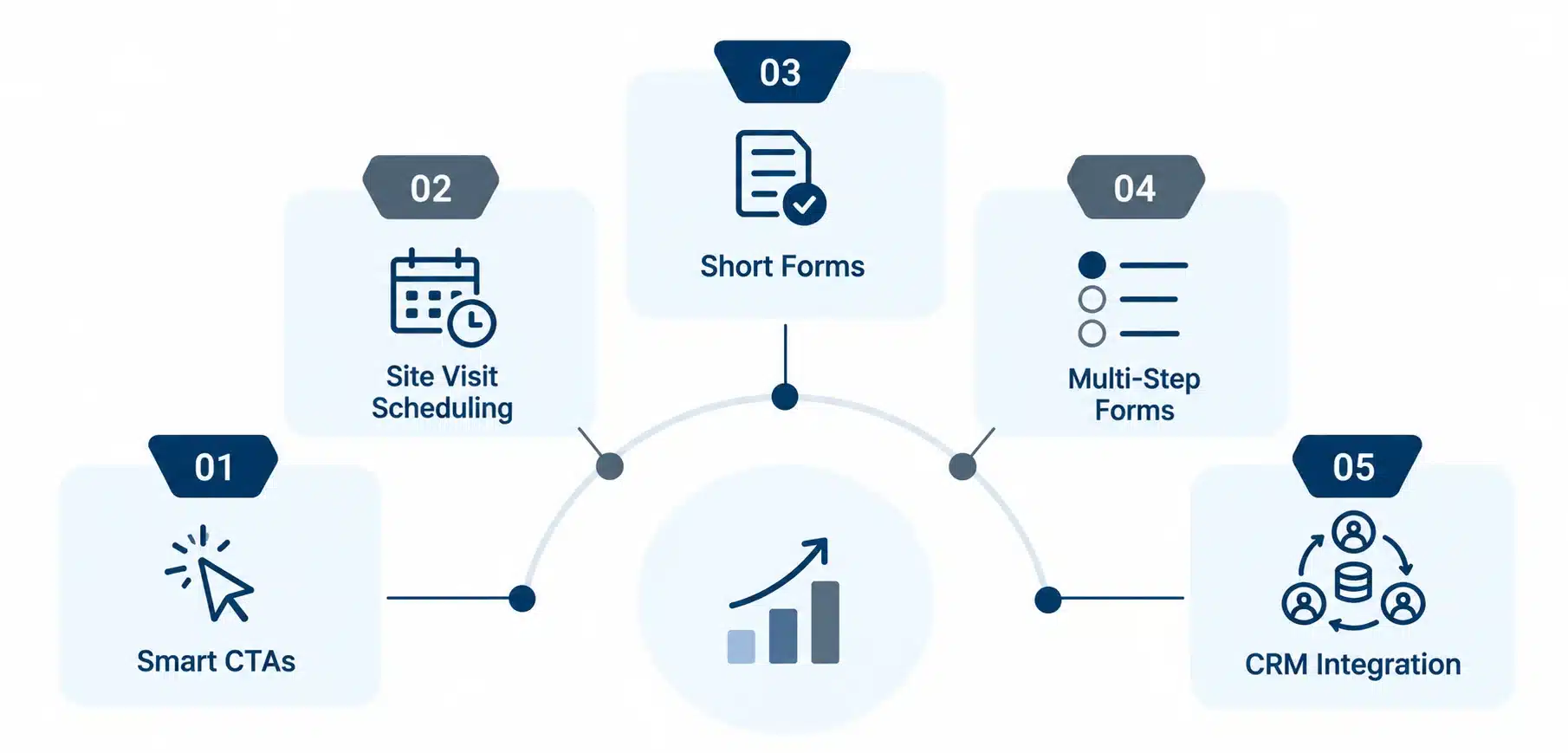
- Smart CTAs-A clear CTA button removes hesitation as people don’t want to guess how to reach you or scroll looking for a contact form. When the CTA is clear and visible, it nudges the visitor to take action.
- Site Visit Scheduling– Some visitors are serious and want to schedule an appointment with you. A smart scheduling tool makes the process feel organized and effortless. It also reduces back and forth emails and saves time for both parties.
- Short Forms– Short forms requesting minimal information respect the visitors’ time. When you ask for only essential details, clients are more willing to fill and submit the form. Just asking for a name, email, phone number and project type is sufficient for committed visitors.
- Multi-Step Forms– Multi-step forms break the process of collecting information into small pieces, making it less overwhelming. Create a stepwise process to collect further information to keep visitors engaged and reduce drop-offs.
- CRM Integration– Keep leads organized with automation so that no lead slips through the cracks. When enquiries flow directly into your CRM, your team can track follow-ups, assign tasks and maintain a clean pipeline, improve response time and boost consistency.
SEO Strategy for Construction Websites in 2026
If you are a construction company owner, it is important to note that SEO is not about chasing trends. It is more about finding the right local clients at the right time. Most people start their construction website search online, and your website visibility depends on how well the website communicates what you do and how trustworthy you are.
The following SEO checklist for new sites will help you rank higher and attract better qualified leads.
- On-Page SEO– This is the foundation of your search visibility. It signifies how search engines understand your content and match it with what people are looking for.
- Keywords– Keywords tell the search engines what your page is about. Use these in headings, descriptions and text bodies in a natural manner and do not stuff it awkwardly.
- Meta Tags-Meta tags and descriptions help search engines display your pages properly in search results. Clear and descriptive meta tags improve click-through rates as visitors know what they will find on your page.
- Internal Linking– Use internal links to help visitors navigate your site and help search engines understand how your pages relate to each other. By linking your service pages to relevant blogs or other resources strengthens site structure and keeps visitors engaged for long.
- Local SEO-Local SEO is critical for construction companies as most clients search within their city or region. Strong local optimization helps you to show up in “map results”, “near me” searches or local directories.
- Google Business Profile- Your Google business profile is the first thing visitors see. Keep it updated with photos, service areas and reviews to improve visibility and make your site look trustworthy.
- Local Citations– List your business on platforms like Yelp, and other local directories. Consistent citations establish your legitimacy and help search engines trust your business information.
- NAP Consistency– NAP (name, address, phone number) must match across all major platforms. Inconsistent details can create a negative impact on search engines and hurt your rankings.
- Content Strategy-Content is how you stay visible, relevant and helpful throughout. It shows search engines that your website is active and reinforces credibility regarding your craft.
- Blogs– Answer most commonly asked questions by adding blogs to increase search traffic. These blogs and thought leadership pieces are especially useful for homeowners or property managers researching timelines, cost or processes.
- Project Updates– Post updates on new projects to keep your site fresh and show ongoing activity. It also gives you more content to rank for especially when you are specific about location and project type.
- Industry Insights– Share insights about trends, materials, or regulatory positions as an expert. Clients trust construction contractors who stay informed.
Also Read: Web Development Challenges and How to Solve Them
Advanced SEO Methods for Stronger Authority
Stay ahead of the curve as search engines become more conversational and AI-driven. This technique also improves how your content is interpreted across answer engines and Generative engines.
- Semantic SEO– Semantic SEO focuses on answering questions naturally instead of forcing keywords. Use clear helpful explanations as search engines look for meanings to rank better.
- E.E.A.T– Experience, expertise, authoritativeness and trustworthiness are major ranking factors. Show credentials, certifications, case studies and real project evidence to establish authority.
- AI Search Optimization– AI-driven search tools rely on clear summaries and structured content. Use short intro paragraphs, and well-organized sections to help AI understand your pages and present them accurately.
Emerging Trends Shaping Construction Website Development
Construction websites are evolving quickly. Clients expect more clarity, transparency, and interactive ways to understand your work before they connect with you. AI is now reshaping construction website development by delivering personalized experiences, smarter automation, and faster decision‑making. The adoption of Artificial Intelligence AI is still in its early stages, but growing rapidly within the construction industry, with the AI market in construction projected to reach $13.5 billion by 2030.The below trends are becoming the “new normal” for what modern buyers are looking for.
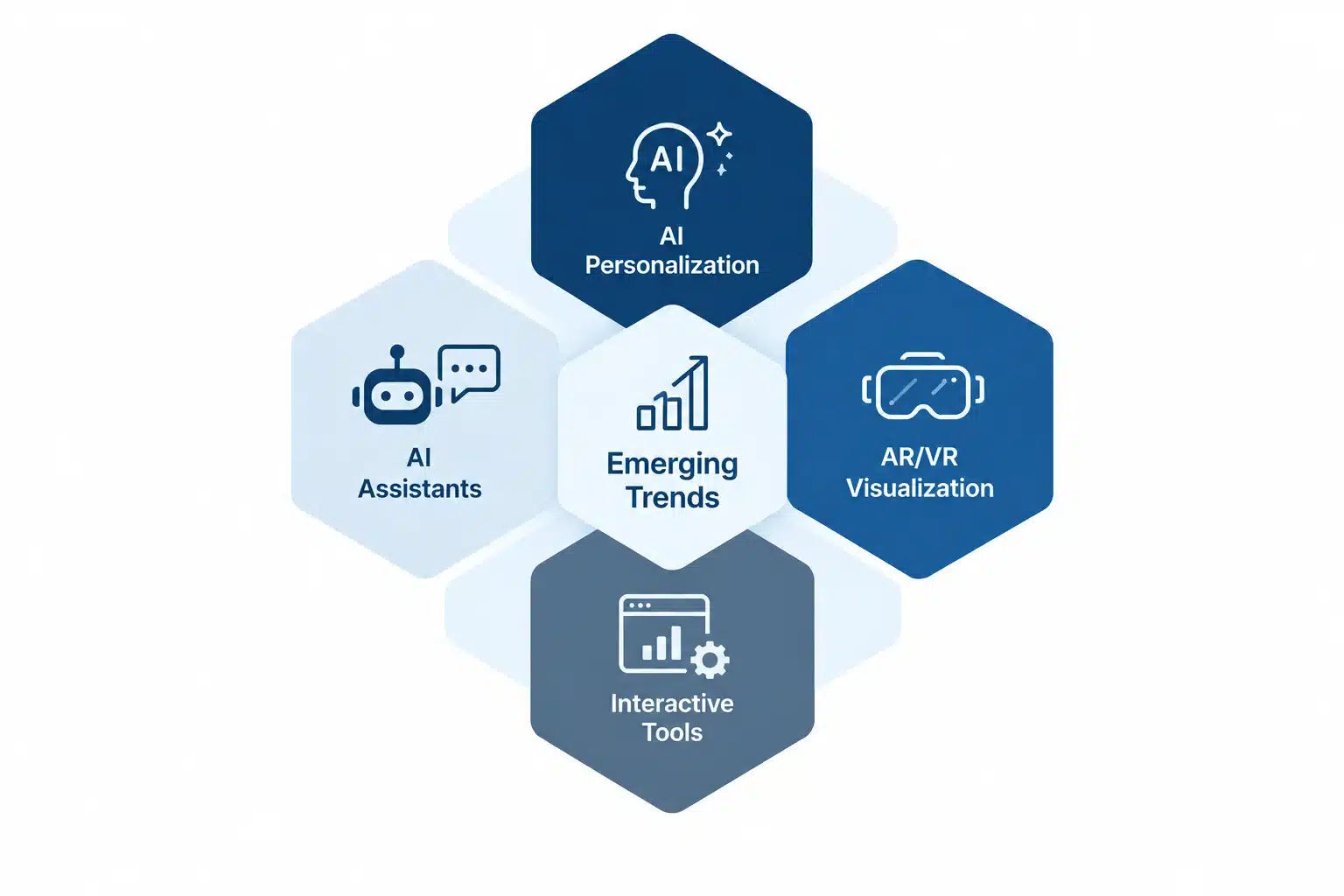
- AI Personalization – AI is starting to make construction websites feel more personal. Instead of generic pages, AI can adjust what visitors see based on their location, past behavior and browsing history. This helps them get the right information faster and make your website feel more relevant from the time they land on it.
- AR/VR Visualization – Clients want to understand what their unfinished projects will look like before the actual work begins. AR/VR makes this possible with virtual walkthroughs and 3D models. Visitors can explore a virtual space in real-time and understand the materials, layouts and flow. These tools also make the proposals feel more deliverable.
- Interactive Tools – Using interactive tools, prospects can make instant decisions without needing to call you for every detail. Cost estimators give a rough idea of the budget and materials calculators help clients understand quantities and pricing. These tools reduce friction and keep your visitors engaged longer.
- AI Assistants – AI assistants lighten the repetitive work of your teams. Automated chatbots answer common questions instantly, lead qualification tools gather basic project details and CRM integration ensures every lead is captured and organized.
Conclusion
In 2026, one thing is obvious. Your construction website is the platform where visitors decide whether they can trust you enough to take the conversation further. They judge your clarity, speed, professionalism and experience via your website long before they actually hit the “Connect” button.
To make your construction website visible, prioritize clarity, speed, consistency, trust and proof. This ensures that your visitors understand what you do, feel safe choosing you and know that you can actually deliver. Add modern elements like AI personalization, AR/VR previews, interactive tools and automated lead handling to make the website a living part of your business.
Partner with an experienced web design and development company to bring it the technical expertise and strategic thinking to make your website support your business. The right partner will turn your project into compelling stories, imbibe the best practices of SEO, design, content and functionality. Moreover, they will make your website adaptable for all screen sizes and make it your strongest digital asset.
Frequently Asked Questions
Q1. What makes a construction website high-performing in 2026?
A high‑performing construction website in 2026 loads fast, shows clear services, displays real project evidence, and uses modern UX, AI personalization, and strong local SEO to help clients trust you instantly.
Q2.Why is local SEO important for construction companies?
Local SEO helps contractors appear in “near me” searches, map results, and city‑specific queries. It improves visibility for local clients who are actively searching for builders, remodelers, or contractors in their region.
Q3.What should a construction company include on its homepage for better conversions?
A strong homepage includes clear positioning, service overview, location, trust badges, project photos, and a visible CTA like “Request a Quote” or “Schedule a Visit,” helping prospects decide quickly.
Q4.How do dedicated service pages improve construction website rankings?
Dedicated service pages help search engines understand each offering clearly, match pages to local intent, and improve rankings for specific services like “commercial remodeling,” “home renovation,” or “office interior construction.”
Q5.What trust building elements increase client confidence on a construction website?
Certifications like OSHA, ISO, project case studies, testimonials, Google reviews, safety standards, and real project photos make your construction business look credible and dependable.
Q6.How does AI improve modern construction websites?
AI enhances personalization, automates lead intake, powers chatbots, improves content summaries for answer engines, and helps visitors get relevant information faster based on their behavior and location.
Q7.What emerging technologies are shaping construction website development in 2026?
AR/VR walkthroughs, interactive cost calculators, AI assistants, and smart scheduling tools make construction websites more engaging, transparent, and helpful for clients evaluating contractors online.