 Design
 App Development
 Web Engineering
 AI Services
 Cloud
 Staffing
 Startups
 Health / Fitness
 Education
 Social
 Nonprofit
 Fintech
 Construction
 Logistics
 Government
 Travel/Hospitality
 HR Software
 About Simpalm
 Our News
 Client Testimonials
 Careers
 Our Blog
 Awards
 Resources
 Information
Key Takeaways
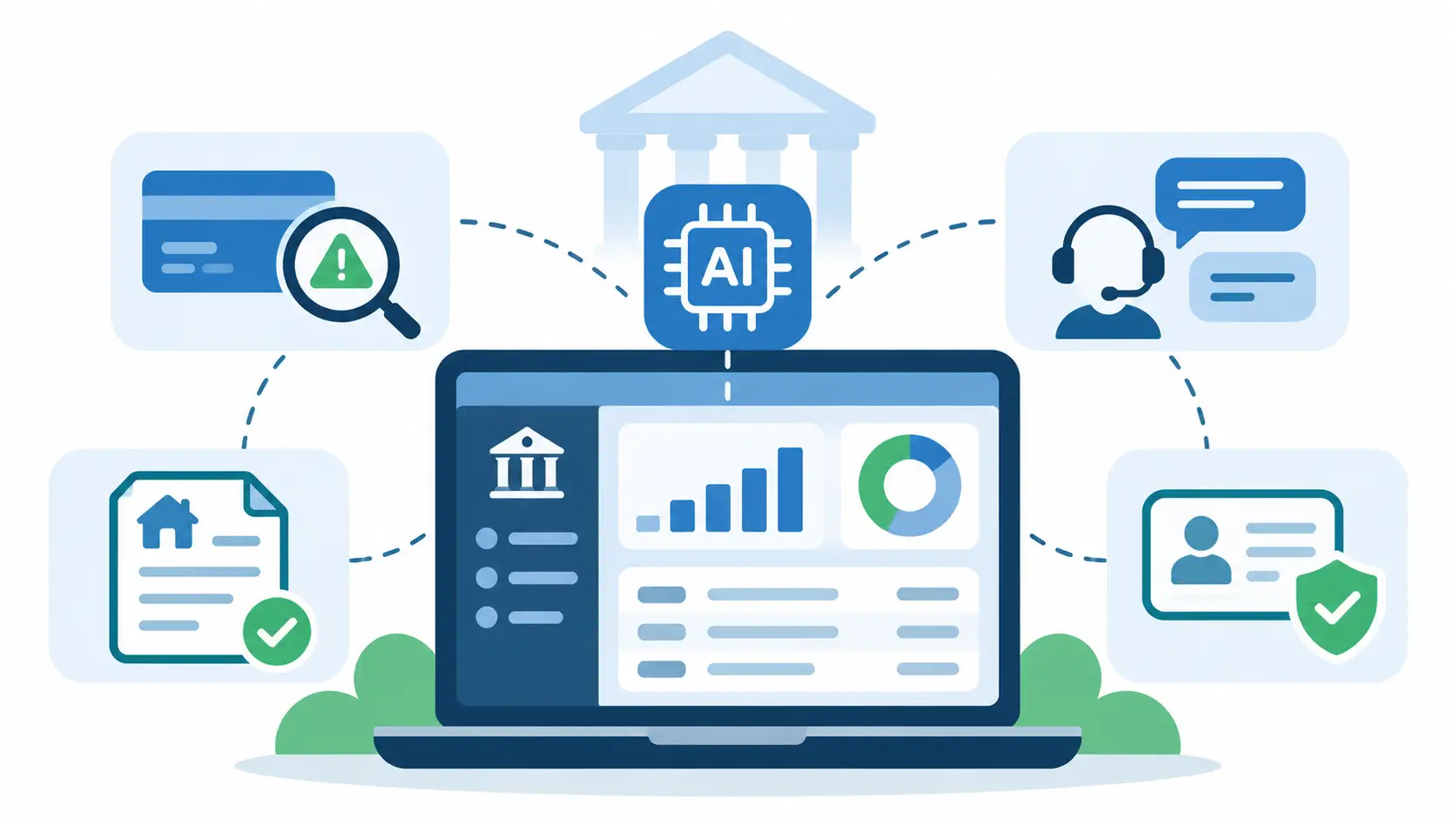
- AI helps banks improve operational efficiency by automating repetitive tasks across customer service, lending, fraud detection, onboarding, and back-office operations.
- Machine learning, generative AI, and agentic AI support different banking workflows, from detecting suspicious transactions to preparing loan files for review.
- Banks can reduce processing time, improve fraud detection, lower service costs, and deliver more personalized customer experiences through AI adoption.
- Successful AI implementation requires explainable decisions, reliable data, bias monitoring, strong security, and human oversight.
- Banks should start with high-volume, measurable workflows, test AI through controlled pilots and scale gradually as they demonstrate results.
_________________________________________________________________________________________
Banking operations involve thousands of daily decisions, from verifying customer identities and processing loan applications to detecting fraud and managing financial records. As customer expectations rise and financial threats become more sophisticated, manual processes and traditional systems are becoming harder to scale.
This is where artificial intelligence (AI) is changing how banks operate. By analyzing financial data, identifying unusual patterns, and automating repetitive tasks, AI helps banks improve efficiency and make faster decisions. Its adoption is already widespread. The European Banking Authority reports that 92% of EU banks are deploying AI, while McKinsey estimates that generative AI could create $200 billion to $340 billion in annual value for the banking industry.
However, successful AI adoption involves more than automating routine tasks. Banks must also address data security, regulatory requirements, system integration, and human oversight. This article explores the key applications of AI in banking, its benefits and challenges, real-world examples, and how financial institutions can implement it effectively.
What AI in Banking Really Means for Day-to-Day Operations
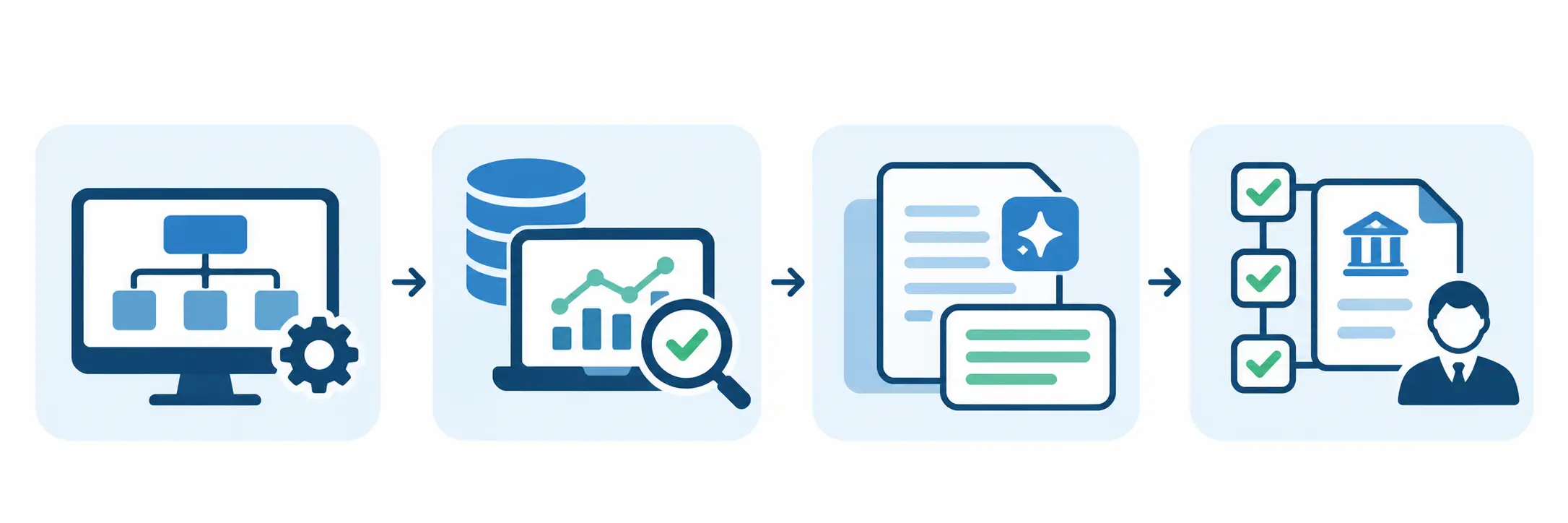
So what is AI in banking? In simple terms, it is the use of machine learning, natural language processing, and generative models to analyze data, make predictions, and automate work across a bank. The European Banking Authority describes AI as machine-based systems that operate with varying levels of autonomy and adapt to the data and context they receive. In practice, that covers everything from a fraud model scoring card payments to an assistant that summarizes a loan file for an underwriter.
It helps to separate AI from the automation banks have used for years. Traditional rules-based software follows fixed instructions and breaks when something unexpected appears. AI systems learn patterns from data, which lets them handle variation, ambiguity and volume that rigid rules cannot. The table below shows how the main technology layers differ and where each one appears in banking operations.
| Technology layer | What it does | Typical banking example |
| Rules-based automation | Executes fixed steps on structured inputs | Routing a payment instruction to the correct queue |
| Machine learning | Finds patterns and predicts outcomes from historical data | Scoring a transaction for fraud risk |
| Generative AI | Creates summaries, drafts and answers from large volumes of text | Summarizing a loan file or drafting a servicing response |
| Agentic AI | Plans and completes multi-step tasks with human oversight | Gathering documents, checking them and preparing a case for review |
Most banks run all four layers at once, so knowing which tool fits which job matters more than chasing the newest capability.
Where AI Delivers Value First: Six Key Applications in Banking
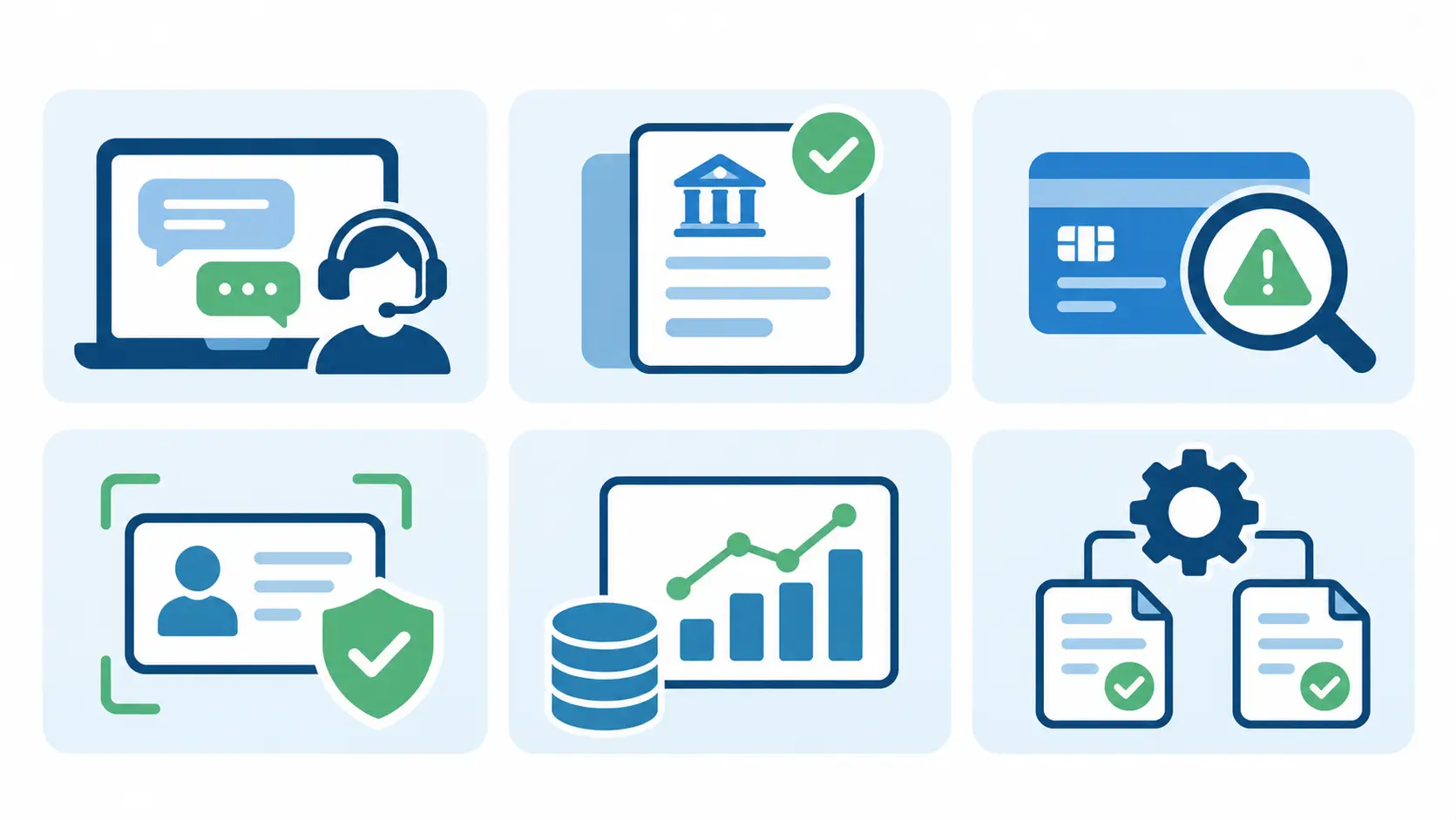
AI is being applied across several areas of banking, from customer-facing services to internal risk management and financial operations. Banks use it to understand customer queries, assess loan applications, identify suspicious transactions, verify customer identities, manage liquidity, and automate routine processes. Each application addresses a specific operational need while helping financial institutions make faster, more informed decisions.
The following six applications show how AI is improving these banking functions and where it delivers the most practical value.
01. AI-Powered Customer Service and Virtual Assistants
Customer service is one of the most visible applications of AI in banking. AI-powered virtual assistants help banks handle routine customer requests across mobile apps, websites, and messaging channels. Unlike traditional scripted menus, these assistants understand natural language, retrieve information from internal knowledge bases, and guide customers through common banking transactions.
Their role is to manage repetitive inquiries so service teams and relationship managers can focus on conversations that require human judgment and empathy. Banks can use these assistants to improve customer support in three key ways:
- 24/7 customer support: Customers can get answers about account balances, cards, and payments without waiting for a service representative.
- Personalized financial guidance: Assistants analyze spending patterns to surface relevant insights and suggest products that align with customer goals.
- Context-aware escalation: When a request requires human assistance, the conversation can be transferred to a service representative with the relevant context attached.
02. AI-Driven Loan Processing and Credit Risk Assessment
AI helps banks make lending workflows faster by reducing the manual effort involved in reviewing applications and assessing credit risk. Credit teams often need to examine financial histories, verify documents, and compare information from multiple sources. AI can automate much of this initial analysis and prepare a structured application summary for review.
For example, AI systems can extract information from application documents, compare reported income against financial records, identify inconsistencies, and generate a preliminary risk assessment. This helps analysts process applications more efficiently while maintaining a consistent review process.
Common applications include:
- Automated document intake: Models extract relevant information from pay stubs, bank statements, and tax forms, reducing manual data entry.
- Income and data verification: Systems flag differences between the information applicants provide and the supporting financial documents.
- Preliminary credit risk assessment: AI prepares structured risk summaries that help analysts evaluate applications before making a decision.
Because lending decisions directly affect customers, AI should support rather than replace human decision-making. Banks must also apply explainability and fairness checks to understand how models influence credit assessments.
03. AI for Fraud Detection and Anti-Money Laundering (AML) Monitoring
AI strengthens fraud detection and AML monitoring by helping banks identify suspicious activity across large volumes of transactions. Traditional rule-based systems can detect known fraud patterns, but they may generate too many false alerts and struggle to identify unfamiliar tactics.
Machine learning models improve this process by establishing behavioral patterns for individual customers. These patterns can include typical transaction amounts, locations, timing, and frequency. When a transaction or activity deviates from the established pattern, the system can flag it for investigation.
AI can also analyze connections between transactions across multiple accounts to identify coordinated fraud or potential money laundering patterns that individual alerts may not reveal. This helps banks direct compliance resources toward higher-risk activity.
Key applications include:
- Reduced false positives: Behavioral analysis helps investigators spend less time reviewing legitimate transactions flagged by static rules.
- Faster suspicious activity detection: AI identifies unusual patterns and brings potentially high-risk activity to investigators’ attention sooner.
- More focused investigations: Compliance teams can prioritize cases that require closer examination instead of manually reviewing large volumes of alerts.
04. AI-Powered Customer Onboarding and KYC Verification
AI can automate several steps in customer onboarding and Know Your Customer (KYC) verification, which typically involve document collection, identity checks, and risk screening. These processes follow a repeatable sequence, making them suitable for AI-assisted automation.
Banks can use AI to verify identity documents, compare a customer’s face with their ID photo, screen names against sanctions and adverse-media sources, and identify applications that need additional review. Automating these checks helps reduce manual processing and makes onboarding faster for customers.
The European Banking Authority identifies remote onboarding, digital identification, and user verification as common AI use cases in European banking. In practice, AI supports onboarding through:
- Identity verification: Automated checks compare identity documents and biometric information in real time.
- KYC and risk screening: Systems screen customer information against sanctions lists and adverse-media sources.
- Exception handling: Applications with unclear or inconsistent information are routed to compliance specialists with the available evidence assembled for review.
Human oversight remains important, particularly when identity information is unclear or a customer requires additional verification.
05. AI in Treasury and Liquidity Management
AI helps treasury teams improve how banks forecast liquidity, plan funding, and manage financial resources. These decisions depend on changing cash flow patterns, funding requirements, and market conditions. Predictive models can analyze financial data to identify trends and help teams prepare for changing liquidity needs.
This capability becomes especially useful during volatile periods, when funding costs and cash requirements can shift quickly. AI expands the analytical capacity available to treasury teams, but human judgment remains central to financial planning and decision-making.
Banks can apply AI in treasury and liquidity management through:
- Short-term liquidity forecasting: Predictive models estimate cash requirements across different business units.
- Scenario modeling: AI-supported analysis helps teams evaluate capital positions under different economic conditions.
- Cash flow pattern detection: Analytics identify changes in funding behavior that may signal emerging liquidity concerns.
06. AI-Driven Back-Office Automation and Payment Processing
Back-office and middle-office operations involve large volumes of repetitive work, including document processing, reconciliation, compliance reporting, and payment handling. These workflows are strong candidates for AI automation because many tasks follow structured processes and can be measured through processing time, error rates, and manual effort.
The European Banking Authority also identifies document summarization and classification as common internal AI applications. Banks can use these capabilities to extract information from documents, organize records, route information between systems, and monitor payment flows across channels.
Some institutions are also moving from end-of-day batch matching toward continuous reconciliation. This allows discrepancies to surface earlier and reduces the need for manual rework.
Key applications include:
- Automated document processing: AI extracts structured information from contracts, statements, and forms.
- Continuous reconciliation: Systems match records throughout the day rather than relying on a single overnight batch process.
- Payment processing optimization: AI identifies discrepancies and enriches payment data to improve straight-through processing.
How Leading Banks Are Using AI Today?
Examples of artificial intelligence in banking are easier to evaluate when they come from named institutions and published analysis. The table below draws on McKinsey’s review of how banks are applying generative AI, along with the EBA’s monitoring of the European market. Several of these deployments were described as reported or early-stage, so they are best read as signals of direction rather than guaranteed outcomes.
| Institution | Where AI is applied | Reported result |
| Morgan Stanley | An assistant built on GPT-4 helps wealth managers search an internal knowledge base and summarize client meetings | Faster answers and automated follow-up emails for tens of thousands of advisors |
| Goldman Sachs | An AI-based tool automates software test generation | Reduced manual effort in a labor-intensive engineering task |
| Citigroup | Generative AI reviewed 1,089 pages of new US capital rules | Faster assessment of regulatory impact |
| A leading bank (unnamed) | Generative AI drafts investment briefs | Brief production time cut from nine hours to roughly 30 minutes |
| EU banking sector | General-purpose and agentic AI in consumer-facing processes | 55% of surveyed banks already use it, mostly for fraud alerts and service support |
A pattern runs through these examples. The strongest results appear where AI handles reading, summarizing and pattern-matching at scale while a skilled person still owns the outcome. That pairing is repeatable, which is why it anchors the rollout approach below.
The Benefits of AI in Banking, Measured in Operational Terms
The benefits of artificial intelligence in banking are easiest to defend when they are tied to operational measures rather than general promises. The advantages of AI in banking fall into five groups, and each one can be tracked with a specific metric.
- Lower cost to serve: Automating routine inquiries and document handling reduces the staff hours spent per customer or per transaction.
- Faster processing: Tasks such as loan intake, onboarding and reconciliation move from days or hours to minutes, as the investment brief example above illustrates.
- Sharper risk management: Behavioral models detect fraud and credit risk earlier and with fewer false alerts than static rules.
- Stronger customer relationships: Personalized insights and faster responses improve satisfaction and make it easier to recommend products that actually fit.
- More capacity for skilled staff: When AI absorbs repetitive work, analysts, advisors and compliance officers can focus on judgment-heavy cases.
Banks that capture these benefits define the target metric before they build anything. A fraud team might track false-positive rates, while an onboarding team tracks completion time and abandonment. Clear measures turn AI from an experiment into an accountable operational program.
Challenges of AI in Banking and How to Fix Them
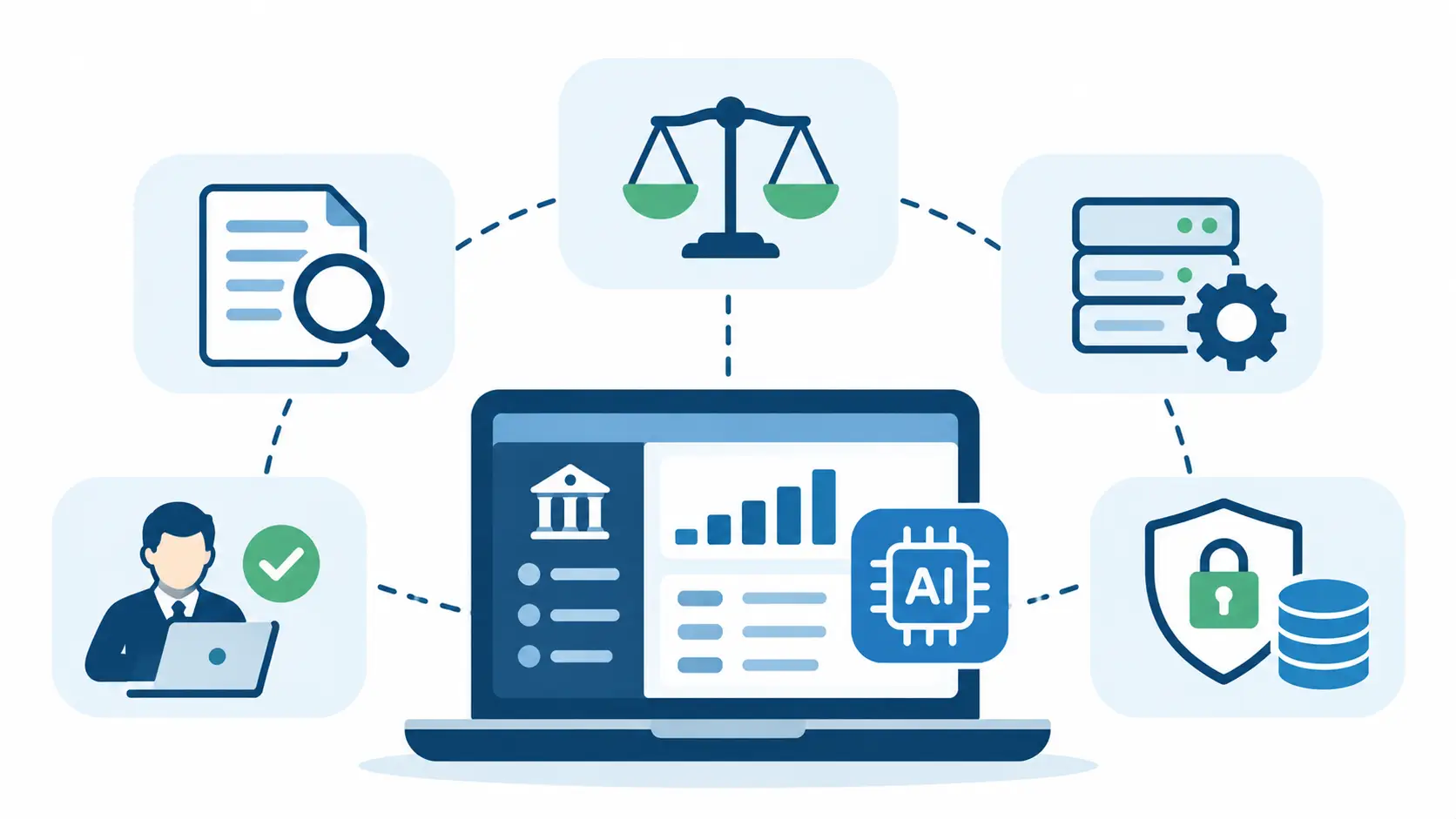
Banks operate in one of the most tightly regulated sectors of the economy, so every AI deployment must meet high standards for accountability and data protection. The European Banking Authority highlights reliance on third parties, data quality, human oversight, consumer explanations and the risk of hallucinations as key concerns. The five challenges below are the ones banking teams most often face, each paired with a practical fix.
01. Can You Explain Every Automated Decision?
Challenge – Regulators and internal audit teams expect clear visibility into how models reach conclusions, especially in lending. Complex models can be difficult to interpret, and the EU AI Act classifies AI used to evaluate individual creditworthiness as high risk.
Fix – Choose models and tooling that support explainability, document which variables influence outcomes and keep an audit trail for each decision. Require human review for any decision with material consequences for a customer.
02. Is Your Data Fair and Well Governed?
Challenge – Historical data can carry patterns that unintentionally reinforce bias in lending or product recommendations. Poor data quality weakens even sophisticated models.
Fix – Validate training datasets, monitor models for bias and performance drift, and set up a governance framework that assigns clear ownership for data and model decisions.
03. How Do You Connect AI to Legacy Systems?
Challenge – Many banks still run core platforms that were never designed for modern AI tools, which makes integration slow and costly.
Fix – Use APIs and an integration layer so AI services can read from and write to existing systems without a full replacement. Phase the work so each stage delivers value on its own.
04. How Do You Protect Sensitive Financial Data?
Challenge – AI systems often need access to large datasets and real-time operational information, which can widen the attack surface. The models themselves can also become targets.
Fix – Apply strict access controls, encryption and continuous monitoring from the design stage. Simpalm’s guide to securing a fintech app covers the practices and compliance requirements in more depth.
05. Will Your Teams Actually Use It?
Challenge – A well-built tool fails if employees do not trust it or understand its limits.
Fix – Involve frontline users early, train them on what the system can and cannot do, and communicate openly about how AI changes their roles.
Why Banks Can No Longer Treat AI as Optional
The role of artificial intelligence in banking has expanded because the pressure on banks comes from several directions at once. Customers expect the speed of a digital-first experience. Fraudsters use increasingly sophisticated tools. Margins are tight, and manual processes are expensive to run and slow to scale. AI addresses all of these pressures at the same time, which is why it has become part of core strategy rather than a side project.
The importance of AI in banking shows up in four areas:
- Productivity at scale: Generative AI is expected to deliver most of its banking value through productivity, and McKinsey notes that the biggest absolute gains are in corporate and retail banking.
- Rising customer expectations: People now expect personalized insights, instant answers and a smooth handoff between a virtual assistant and a human advisor.
- Escalating fraud and compliance demands: Static rules struggle to keep up with changing fraud tactics and growing monitoring obligations.
- Pressure on cost to serve: Routine inquiries, document checks and reconciliations consume staff time that could go toward complex customer needs.
Adoption alone does not guarantee results, however. Banks that scale AI successfully tend to pair it with strong governance and a realistic view of regulatory and security demands, a theme explored further in Simpalm’s guide to fintech challenges and solutions.
A Practical Rollout: How to Start Without Overreaching
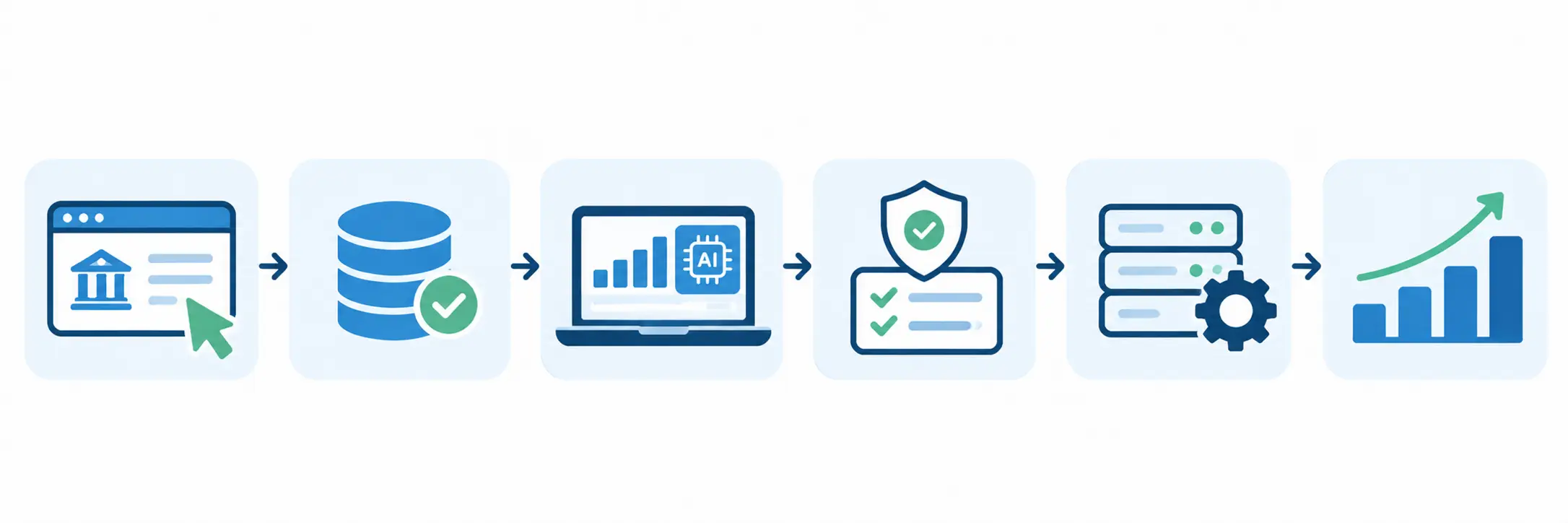
A successful program rarely begins with the most ambitious idea. It begins with a focused use case, a clear owner and a defined measure of success. The steps below offer a sensible sequence for banks of any size.
- Choose a high-volume, measurable process – Look for work that is repetitive, rules-heavy and easy to quantify, such as document intake, reconciliation or routine customer inquiries.
- Check data readiness – Confirm that the data the use case needs is accessible, accurate and permitted for this purpose before building anything.
- Pilot with human review – Run the system alongside your existing process, compare results and keep a person responsible for every output that reaches a customer.
- Put governance in place early – Define who approves models, how performance is monitored and what triggers a rollback.
- Decide whether to build, buy or partner – Weigh the competitive value of each capability against speed, cost and risk, and plan how it will integrate with existing systems.
- Scale in stages – Expand to adjacent workflows once the first one meets its targets, reusing data pipelines, controls and training.
Starting with low-risk administrative work applies well beyond finance. Simpalm’s article on AI in healthcare operations makes the same point for another regulated industry, where scheduling and routine workflows offer a safer first step than clinical decisions. In banking, back-office and service workflows play that role.
The Future of AI in Banking
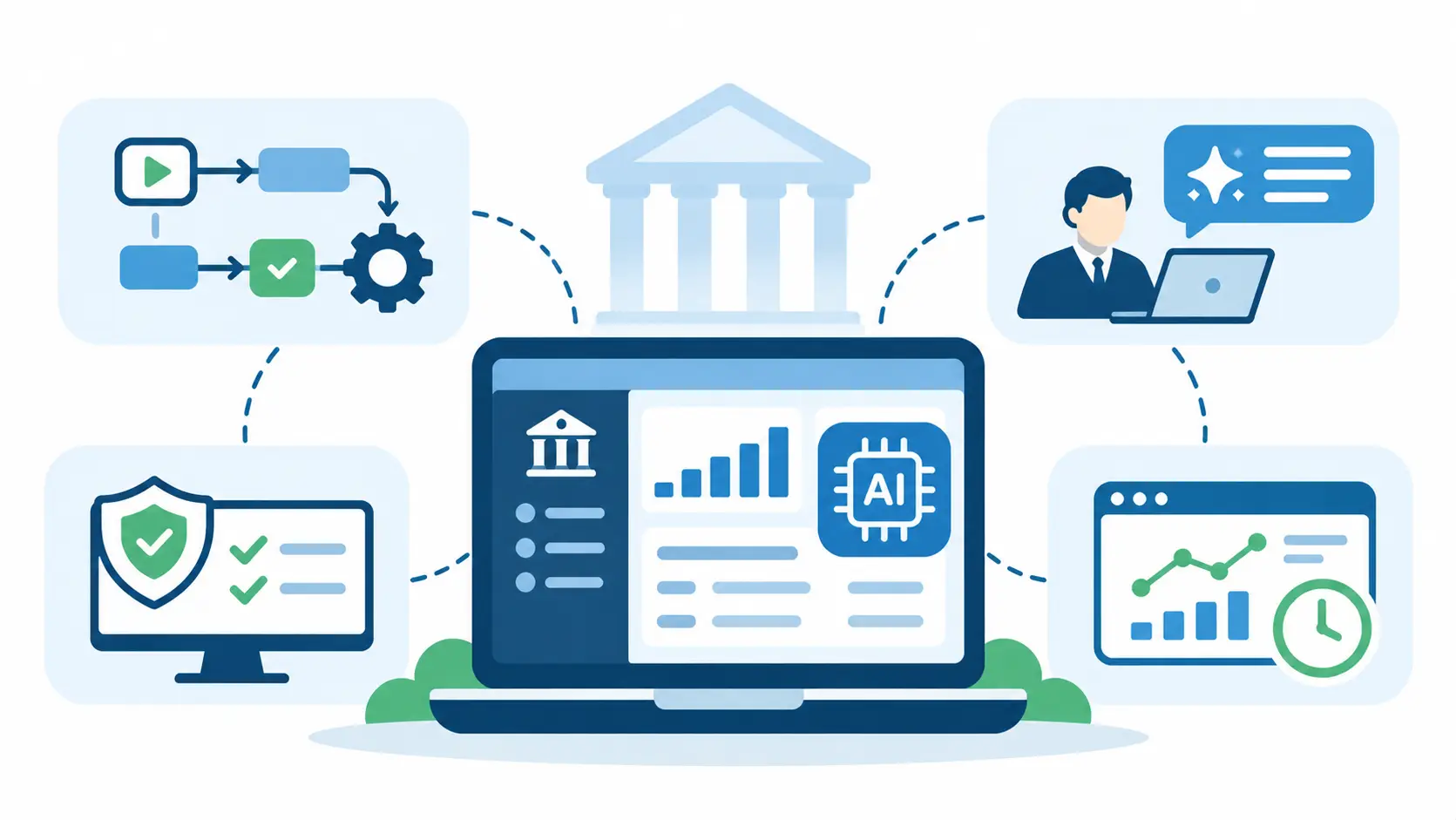
The future of AI in banking points toward systems that do more than answer questions. The EBA already tracks the spread of agentic AI in the European market, and banks are exploring agents that can gather documents, check them against policy and prepare a case for review. At the same time, supervisors are paying closer attention to how banks govern these tools. The table below summarizes the shifts most likely to shape operations in the coming years.
| Trend | What changes | What it means for banks |
| Agentic workflows | AI completes multi-step tasks under supervision | Processes such as onboarding and case preparation become faster and more consistent |
| AI copilots for staff | Assistants help advisors, analysts and engineers | Productivity gains spread across the whole organization |
| Closer supervision | Regulators examine AI risk and resilience more closely | Governance and documentation become a competitive requirement |
| Real-time decisioning | Models act on live data | Fraud response, pricing and liquidity management become more dynamic |
Adjacent areas of finance will change too. Investing and algorithmic trading platforms depend on real-time data and fast decisions, and Simpalm’s trading app development guide explains what it takes to build them responsibly. The banks that benefit most will treat AI as a core operating discipline rather than a series of disconnected projects.
Final Thoughts
It is tempting to view AI in banking as a story about efficiency, but the larger story is about trust. Customers hand banks their money and their data on the assumption that decisions will be accurate, fair and secure. AI can strengthen that trust by catching fraud earlier, answering questions faster and reducing errors. It can also erode that trust quickly if it is deployed without explainability, oversight and care.
That is why the most successful banks treat AI as an operating discipline. They pick use cases that matter, measure outcomes honestly, build governance alongside the technology and keep skilled people accountable. The institutions that do this well will not simply run leaner. They will earn the confidence to respond to change faster than their peers.
If your team is exploring AI-powered banking or fintech solutions and wants a technical partner to help shape the roadmap, Simpalm’s fintech AI specialists are happy to talk through your goals.
Frequently Asked Questions
Q1. What is AI in banking?
Ans. AI in banking refers to the use of machine learning, natural language processing and generative models to automate tasks, analyze data and support decisions across a bank. It covers customer-facing tools such as virtual assistants and personalized recommendations, as well as behind-the-scenes systems for fraud detection, credit assessment, onboarding and reconciliation. The common thread is that these systems learn from data and improve over time, which allows banks to handle more volume and complexity than fixed rules can manage.
Q2. How does AI help banks?
Ans. AI helps banks by taking over repetitive, data-heavy work and by surfacing insights that people would struggle to find manually. In practice, this means faster loan processing, fewer false fraud alerts, quicker onboarding and round-the-clock customer support. It also gives staff more time for complex cases that require judgment. The most effective deployments keep a human responsible for important decisions while the AI handles the reading, matching and pattern detection that slows teams down.
Q3. What are the main benefits and advantages of AI in banking?
Ans. The main benefits are lower operating costs, faster processing, stronger risk detection, better customer experiences and more capacity for skilled employees. For example, one bank reportedly moved toward cutting the time to produce an investment brief from nine hours to about 30 minutes using generative AI.
Q4. What are the biggest risks of using AI in banking?
Ans. The main risks include opaque decision-making, biased outcomes from flawed data, security exposure, reliance on third-party providers and inaccurate outputs from generative models. Because banks make decisions that directly affect people’s finances, regulators expect transparency, fairness and strong oversight. Banks manage these risks through explainable models, bias monitoring, strict access controls, human review of consequential decisions and clear governance over who approves and monitors each system.
Q5. Will AI replace bank employees?
Ans. AI is more likely to change roles than to eliminate them outright. It automates repetitive tasks such as data entry, document checks and routine inquiries, while people remain essential for complex lending decisions, investigations, advice and relationship management. Transparent communication and upskilling are central to successful adoption, and banks that invest in training tend to see better acceptance.
Q6. What does the future of AI in banking look like?
Ans. The future points toward agentic systems that complete multi-step tasks under human supervision, AI copilots that support every function and real-time decisioning across fraud, pricing and liquidity. Supervisors are also increasing their focus on AI governance and operational resilience, so documentation and oversight will matter as much as the technology itself. Banks that build strong data foundations and clear controls now will be best positioned to adopt these capabilities safely.