
 Design
 App Development
 Web Engineering
 AI Services
 Cloud
Cloud Staffing
 Startups
 Health / Fitness
 Education
 Social
 Nonprofit
 Fintech
 Construction
 Logistics
 Government
 Travel/Hospitality
 HR Software
 About Simpalm
 Our News
 Client Testimonials
 Careers
 Our Blog
 Awards
 Resources
 Information
Maryland isn’t just another state for life sciences, it is a powerhouse that harbours thousands of companies. From startup biotechs to global pharma giants, all operate here. But here’s the catch! They all compete for the same investors, customers, partners and talent!
Imagine the below scenarios:
- An investor in Boston evaluates your clinical trial data and facilities capabilities through your website before funding approval.
- A global pharma giant in Washington DC reviews your pipeline, partnerships and quality standards from your website before signing a collab.
- A top Biotech researcher in Maryland compares your company culture, lab photos and career benefits on your website against three other competitors.
Within Maryland’s crowded life sciences marketplace, your website is the first impression to prove that you are reliable and scalable.
That’s why building a high-performing, attractive website is not just a marketing initiative, but a non-negotiable component in an area where thousands of similar companies co-exist. A well-made site feels like a serious player that builds credibility, connects with the audience and drives action.
In this guide we walk the Maryland life sciences companies through the key steps to create a robust website that supports their business initiatives.
Why a Digital Presence Matters in the Maryland Life Sciences Ecosystem
Maryland is one of the strongest life sciences hubs in the US. The Trend analysis report 2025 shows that the company landscape in Maryland remains diverse, with 608 biotech companies, 176 medtech firms, and 88 investors operating in the region. This creates fierce digital competition where investors, partners and job candidates are just not comparing one company to the other-they are comparing websites.
Your website is the first place where your target audience will look for trust, credibility and authenticity. They will visit your website long before they connect with your team hence it plays a critical role in creating the first impression of your brand.
A strong and aesthetically built website will help you stand out clearly by explaining what you do, who you serve and why your work matters. It will showcase your team’s expertise, research, capabilities and reassure visitors that your company is stable and ready to grow. It provides a virtual tour and instills a fact check for potential customers and investors.
Your website is also the key to your partnerships, trials, success stories and publications. People comparing companies in the Maryland region will want to see your mission, culture and scientific focus. If your site feels unclear, outdated or hard to navigate, it will lose trust even before the conversation begins.
Life sciences websites in Maryland must also comply with FDA and HIPAA requirements in the US. These are one of the strictest digital regulations and a single misstep can create lasting damage. Effective web design and development companies enforce these standards to maintain accountability from the very first click.
Hence a crafted website is the most important asset to show that your platform is innovative and aligns well with technical and non technical audiences. It helps visitors navigate through seamlessly and deliver the information they are looking for.
Unique Audiences Visiting Your Website
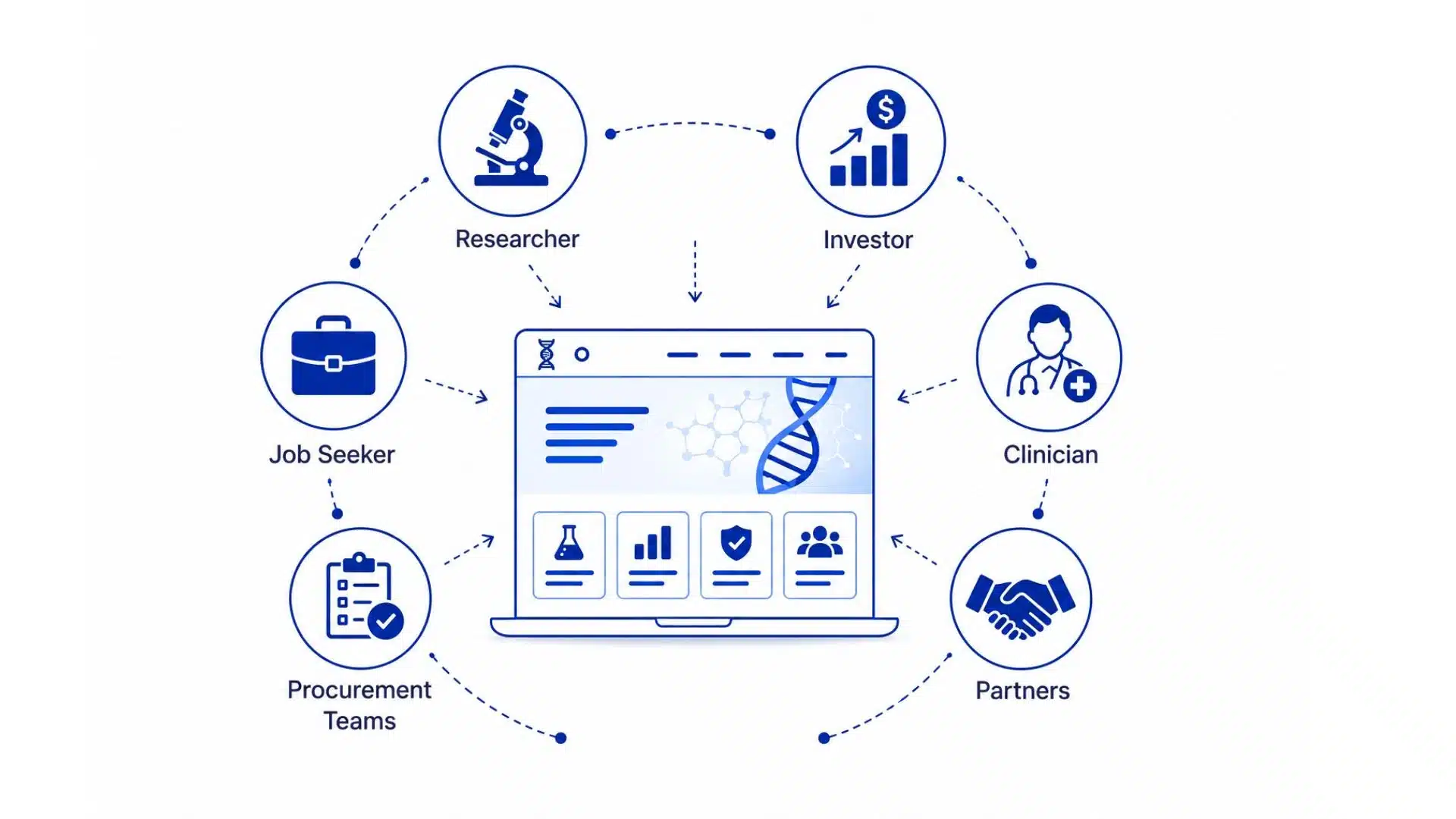
A life sciences website caters to a wide range of visitors, each having their own goals and requirements. A researcher looks for technical depth and scientific proof while an investor is interested in potential growth and market opportunities. A clinician wants to know whether your solutions are reliable whereas a job seeker wants to understand your company’s culture, mission and benefits.
Partners such as pharma companies, academic institutions and collaborators look for alignment with their objectives. They often want to understand your expertise, technology and capabilities to decide whether your company is a strong fit for collaboration.
Procurement teams care about reliability, compliance and operational fit. They look for required standards, consistent delivery, certifications, quality assurance and product availability that will support their purchasing decisions.
The key to design your website so your target audience can quickly find the information they are looking for. This means audience-specific pages, clear navigation, easily digestible content that removes friction in the evaluation process. When each visitor feels understood, your website becomes a growth engine delivering business value.
Why Your Website It The Backbone Of Trust, Compliance And Credibility For The Audience?
In life sciences, your website is the main place where your audience can decide whether your company is credible and safe. Life sciences domain consists of high stakes work like clinical trials, diagnostics and therapeutics. Here every visitor expects clarity, accuracy and proof of compliance. When your website delivers this, it becomes a platform of trust that users can rely on.
Trust signals must be built inside your website structure. This will make the visitors feel confident about your company.
Here are 10 ways how you can build the trust signals in your website.
- Publish study results, data summaries or technical reports with clear citations.
- Use visual elements like graphs or tables to make the data relatable.
- Highlight key metrics that reflect accuracy, and sensitivity where relevant.
- Add clear disclaimers for research-only or investigational products.
- Display HIPAA, GDPR or privacy compliance policies clearly.
- Show certifications or industry specific standards with details.
- Highlight third party validation or partner details.
- Feature leadership bios, key collaborators and scientific advisors to show expertise and experience.
- Include success stories and client testimonials
- Ensure your site is mobile-friendly and accessible to all users.
When the above trust signals are visible across your website, your audience feels confident and safe. It also mitigates confusion in decision-making and helps you win investors and partners fast. By showing that your company is credible, you can also acquire high quality talent. In Maryland’s widespread life sciences niche business , this credibility becomes the backbone of your mission.
Creating Website Building Foundations: Strategy Before Design
Before thinking of creating your website, you must be clear of the strategy- what it is supposed to accomplish, who it is for and what the narrative should be. Without this, the website will be just a few pages.
Establish Your Website Goals
Before the design and content, be clear of what business goals you want the website to achieve.
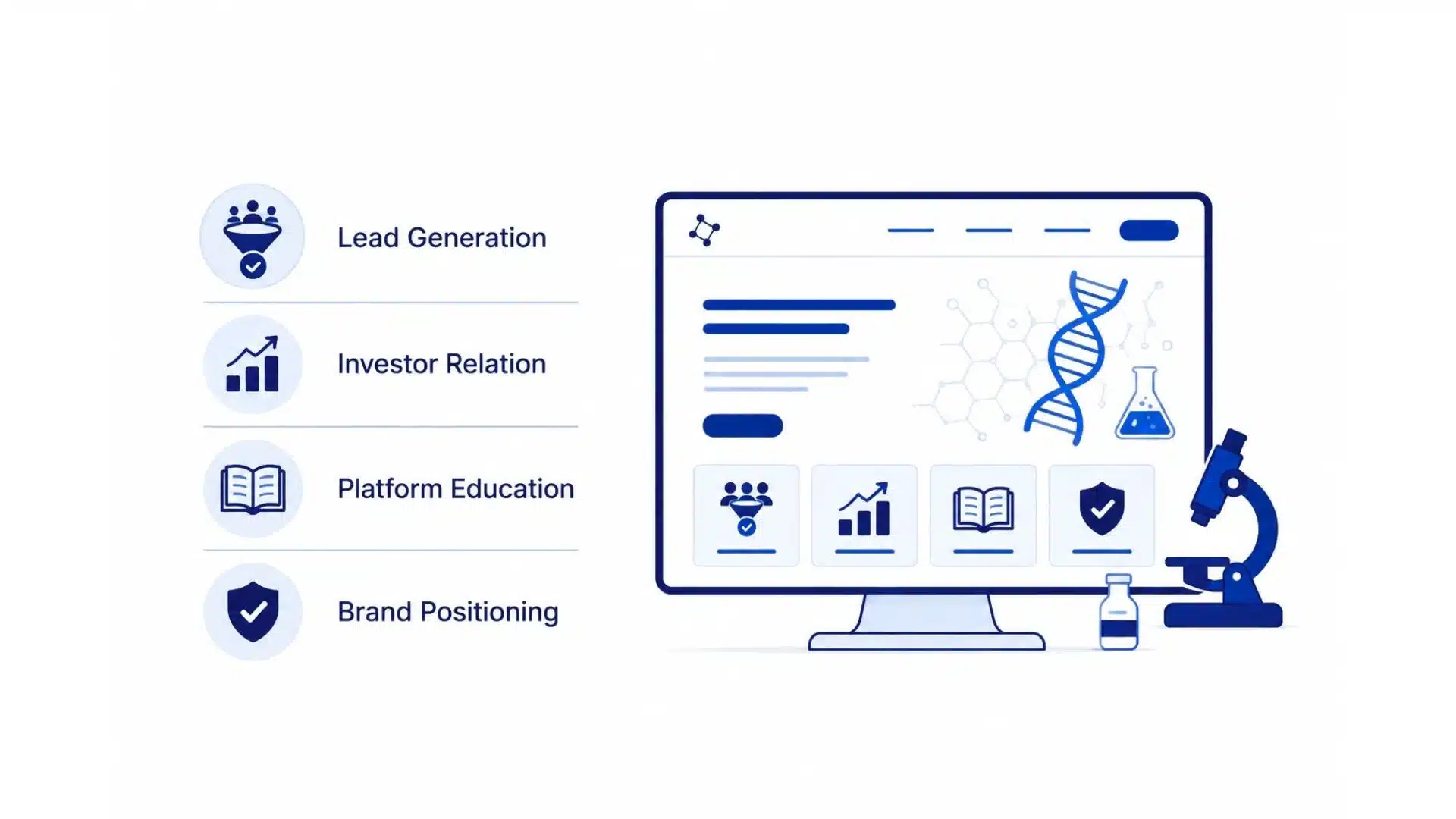
- Lead generation (getting qualified prospects to request demos, trials or quotes)
- Creating investor relations ( helping investors understand your story, gain traction).
- Providing product or platform education (explaining product is simple language)
- Brand positioning (proving your credibility in Maryland’s tough life sciences market)
Link Each Goal To Measurable Kpis
Clear goals and KPIs will help you design pages, content and CTA to support them.
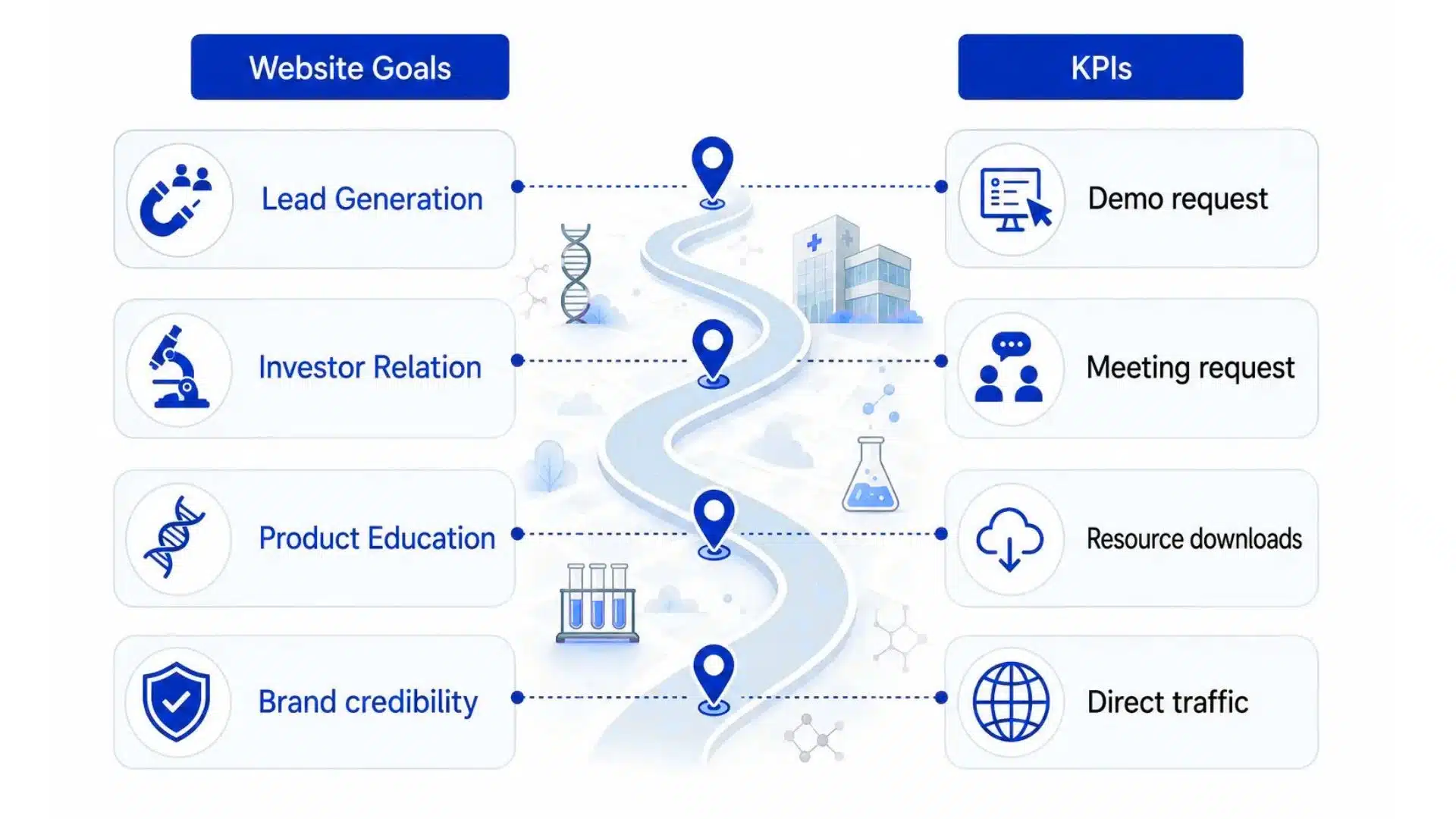
| Website Goals | KPIs |
| Lead Generation | Number of demo requests, product requests, |
| Investor Relation | Investor deck downloads, meeting requests |
| Product Education | Resource downloads, time spent on the page |
| Brand credibility | Returning visitors, Direct traffic, backlinks from trusted sites |
Create Audience Personas And Journeys
Not all visitors to your website will look for the same thing. By building audience personas, you can tailor the content to fit their unique interests.
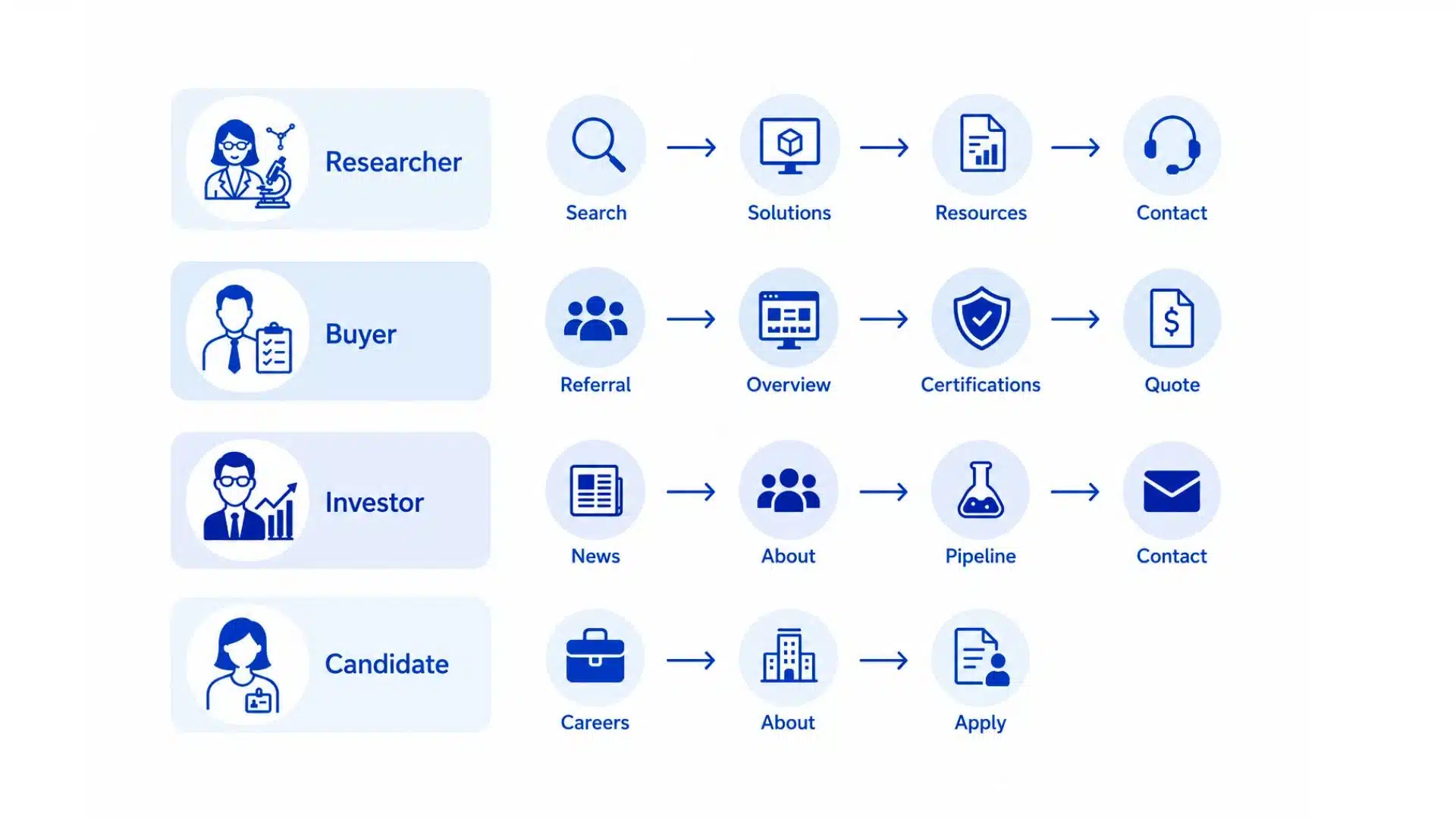
Here are some key audience personas for a Maryland life sciences website.
- Researcher- Cares about data, protocol and technical depth.
- Buyer/procurement- Looks for reliable pricing, certifications and support
- Investor- interested in market potential, leadership, pipeline and milestone
- Job candidate- looks for culture, mission and growth paths.
Map simple user journeys for each persona.Most user journeys start offsite and end with a clear action on your site.
| Persona | Journey path |
| Researcher | Google search>Solution page>Technical resources>Contact support |
| Buyer | Referral> Solutions overview>Certifications>Request Quote |
| Investor | Press release/LinkedIn>About page>Clinical trials>Contact |
| Candidate | Careers page>About page>Apply for role |
You can use these journeys to make smart decisions. Place the most important content for each persona where they land first and make the CTAs clear and specific. Simplify the path to reach the next steps so that users don’t drop off in between.
Create Core Messaging And Unique Positioning
For standing out in Maryland’s crowded Life sciences market, there must be a clear answer to “why you”.

Identify your unique positioning. Start by asking simple questions like:
- What do we do better, faster and safer than our competitors?
- Do we serve a specific niche?
- Do we offer something more helpful than others?
- Do we have case studies, certifications and testimonials to support our claims?
Once these questions are answered, create 2 to 3 core messaging pillars that appear consistently across your homepage, About us page and service pages.
These core messages must be short and clear, outcome-focused and flexible enough to apply to different pages of your site.
When your website goals, personas and core messaging is clear and consistent, the design becomes much easier. You create a focused, purposeful experience that users can relate to.
Information Architecture of a Life Sciences Website
A life sciences website must be easy to navigate despite its complex content. The visitor should be able to find what they are looking for without feeling overwhelmed.
Here are some of the must-have pages of the website
Homepage
The homepage gives the first impression and explains what your company does.
- Clear value proposition
- A short intro to the company
- Key proof points like certifications, partnerships and results
- Simple navigation for different audiences.
About Us Page
This page talks about the company story in a simple way.
- Mission and vision
- Leadership team
- Maryland location
- Certifications and credibility markers
Products/ Services/Solutions page
This page highlights the products or solutions and is organized by audience, use case and industry type.
- Organized by audience
- Simple explanation of each offering
- Benefits and applications
- Next steps and CTA
Research and Pipeline Page
This page is important to showcase the scientific progress of the company.
- Current programs
- Stages of development
- Scientific publications
- Research milestones
Resources/Insights Page
Here the users can find useful content and this page keeps the SEO initiatives active.
- Blogs and articles
- Whitepapers and guides
- Case studies and success stories
- Webinars and How-to videos
Career Page
This page focuses on attracting the right talent and why Maryland is a good place to work for life sciences candidates.
- Employee value proposition
- Perks and benefits
- Culture and team environment
- Location advantages
Contact/Location Page
This page allows the visitors to get in touch with the company.
- Contact form and email
- Phone number and office address
- Maps and location information
Things to Keep in MInd While Creating the Information Architecture
- Keep the navigation simple
- Avoid using too many dropdown layers
- Make the labels short and familiar
- Keep audience-specific information
- Use a sticky header for helpful navigation
- Include privacy policy, terms and compliance pages in the footer
Design Principles of a Life Sciences Website
Your life sciences website must feel precise and trustworthy. It must attract visitors with the right visuals, simple layout and a design that supports science. To learn more about responsive web design, check out our Guide.
Visual Style
The visual style must be scientific, human and on-brand. For life sciences companies, this means a clean, clinical look with a human touch.
Here are a few elements to make your website look professional and credible
- Use calm, professional colours and avoid loud, flashy ones.
- Choose modern and easy to read fonts.
- Keep the font sizes readable across all devices.
- Make the site polished by using consistent headings, buttons and links.
- Show real labs, research teams, clinics and facilities wherever possible.
- Use illustrations and icons to explain complex ideas and workflows.
- Avoid generic stock photos that do not align with the company’s brand message.
- Maintain visual hierarchy and readability by using clear headings and subheadings.
- Break the content into logical sections and keep the body text short and focused.
- Place the most important message near the top of the page.
- Keep white spaces to make the page feel cleaner.
Mobile-first Responsive Design
Life sciences workers, researchers and jobseekers often visit the website on their phones. Investors and partners also use mobile devices for visiting company pages and quick updates. If your site does not work well on mobile, people will leave quickly.
Here are a few things that a mobile-responsive site must include
- Tap friendly buttons that are easy to click.
- Readable text that is large enough to read without zooming.
- Simple navigation for smaller screens.
- Fast loading pages even on weaker connections.
- Short and easy to fill forms on mobile devices.
To understand how good design impacts app retention, read our blog on the importance of UI/UX Design.
Content Strategy
A good, jargon-free content helps visitors understand your site better. If the message is clear, simple and relevant for each audience, they keep returning to your site.
Here are some clear tips for turning complex content into relatable stories.
- Tailor the messaging based on the preferences of different audiences.
- The most important pages like the homepage, about us page and product/service page must have clarity.
- Life sciences content can be very technical, keep it simple and focused.
- Explain complex terms in simple language and use short summaries wherever possible.
- Create content types that build authority like blog posts for information, case studies to show results, webinars to demonstrate knowledge and success stories to show outcomes.
- Embed visual storytelling using diagrams and infographics.
- Keep visitors engaged using interactive media like videos, product demos and explainer videos.
- Maintain best practices for images and illustrations using alt text, optimizing images for fast loading.
When design, content and visuals work hand in hand, your life sciences website becomes easier to use, trust and retain audiences.
Step-by-step Development of Life Sciences Website
Website development is the most important part where the site becomes fully functional and delivers unique experiences to the audience. For a life sciences website this is even more crucial as the site must have trusted data, should be compliant with regulatory norms, and scale with your business. The development stage matters because it turns ideas into experience and gives your life sciences company a solid digital foundation for growth.
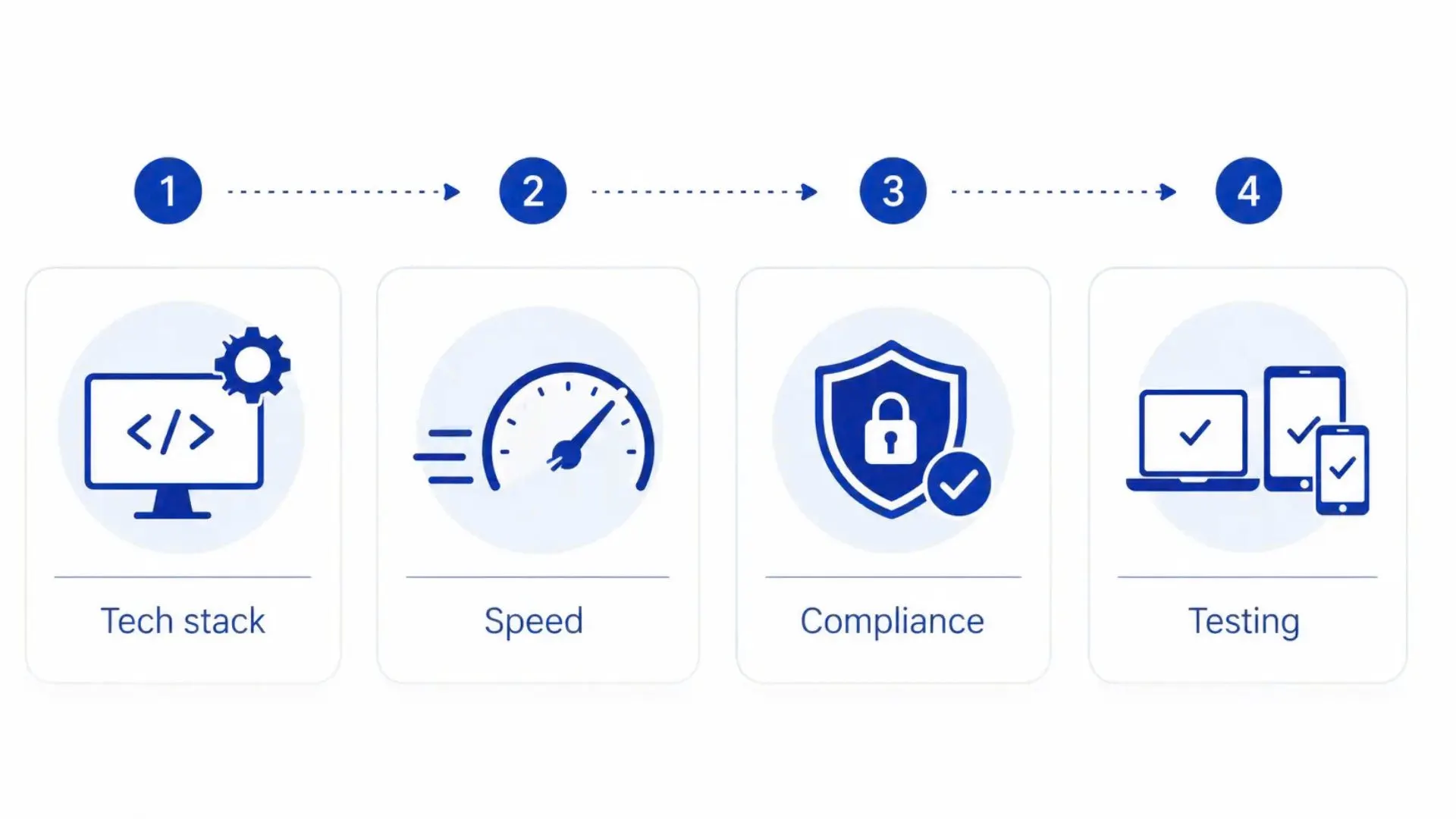
Key Steps for Website Development:
Choose The Right Tech Stack
- The tech stack are the tools required to build the website. Your selection must depend on your business goals, content needs and authority.
- Pick a CMS like WordPress or Drupal that your team can easily manage.
- Choose a framework that supports clean code and future updates.
- Make sure that the platform can handle content, forms, downloads and integrations.
- If you are looking to scale, avoid systems that are too limited.
Focus On Speed
- Visitors leave when a page takes time to load. This is especially true in the life sciences domain when the target audience wants to access the information quickly.
- Compress images without losing quality.
- Keep plugins and scripts to a minimum.
- Use clean page structure for speed.
- Set up caching and other performance features.
- Test page speed across devices.
Make The Site Compliant And Scalable
- Life sciences websites harbour sensitive data, and regulated content and so you must not neglect compliance.
- Use data protection policy.
- Add privacy, cookie and legal policies wherever required.
- Build the website in a way that allows future pages, integrations and content updates without major rework.
Test Across Devices And Browsers
- Your website must work smoothly no matter how your visitors access it. Make sure that it is easy to access from laptop, mobiles, tablets.
- Ensure that buttons, menus and downloads work properly.
- Look out for broken links or layout issues before go-live.
- Test both visual design and user journey.
SEO and Discoverability for Maryland Life Sciences Companies
In a crowded market like Maryland, SEO helps your website find the right audience. Investors, researchers, partners and talents start with a search so if your website does not appear early and often you may miss the attention to competitors.
A robust SEO initiative will help your website stand out in search results and make it easier for people to discover your brand, services and products. It may also reach visitors who are not familiar with your company but are looking for specific solutions.
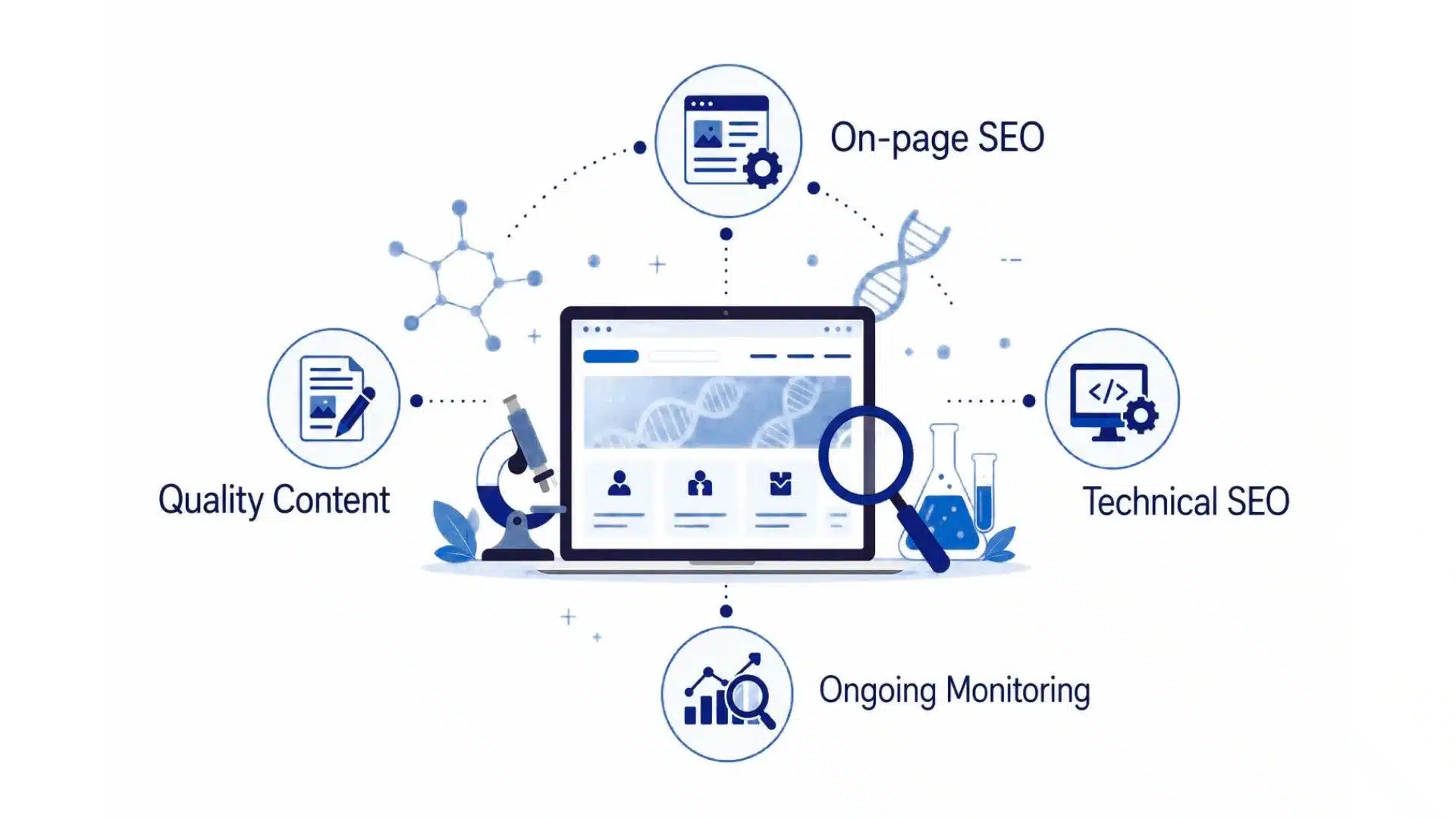
Here’s how you can optimize your life sciences website for SEO
On-Page Seo Essentials
- Keep the structure clean and the language focused.
- Incorporate relevant keywords like “life sciences company in Maryland”, or “web page design for life sciences in Maryland”
- Create compelling meta descriptions for each page that will make people want to click.
- Boost SEO authority by interlinking relevant pages, blog posts or aligning content.
High Quality Content For Authority Building
- Create content that provides solutions, insights or answers to specific questions.
- Share research updates and industry trends.
- Establish your website as a trusted authority by earning backlinks from high-value websites.
- Emphasize on partnerships wherever relevant.
Optimize Technical SEO
- Maximize page speed with relevant tools.
- Implement structured data (schema markup) to ensure that your site is relevant and is discoverable by search engines.
- Make your site mobile-friendly.
Support Ongoing Monitoring
- Treat your website like a living system and track performance by using tools like Google Analytics and Search Console.
- Conduct safe testing, maintain version control, and schedule routine updates.
- Use actionable dashboards to monitor page performance and unlock insights for improvement.
- Perform regular site audits for compliance and changing SEO trends.
How to Build a Life Sciences Website on Budget?
While building a website you must avoid some clear roadblocks that may cause overspending. An expert web agency in Maryland can help you stay on budget and achieve your website building goals.
Here are some common mistakes to avoid that can lead to rework and extra cost
- Define your goals and priorities early to keep the project focused on the pages and the features that matter most.
- Plan the website structure early to avoid unpleasant surprises that may extend your budget.
- Keep the messaging and the content simple to avoid confusion.
- Use practical design choices to avert unnecessary complexities.
- Avoid overbuilding features that do not support the core objectives.
- Plan for search visibility early in the process, to avoid expensive fixes later.
- Consider scalability from the beginning to avoid rebuilding later.
- Focus on the right audience to manage your project effectively without extra spending.
Wrapping Up
Your website is your strategic asset in Maryland’s Life Sciences market. It must be the platform that supports your credibility, visibility and business goals. When patients, researchers and talents land on your website, the first impression must be long lasting. A strong site can answer your audience’s queries and drive value easily.
You know the steps to create an efficient website, avoid common pitfalls and stay on budget. The best life sciences websites are not the complex ones but the ones built with a clear strategy, are well planned and easy to use.
Frequently Asked Questions
Q1. Why is a high-performing website important for life sciences companies in Maryland?
A strong website helps life sciences companies build credibility, and stand out in the crowded market. It also gives investors, partners, researchers and job seekers a clear first impression of the company.
Q2. What pages should the Maryland life sciences website include?
A well-structured life sciences website must include a homepage, about page, solutions/services page, research or pipeline pages, resources section, careers page and contact page. This helps different audiences to find relevant information quickly.
Q3. How can life sciences websites build trust with visitors?
A website can build trust with visitors by showcasing scientific proof, leadership information, certifications, compliance details, clear disclaimers and case studies. The site must also provide a seamless mobile experience for users.
Q4. What compliance issues should life sciences companies consider when building a website?
Life sciences companies must prioritize and review privacy, data handling and tracking practices carefully. They must manage HIPAA protected health information in a secured way and follow FDA rules for regulated content or claims.
Q5. How can a life sciences company keep website costs under control?
The best way to stay on budget is to define goals early, prioritize essential pages and features, simplify content and navigation, and plan for SEO and scalability in the beginning to avoid expensive rework later.