 Design
 App Development
 Web Engineering
 AI Services
 Cloud
 Staffing
 Startups
 Health / Fitness
 Education
 Social
 Nonprofit
 Fintech
 Construction
 Logistics
 Government
 Travel/Hospitality
 HR Software
 About Simpalm
 Our News
 Client Testimonials
 Careers
 Our Blog
 Awards
 Resources
 Information
Key Takeaways
- Treat outsourcing as a partnership. External teams deliver better results when they understand your goals and project scope. Regular check-ins with your in-house team help keep both the project and delivery on the right track.
- Choose an outsourcing model that fits your project. Fixed-price, time-and-materials, dedicated teams, and staff augmentation work differently, so the right choice depends on your project scope, flexibility, and budget.
- Look beyond hourly rates when estimating the cost of outsourcing an external team. A lower rate can lead to higher project costs if the team needs frequent rework or changes often, so budget for contingencies and ongoing maintenance as well.
- Define intellectual property ownership before development begins. Your contract should clearly assign ownership of the code, designs, and documentation while ensuring your company controls its repositories and cloud accounts.
_________________________________________________________________________________________
Application outsourcing has become a standard way to build software, yet it remains one of the easier ways to lose money and time. A Deloitte survey of more than 500 global executives found that 70% of organizations had brought previously outsourced work back in-house over the previous five years. Interestingly, the same survey found that adoption of outcome-based outsourcing models rose from 45% to 67% in just two years. Companies are not abandoning outsourcing. They are learning, often the hard way, that results depend on how the relationship is designed.
For mobile products, the stakes are even higher. An app touches customer data, app store rules, payment systems, and device fragmentation all at once. A weak build can mean poor reviews, security gaps, and a costly rewrite within a year.
This guide explains how mobile app development outsourcing works in 2026. You will learn when it makes sense, which engagement model to choose, what it really costs, how to vet partners, and how to protect your code and data. Each section is written to help you make a decision, not just absorb information.
When Should You Outsource Your App Development Project?
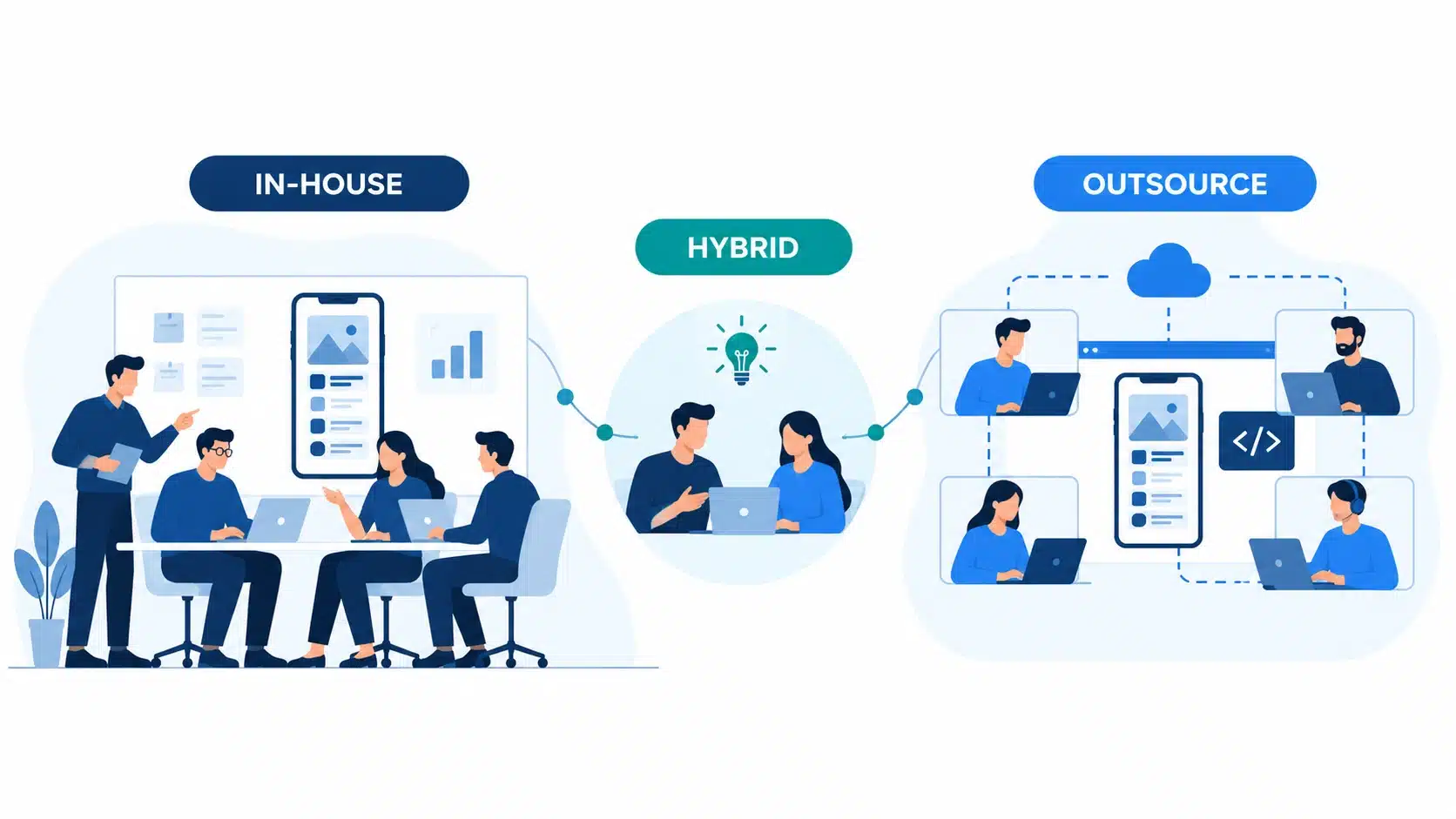
Companies that outsource mobile development do best when speed, skills or budget flexibility matter more than having an in-house engineer. It is a poor fit when the app is your core intellectual property, and you need daily, hands-on control over every technical choice.
Use the table below as a quick decision guide.
| Factor | Lean toward outsourcing | Lean toward in-house |
| Timeline | You need to start within weeks | You can spend three to six months hiring |
| Budget | Project-based spending, no long-term payroll | Funding for salaries, benefits and tools |
| Skills | No mobile depth, or a skill gap in areas like security or DevOps | A strong engineering team that can grow |
| Product scope | MVP, pilot, companion app or well-defined build | Core platform with complex workflows and heavy IP |
| Control | Comfortable managing through milestones and reviews | Need daily direction and cultural alignment |
If your answers are mixed, consider a hybrid approach. Keep product leadership and core architecture inside your company, and outsource the execution-heavy or specialized parts such as design, testing or a specific feature set. Many teams find that this balance gives them speed without losing strategic control.
Which Outsourcing Model Fits Your Project?
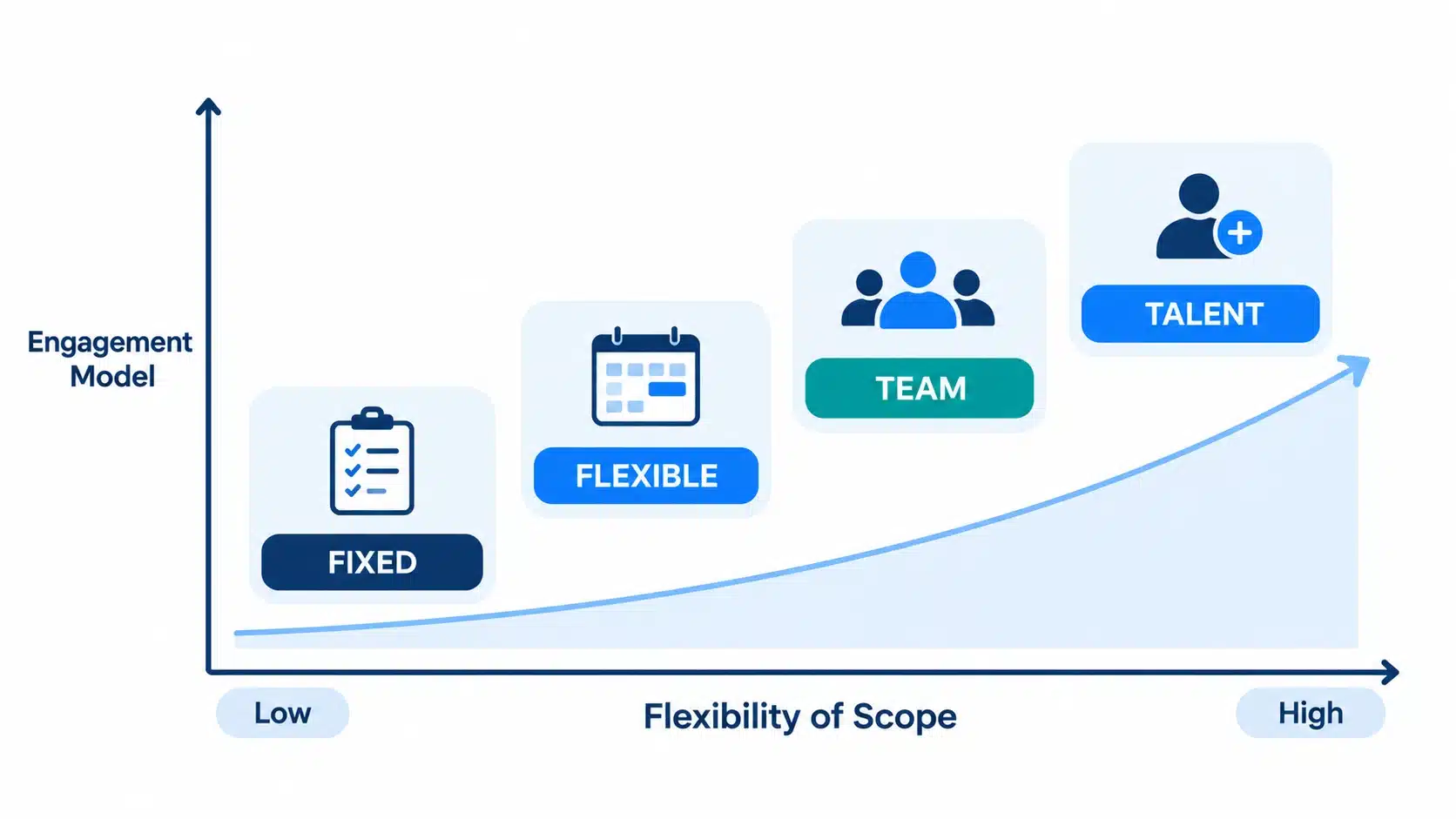
The outsourcing engagement model decides how flexible your scope can be and how much management effort you will need. Most outsourcing app development projects fall into one of four models.
- Fixed price: The vendor delivers a defined scope for an agreed fee, usually paid in milestones. This works well for projects with stable requirements and clear acceptance criteria. The trade-off is that any change triggers a formal change request and extra cost.
- Time and materials: You pay for the actual effort used, based on agreed rates and team size. This suits products that will evolve through user feedback, such as an MVP. It needs disciplined backlog reviews and a monthly budget cap to avoid open-ended spending.
- Dedicated team: A stable group of developers, testers and a project manager works only on your product. This fits long-term roadmaps where the team builds deep product knowledge over time.
- Staff augmentation: Individual engineers join your existing team and report to your internal leads. It works best when you already have strong technical leadership and only need extra capacity or a specific skill.
The table below compares the four models side by side.
| Model | Cost structure | Flexibility | Your management effort | Best suited for |
| Fixed price | Set project fee | Low | Low to medium | Stable scope, MVPs with clear specs |
| Time and materials | Pay for effort used | High | Medium to high | Evolving products |
| Dedicated team | Monthly team fee | High | Medium | Long-term products |
| Staff augmentation | Per engineer | High | High | Existing engineering teams |
A practical rule is to match the model to how well you understand your scope. If you can describe every screen and integration today, fixed price protects your budget. If you expect to learn as you build, choose “time and materials” or a “dedicated team” and track project with sprint reviews.
Which Outsourcing Team to Choose: Onshore, Nearshore, or Offshore?
The nature of outsourcing teams affects development costs, communication, time zone overlap, and how easily your teams can collaborate. Understanding these trade-offs helps you choose the right fit for your project.
- Onshore: The team sits in your own country. You get the easiest communication and the simplest legal environment, but the highest rates.
- Nearshore: The team is in a neighboring or similar time zone, such as a U.S. company working with teams in Latin America. You gain real-time collaboration at lower rates than onshore.
- Offshore: The team is several time zones away, often in South Asia or Eastern Europe. Rates are the lowest, but you need deliberate planning for overlap hours, written documentation and escalation paths.
Many companies discover that no single location handles every need. A blended approach, with local product and strategy leads and distributed engineering capacity, can combine the strengths of each. Simpalm explores this idea in its article on why hybrid shoring can be the right shoring model for software development.
Whatever you choose, agree on overlap hours in the contract. Even a gap of ten hours can work if the team shares notes in writing and keeps a clear list of questions that need same-day answers. Left unplanned, a time zone gap quietly turns every question into a 24-hour delay.
What Does Outsourcing App Development Really Cost?
The outsourcing app development cost for a project depends mostly on complexity, platforms, backend needs, team location, and team seniority. Published estimates vary widely, so treat any single number with caution. The figures below are planning ranges that reflect typical 2026 market conditions, not fixed quotes.
01. Cost by Region
| Region | Typical hourly rate |
| North America | $100 to $150 |
| Western Europe | $60 to $120 |
| Eastern Europe | $30 to $70 |
| Latin America | $25 to $70 |
| South Asia | $20 to $45 |
Hourly rate is not the same as project cost. A senior team charging more per hour may finish faster and produce fewer defects than a lower-cost team that needs extra rounds of rework. Compare vendors on estimated total cost, team stability and delivery track record, not on rate alone.
Technology choices also change the price. Cross-platform frameworks let one codebase serve both iOS and Android and can often cut total build cost by roughly 30 to 50 percent compared with building two native apps. This is a strong fit for most business apps, as explained in Simpalm’s guide to React Native for AI-powered business apps.
02. Hidden Costs to Budget For
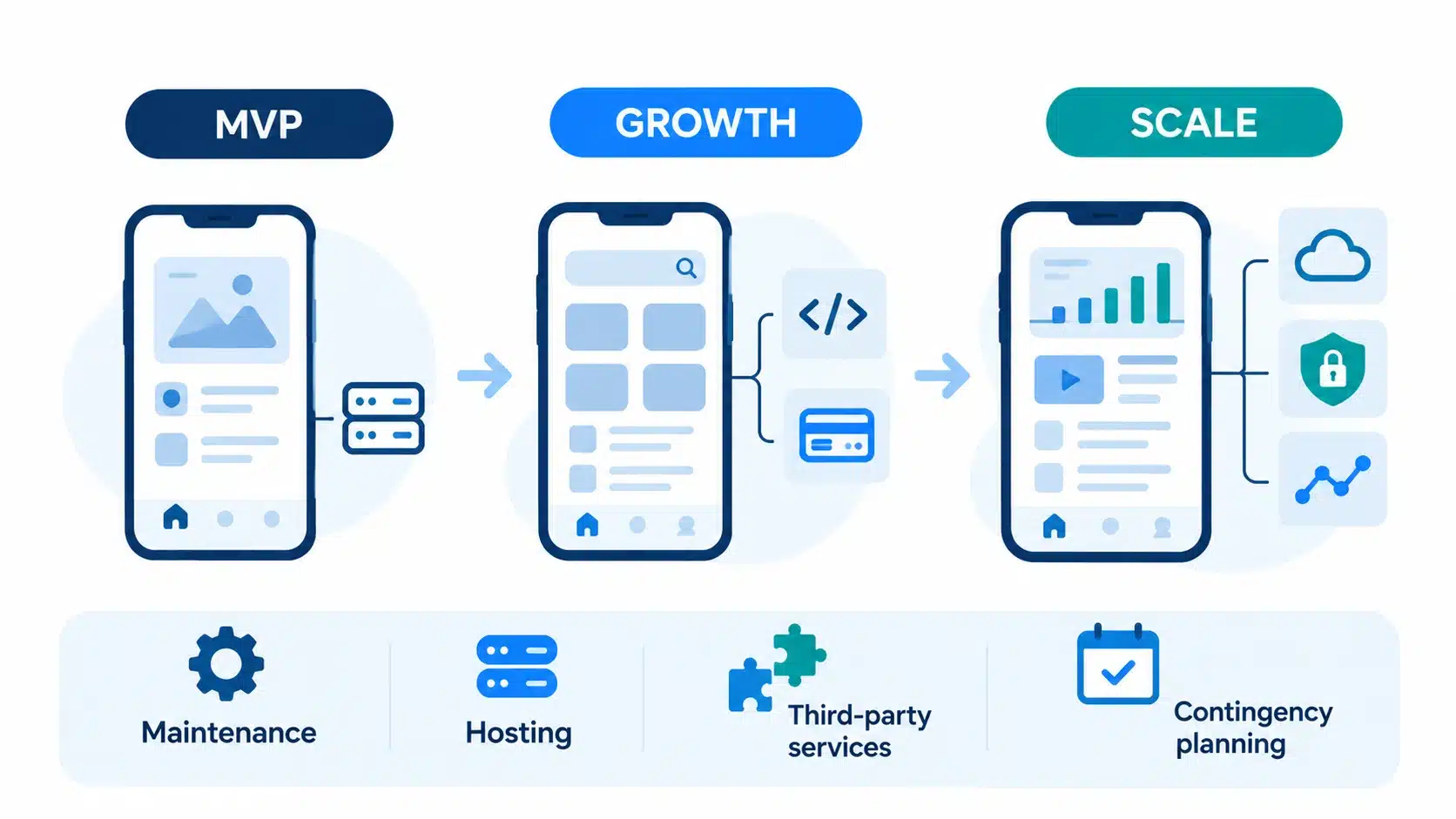
Quotes often cover design and development but leave out the costs that appear after kickoff. Plan for these before you sign:
- Contingency buffer: Add 10 to 20 percent for scope clarification, API changes and platform updates.
- Annual maintenance: Budget roughly 15 to 25 percent of the original build cost each year for updates, security patches and bug fixes.
- Third-party services: Cloud hosting, analytics, payment processing fees, push notification tools and software licenses add recurring costs.
- App store fees and compliance: Developer accounts, review requirements and legal reviews take time and money.
- Internal time: Your product owner and testers will spend hours each week on reviews and feedback.
Adding these items early gives you a realistic number for mobile app outsourcing, and it prevents the unpleasant surprise of a budget that was only ever the first half of the real cost.
Seven Steps to Outsource Without Surprises
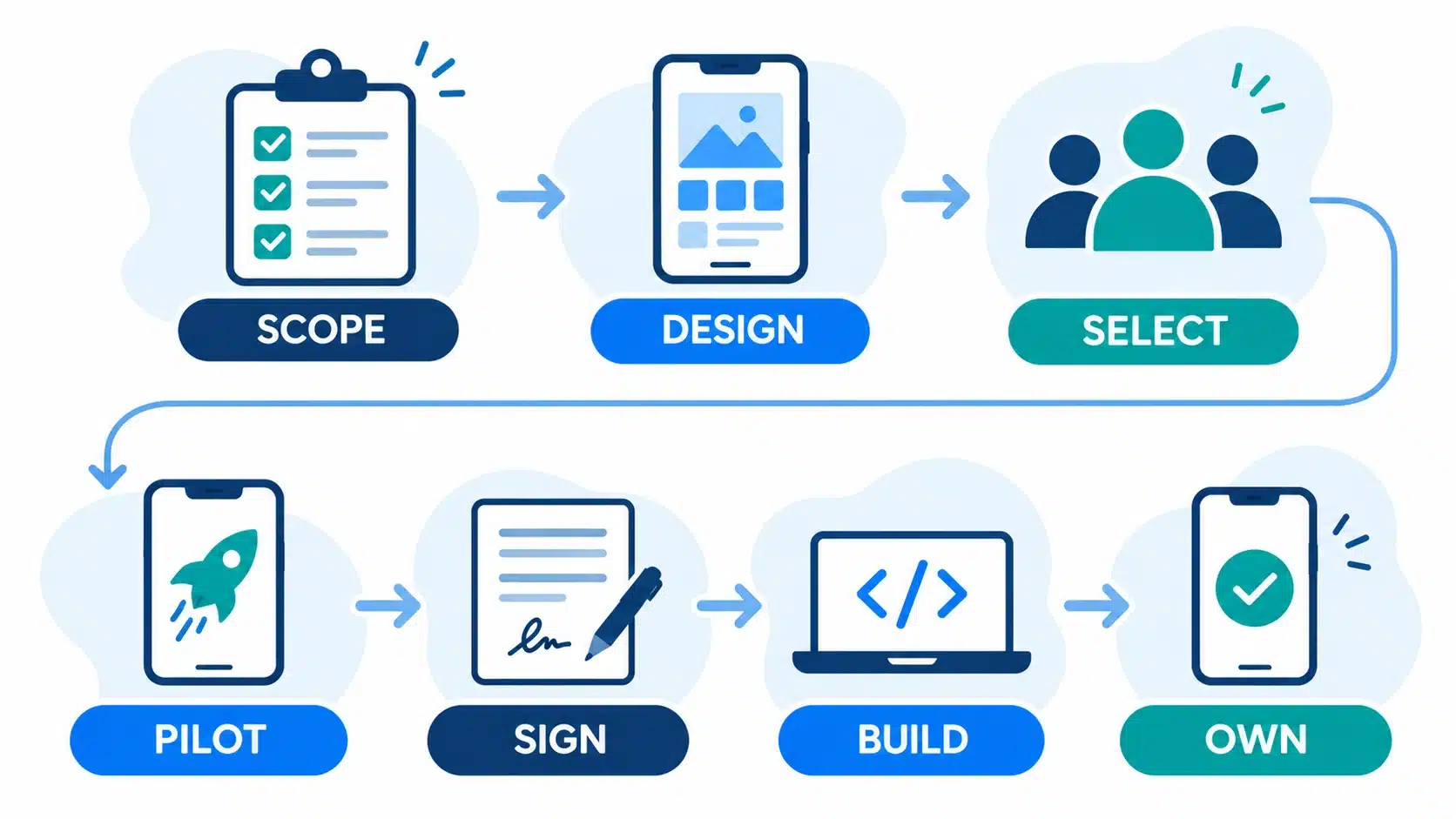
A reliable outsourcing process follows the same sequence whether the project is small or large. Skipping early steps usually moves the problem to a more expensive stage later.
- Define scope before talking to vendors: Write down the problem the app solves, your target users, platforms, a prioritized feature list, and what a successful launch looks like. Separate must-have features from nice-to-have ones. A written scope forces hard decisions while they are still cheap.
- Validate the design early: Wireframes and clickable prototypes expose misunderstandings before any code exists. A few days spent here can save weeks of rework later.
- Build a shortlist of three to five partners: Look at directories such as Clutch, personal referrals and industry peers. Review portfolios for live apps and ask for store links, not slide decks.
- Run a paid pilot: Hire your top choice for a small, defined task such as a prototype or proof of concept. It reveals communication habits, estimation accuracy and code quality at low cost.
- Sign a contract that protects you: Tie payments to milestones, define acceptance criteria in advance and include intellectual property ownership, support terms and an exit plan.
- Manage in short sprints: Two to three-week cycles with working demos give you visibility before problems grow. Ask for real builds on a test device rather than status reports.
- Prepare launch and handover: Confirm you hold administrator access to repositories, cloud accounts, build pipelines, and store listings. Complete documentation and knowledge transfer before the team rolls off.
Each of these steps supports the others. A clear scope makes the pilot meaningful, and a good pilot makes the contract easier to write. Teams that follow all seven steps usually spend less time on disputes and more time on the product itself.
How to Vet an Outsourcing Partner Before Signing
A thorough outsourcing vetting process helps you look beyond a vendor’s portfolio to assess their technical skills, team stability, communication, and ability to handle challenges throughout the project.
- Live work: Ask for apps you can download and test. Review how they perform, how they look, and how often they are updated.
- Engineer stability: High turnover costs you in lost context and repeated explanations. Ask for the average tenure of engineers on long-term projects and what happens when a key developer leaves.
- Reference calls: Speak with past clients directly. Ask how the vendor handled a major scope change and how fast they fixed a critical bug after launch.
- Process evidence: Request details on code reviews, automated testing, release management, and documentation standards.
- The actual team: Interview the engineers who would work on your project, not only account managers. Notice whether they ask thoughtful questions or simply agree with everything.
For a deeper checklist, see Simpalm’s guide on how to choose a mobile app development partner.
| Editor’s note: Ask every shortlisted partner how they use AI coding assistants. Good answers describe human review of every AI-generated change, clear ownership of the final code, and the option for you to opt in or out. Vague answers or claims that AI makes everything faster should prompt follow-up questions about quality control and data handling. |
Vetting takes time, but it is cheaper than switching vendors halfway through a build. A partner who asks hard questions during the sales process will usually ask the right questions during delivery.
Establishing Secure Outsourcing Relations: Protecting Your IP, Data, and Source Code
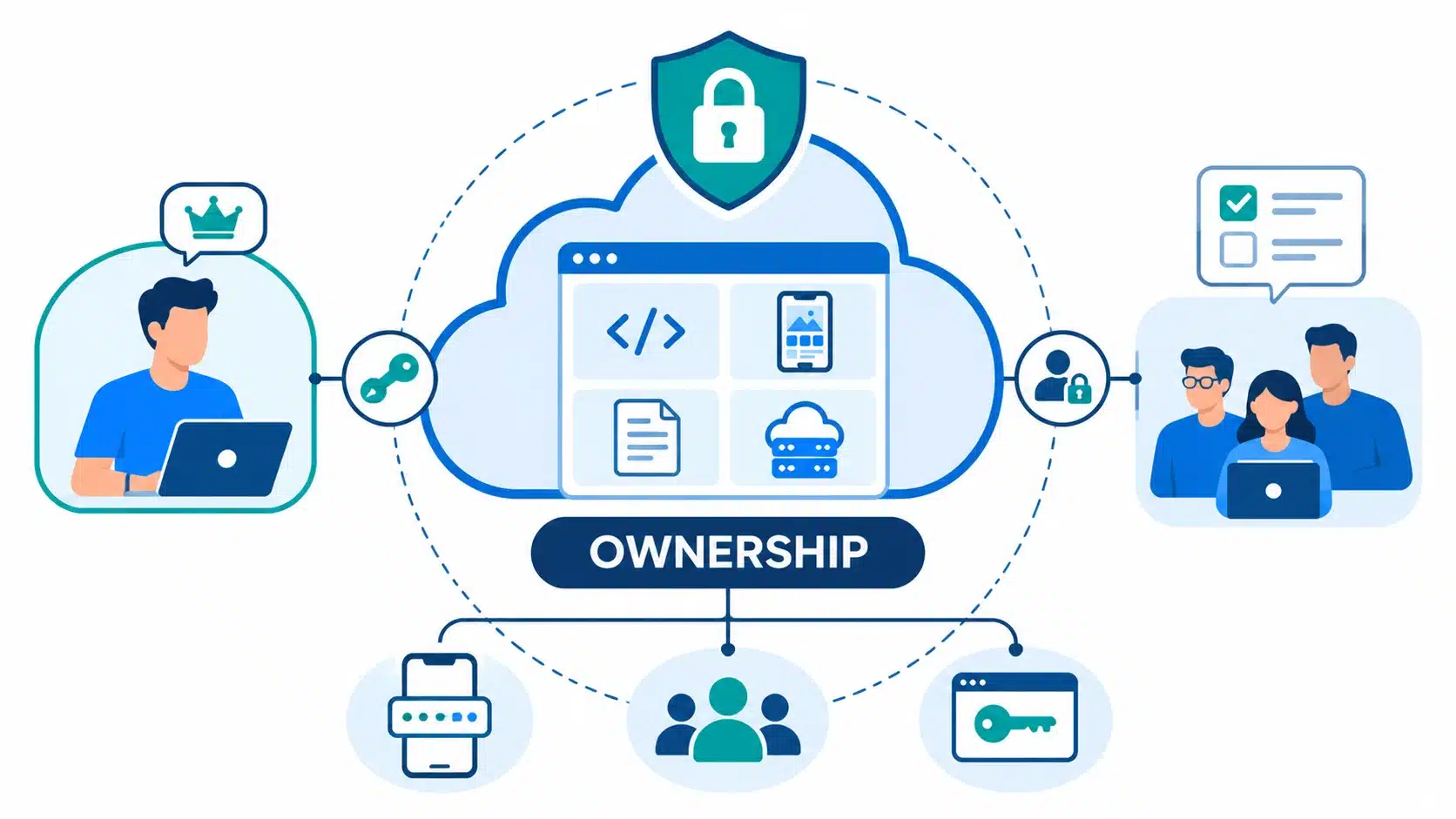
Security is part of the outsourcing decision, not an afterthought. Verizon’s 2026 Data Breach Investigations Report found that third-party involvement appeared in 48% of breaches, a 60% increase from the previous year. You can read the full findings in the Verizon Data Breach Investigations Report. Handing code and data to an outside team creates real exposure unless you control access carefully.
- Ownership clause: An NDA protects confidentiality but does not transfer ownership. Your contract should state that all code, designs, documentation and configurations belong to your company on delivery. Include a work-for-hire clause in the statement of work as well as the main agreement.
- Repository control: Keep source code in repositories owned by your company and grant the vendor role-based access. Do not let the vendor hold the only copy of your code.
- Least-privilege access: Give developers only the systems they need for current tasks. Use multi-factor authentication, separate development and production environments and access logs.
- Compliance duties: If your app handles health, payment or personal data, confirm the partner has experience with the relevant rules such as HIPAA, PCI DSS or GDPR. Write compliance responsibilities into the contract.
- Open-source review: Ask for a list of third-party libraries and their licenses so you avoid restrictive terms that could limit how you distribute the app.
Editor’s note: If you remember only one control, make it this one: your company, not the vendor, should own the repository, the cloud accounts and the app store developer accounts. Everything else becomes easier to manage when you hold the keys.
Common Outsourcing Challenges and Their Fixes
Most failed projects trace back to a handful of predictable problems. Each one has a practical fix if you act early.
Challenge: Unclear requirements lead to scope creep. Vague feature lists produce conflicting assumptions, rework and missed deadlines. Scope creep often starts inside the client organization when new stakeholders add requests after the contract is signed.
Fix: Complete a short discovery phase before development starts. Document user flows and acceptance criteria, and require a written change request with a re-estimate for every new feature.
Challenge: Communication gaps slow decisions. Time zone differences and scattered messages bury important decisions and delay answers across sprints.
Fix: Name one point of contact on each side. Set a regular meeting rhythm, keep decisions in a shared document and agree on overlap hours.
Challenge: Vendor lock-in makes change difficult. When the vendor controls the code, credentials and documentation, leaving becomes expensive.
Fix: Hold repository ownership from day one, require current documentation and keep an exit clause in the contract. Simpalm outlines what to review in its checklist before you change your software development team.
Challenge: Quality problems reach production. Weak testing lets bugs reach real users and consumes the budget in emergency fixes.
Fix: Define quality benchmarks at the start, including test coverage, code review rules and performance targets. Review each sprint instead of auditing only at the end.
Challenge: Hidden costs push the budget over. Cloud fees, licenses and maintenance often sit outside the original quote.
Fix: Build a lifecycle budget that lists recurring fees, change order rates and a contingency buffer before you sign.
Challenge: Team turnover causes knowledge loss. When a developer leaves, undocumented decisions leave with them.
Fix: Require shared documentation, onboarding notes and architecture records, and ask the vendor for a plan to hand over work smoothly.
Plan Post-Launch Support Before You Sign
Launching the app is the beginning of its operating life, not the end of the project. Operating systems change, devices evolve and users expect steady improvements. If you wait until after launch to discuss support, you lose most of your negotiating leverage.
Agree on these points up front:
- Support terms: Define response times by severity level, escalation paths and who handles production incidents.
- Warranty period: Set a window, often 30 to 90 days, during which the vendor fixes defects at no extra charge.
- Monitoring: Use crash reporting and performance monitoring so issues are visible before users complain.
- Ongoing updates: Plan a recurring budget for operating system updates, security patches and small feature releases.
Modern tools can also reduce the maintenance burden. Simpalm explains how AI is transforming app maintenance and support by catching problems earlier and reducing routine effort.
Final Thoughts
Outsourcing mobile development works best when you treat it as extending your team, not placing an order. The companies that succeed define scope carefully, match the engagement model to their needs, budget for the full life of the product and keep ownership of their code and accounts. They also choose partners the way they would hire a senior engineer, by testing skills, checking references and watching how the person handles ambiguity.
Looking ahead, the gap between teams that plan their outsourcing and teams that improvise will keep growing. AI tools are speeding up development, user expectations are rising and security expectations are tightening. A well-structured partnership lets you adopt those changes without rebuilding your team every time the market shifts.
If you are weighing your options and want a second opinion on scope, model or budget, Simpalm’s team can help you think it through. Explore Simpalm’s software development outsourcing services to see how a U.S.-based team can support your next mobile project.
Frequently Asked Questions
Q1. How do I start outsourcing mobile app development?
Ans. Start by writing a clear scope that covers the problem your app solves, your target users, the platforms you need and a prioritized feature list. Then research three to five partners, review live apps and speak with past clients. Run a small paid pilot with your top choice to test communication and quality. Once you are confident, sign a contract that covers milestones, intellectual property ownership, support terms and an exit plan. Starting with a defined scope is the most important step, because every later decision depends on it.
Q2. How much does it cost to outsource mobile app development?
Ans. Costs range widely based on complexity, platforms and team location. A simple app or MVP often falls between $20,000 and $60,000, mid-complexity apps between $50,000 and $120,000, and complex or enterprise apps can exceed $250,000. Hourly rates also differ by region, from roughly $20 to $45 in South Asia to $100 to $150 in North America. Always add a contingency buffer of 10 to 20 percent and plan for annual maintenance of about 15 to 25 percent of the build cost. These numbers are planning estimates, so request a detailed quote based on your actual scope.
Q3. Should I choose a freelancer, staff augmentation or an agency?
Ans. Freelancers suit small, well-defined tasks such as a prototype or a single feature, but you carry the responsibility for project management, quality control and security. Staff augmentation adds engineers to your existing team and works best when you have strong internal technical leadership. An agency or dedicated team fits complex products because it brings design, engineering, testing and project management together under one accountable partner. The right choice depends on how much delivery responsibility you want to keep in-house.
Q4. How do I protect my app idea and source code?
Ans. Sign an NDA before sharing details, but remember it only covers confidentiality. Your contract must also assign ownership of all code, designs and documentation to your company, ideally with a work-for-hire clause in the statement of work. Keep repositories and cloud accounts under your own company accounts, limit developer access to what each task requires and use multi-factor authentication. Review open-source licenses and confirm compliance duties if the app handles sensitive data.
Q5. How long does an outsourced app project take?
Ans. A simple app can launch in a few weeks to a few months. Mid-complexity apps with custom backends and integrations often take four to six months, and complex or enterprise apps can take six to twelve months or longer. Cross-platform development can shorten timelines because one codebase serves both platforms. The biggest variable is often not coding speed but how quickly your team clarifies requirements, reviews builds and makes decisions, so prompt feedback keeps the schedule on track.
Q6. How do I keep control of an outsourced project?
Ans. Retain ownership of product priorities, the roadmap and business acceptance, even when the vendor handles execution. Use short sprints with working demos, review each milestone against written acceptance criteria and track measurable results such as release frequency, defect rates and sprint predictability. Hold administrator access to repositories, cloud environments and store accounts. Regular communication and clear decision rights matter more than any single tool, and they keep the partnership aligned with your business goals.