
 Design
 App Development
 Web Engineering
 AI Services
 Cloud
 Staffing
 Startups
 Health / Fitness
 Education
 Social
 Nonprofit
 Fintech
 Construction
 Logistics
 Government
 Travel/Hospitality
 HR Software
 About Simpalm
 Our News
 Client Testimonials
 Careers
 Our Blog
 Awards
 Resources
 Information
Key Takeaways
- Mobile commerce helps businesses reach customers through mobile websites, shopping apps, progressive web apps and social commerce channels.
- A successful mobile shopping experience depends on fast navigation, simple checkout, secure payments and relevant product recommendations.
- Businesses should choose their mobile commerce channels based on customer behavior, purchase frequency and operational requirements.
- AI-powered personalization, digital wallets, augmented reality and social commerce are shaping how customers discover and purchase products.
- Mobile commerce costs depend on the chosen platform, integrations, customization requirements and ongoing maintenance.
- Security, payment protection and customer data privacy are essential for building trust and encouraging repeat purchases.
_________________________________________________________________________________________
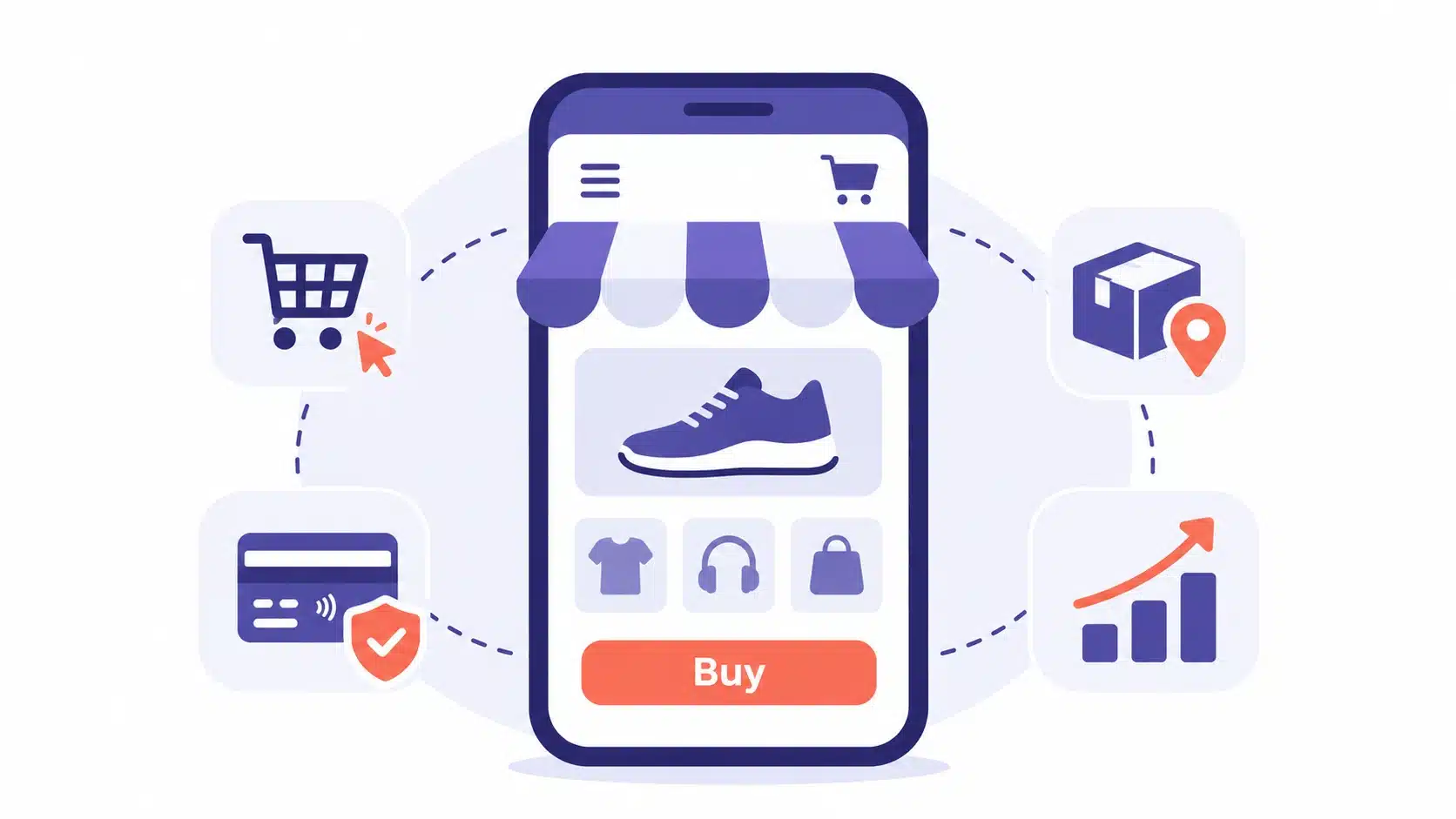
Mobile commerce has changed how people discover products, compare prices and make purchases on e-commerce stores. Customers increasingly expect to browse stores, make secure payments, track orders and receive personalized recommendations through their smartphones. For businesses, meeting these expectations can increase conversions, encourage repeat purchases and create more opportunities to grow revenue.
In fact, Statista’s market data shows that mobile commerce accounted for more than half of global retail e-commerce sales in 2023. This shift creates a significant opportunity for businesses to reach customers, improve conversions and generate repeat sales through mobile shopping experiences.
Mobile commerce, or mCommerce, goes beyond making an e-commerce website mobile-friendly. It involves choosing the right shopping channels, simplifying product discovery and checkout, offering convenient payment options and creating experiences that encourage customers to return.
This guide covers the key aspects of mobile commerce, from shopping channels and conversion strategies to essential features, emerging technologies, platform selection, implementation costs and security. It also explains how businesses can build an mCommerce strategy that improves the customer experience and supports revenue growth.
What is Mobile Commerce and Why Does It Matter?
Mobile commerce refers to buying and selling products or services through mobile devices. It is a part of electronic commerce that allows customers to complete shopping activities without relying on desktop computers.
Customers use mobile commerce to search for products, compare prices, make payments, track deliveries and access loyalty programs. Businesses use it to improve shopping convenience, engage customers and generate sales through mobile channels.
Unlike traditional e-commerce, which includes transactions across desktop and mobile devices, mobile commerce focuses specifically on the mobile shopping experience.
Why Mobile Commerce Matters for Online Businesses
Mobile commerce has become important because customers increasingly expect to complete shopping activities from their phones. A complicated mobile checkout, slow product pages or limited payment options can interrupt the purchase journey and send customers to competitors.
Here are some business benefits of investing in mobile commerce:
- Greater customer accessibility: Mobile websites and applications allow customers to browse products and place orders from almost anywhere.
- Improved shopping convenience: Features such as saved addresses, digital wallets and personalized recommendations reduce the effort required to complete purchases.
- Higher customer engagement: Push notifications, loyalty programs and personalized offers give businesses additional ways to communicate with shoppers.
- Better customer retention: Saved preferences, order history and subscription features encourage repeat purchases.
- More opportunities for personalization: Customer browsing and purchase behavior can help businesses recommend relevant products and create more targeted shopping experiences.
- Improved purchase visibility: Mobile analytics help retailers understand how customers discover products, interact with pages and move through checkout.
For retailers, the objective is not simply to attract mobile visitors. It is to create a convenient shopping experience that encourages customers to complete purchases and return.
Different Ways Businesses Can Enable Mobile Commerce
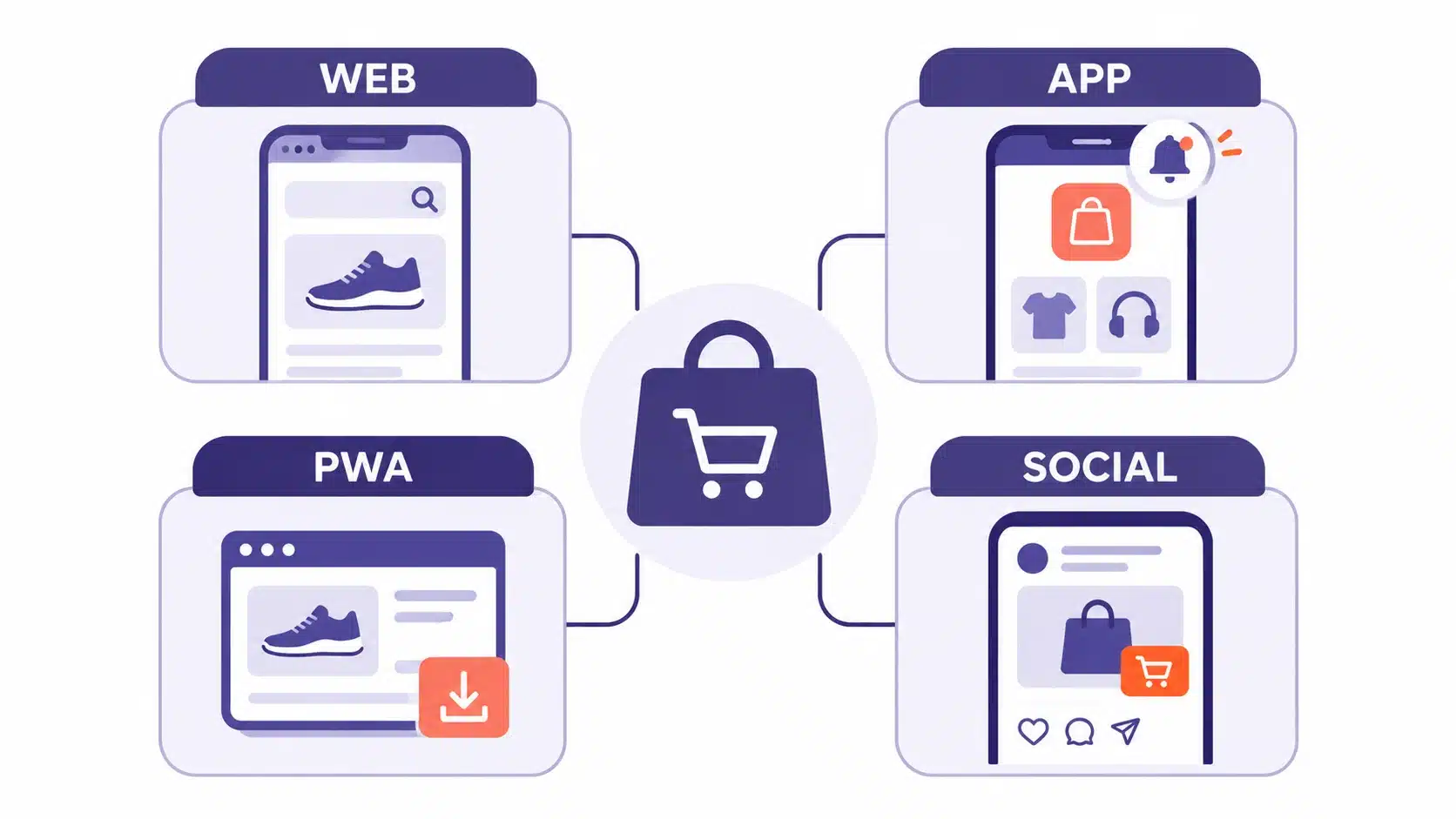
Businesses can support mobile shopping through several channels. The right choice depends on customer preferences, purchase frequency, available resources and the level of functionality required.
The following options offer different ways to make products and services accessible to mobile shoppers.
Mobile-Optimized E-Commerce Websites
A mobile-optimized website adjusts its layout, navigation, images and checkout experience to different screen sizes. Customers can access the store through a mobile browser without installing an application.
This is often the most practical starting point for businesses that want to improve mobile shopping without managing another digital product.
A well-optimized mobile website should offer:
- Responsive layouts that adapt to different screen sizes.
- Fast-loading product and category pages.
- Touch-friendly navigation and buttons.
- Easy-to-use search and filtering options.
- A streamlined checkout process.
- Mobile-friendly payment methods.
Mobile website optimization is particularly useful for businesses that attract customers through search engines, advertising campaigns and social media links.
Dedicated Mobile Shopping Applications
Dedicated shopping applications provide a more integrated experience through installed software on iOS and Android devices.
They can use device capabilities such as biometric authentication, camera access, push notifications and digital wallets. They can also store customer preferences, shopping history and other information that makes repeat purchases easier.
Dedicated applications are particularly valuable for:
- Grocery and food delivery businesses with frequent orders.
- Fashion and beauty retailers with loyalty programs.
- Subscription businesses that encourage recurring purchases.
- Marketplaces with multiple sellers and customer accounts.
- Retailers that rely on personalized shopping experiences.
However, an application requires additional investment in development, testing, distribution and maintenance. Businesses should evaluate customer demand and retention opportunities before choosing this route.
Progressive Web Applications (PWAs)
A progressive web application combines aspects of a website and a mobile application. Customers can access it through a browser and, where supported, install it on their devices.
PWAs can offer features such as home-screen installation, offline functionality for selected experiences and push notifications on supported platforms.
They allow businesses to improve mobile engagement without maintaining completely separate native applications. However, device capabilities and browser support vary, particularly across iOS and Android.
PWAs are useful for retailers that want an app-like shopping experience while keeping much of their existing web infrastructure.
Social Commerce and In-App Shopping
Social commerce allows customers to discover and purchase products through social media platforms.
Retailers can use product tags, shoppable posts, creator partnerships and product links to connect discovery with purchasing. Depending on the platform and market, customers may complete purchases within the social platform or continue to the retailer’s website.
This approach is useful for brands that attract customers through visual content, influencers and social media communities.
Rather than treating social media only as a promotional channel, businesses can make it an important part of their mobile customer journey.
Essential Elements of a Successful Mobile Shopping Experience
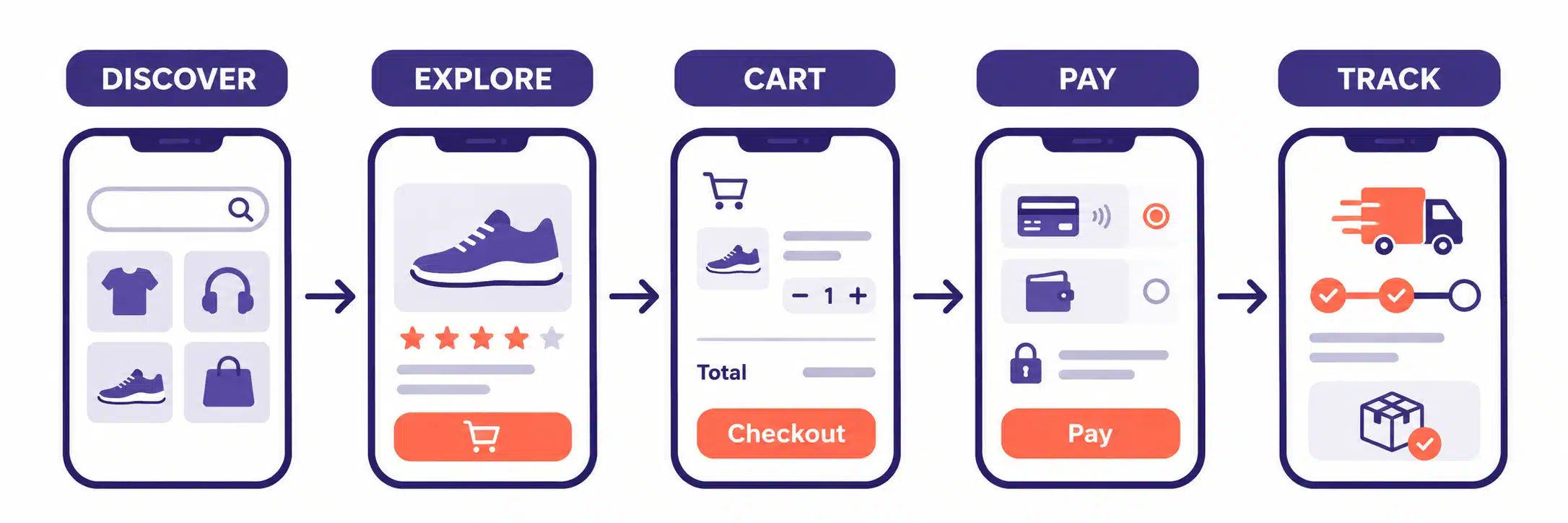
Choosing a mobile commerce channel is only the beginning. Businesses must also make sure customers can find products, understand their options and complete purchases without unnecessary friction.
The following elements help create a more effective mobile shopping experience.
Simple Navigation and Product Discovery
Customers should be able to find products without navigating through multiple menus or unnecessary pages.
A clear category structure, visible search bar and useful filters make product discovery easier. Search autocomplete and typo tolerance can also help shoppers find relevant products when they do not know the exact product name.
For stores with large catalogs, filters for size, color, price, brand and availability help customers narrow down their choices.
Mobile-Friendly Product Pages
Product pages should provide the information customers need to make purchasing decisions.
Important elements include:
- Clear product images with zoom functionality.
- Product descriptions and specifications.
- Available sizes, colors and variations.
- Transparent pricing and shipping information.
- Customer reviews and ratings.
- Visible availability and delivery estimates.
- Clear add-to-cart buttons.
Businesses should also optimize images and page assets to maintain loading speed without compromising product presentation.
Fast and Frictionless Checkout
Checkout is one of the most important parts of the mobile shopping experience.
Baymard Institute’s analysis of 50 studies puts the average cart abandonment rate at 70.22%. Its research identifies unexpected costs and forced account creation among the leading reasons shoppers abandon their carts.
Businesses can address these issues through:
- Guest checkout for first-time customers.
- Saved payment methods for returning shoppers.
- Address autocomplete to reduce manual entry.
- Early disclosure of shipping fees and taxes.
- Fewer checkout steps and form fields.
- Clear error messages and payment confirmation.
The objective is to remove unnecessary steps between adding a product to the cart and completing the purchase.
Multiple Payment Options
Customers have different payment preferences. Offering a limited set of payment methods can create friction, particularly when shoppers cannot use their preferred option.
Businesses should consider supporting:
- Credit and debit cards.
- Apple Pay and Google Pay.
- Other supported digital wallets.
- Region-specific payment methods.
- Buy now, pay later options where appropriate.
- Secure saved payment methods for returning customers.
Payment options should match the target market, customer expectations and available payment gateway integrations.
Personalized Product Recommendations
Personalization helps customers discover products that match their interests and shopping behavior.
Retailers can use browsing history, previous purchases, product preferences and cart activity to recommend relevant items.
For example, a fashion retailer might recommend matching accessories based on a customer’s previous purchase. A grocery store could suggest frequently purchased products when a shopper returns.
AI-powered recommendation systems can improve this process by analyzing customer behavior and identifying patterns across large product catalogs.
Order Tracking and Easy Returns
The customer experience does not end when a payment is successful. Shoppers also need clear information about order processing, shipping, delivery and returns.
Mobile commerce channels should make it easy to:
- View current order status.
- Receive shipping and delivery updates.
- Access previous purchases.
- Request returns or exchanges.
- Contact customer support.
Clear order information reduces uncertainty and helps businesses manage customer expectations after a transaction.
Loyalty Programs and Subscriptions
Loyalty programs encourage customers to continue purchasing from the same business.
Retailers can offer reward points, referral benefits, exclusive discounts and membership programs. Subscription features can also support recurring purchases for products such as groceries, personal care items and household supplies.
These features are particularly valuable for businesses that depend on repeat purchases rather than one-time transactions.
Mobile Commerce Strategies That Improve Conversions and Retention
Having the right features does not automatically produce better sales. Businesses must use them strategically to address customer needs and improve the shopping journey.
Here are some practical strategies that help retailers improve mobile commerce performance.
Reduce Cart Abandonment
A complicated checkout process, unexpected charges and limited payment options can discourage customers from completing purchases.
Businesses should review their checkout analytics to identify where shoppers leave. Simplifying forms, displaying delivery costs earlier and offering guest checkout can help remove common barriers.
Abandoned cart reminders can also bring customers back, provided businesses use relevant messaging and appropriate notification frequency.
Use Personalization to Increase Order Value
Relevant product recommendations can help customers discover complementary products and alternatives.
For example, an electronics retailer can recommend accessories alongside a smartphone, while a grocery store can suggest frequently purchased household items.
Businesses should use customer data responsibly and evaluate recommendation performance through metrics such as average order value, click-through rate and purchase conversion.
Use Push Notifications Strategically
Push notifications allow businesses to communicate with customers even when they are not actively browsing the store.
Useful notification categories include:
- Order confirmations and delivery updates.
- Back-in-stock notifications.
- Price-drop alerts.
- Abandoned cart reminders.
- Relevant promotional offers.
- Subscription renewal reminders.
However, excessive notifications can frustrate customers and lead them to disable alerts. Businesses should segment audiences and send messages based on customer preferences and behavior.
Improve Mobile Page Performance
Slow-loading pages can interrupt product discovery and checkout.
Retailers should optimize image sizes, reduce unnecessary scripts, use caching and monitor server response times. They should also test performance across different devices and network conditions.
Performance optimization should cover the complete shopping journey, including product listings, product details, cart and checkout pages.
Build Long-Term Customer Loyalty
Acquiring a customer is only one part of growing an online business. Retailers also need to create reasons for customers to return.
Loyalty rewards, personalized offers, subscriptions and convenient reorder options can support repeat purchases.
Businesses should track repeat purchase rate, customer lifetime value and purchase frequency to understand whether these initiatives are producing meaningful results.
Technologies and Trends Shaping Mobile Commerce
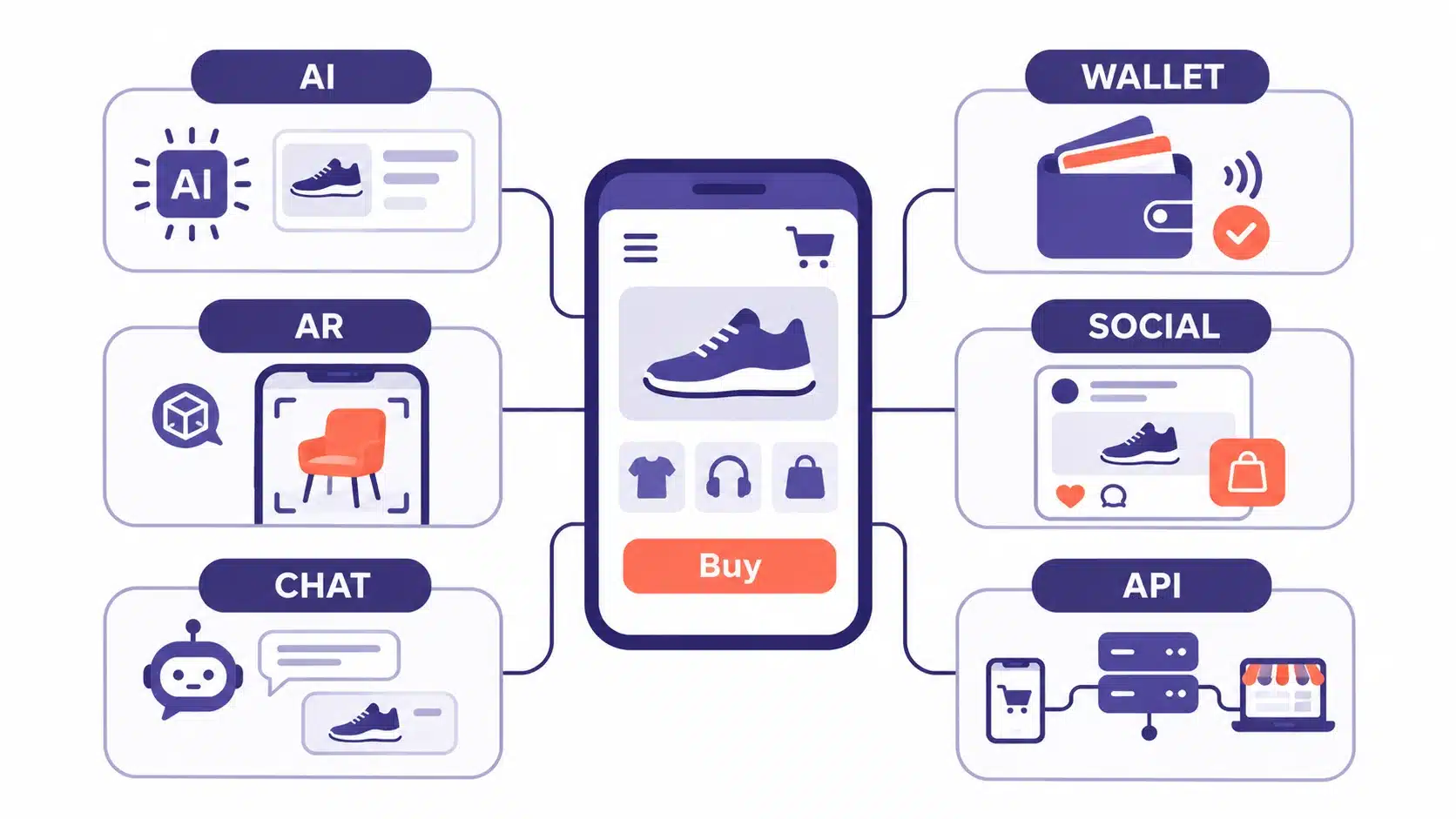
Mobile commerce continues to evolve as businesses adopt technologies that make shopping more convenient and personalized.
However, not every emerging technology deserves an immediate investment. Retailers should prioritize solutions that address measurable customer or operational needs.
AI-Powered Personalization
Artificial intelligence helps retailers analyze customer behavior and make product discovery more relevant.
Common applications include:
- Personalized product recommendations.
- AI-powered search and product discovery.
- Conversational shopping assistants.
- Automated customer support.
- Predictive inventory and demand analysis.
- Personalized promotional campaigns.
For example, AI can help a retailer recommend products based on browsing behavior, previous purchases and similar customer preferences.
Businesses should begin with specific use cases and expand their AI capabilities as they collect reliable customer and product data. You can also explore how AI is changing the e-commerce industry.
Digital Wallets and Contactless Payments
Digital wallets make mobile payments faster by reducing the need to enter card information manually.
Services such as Apple Pay and Google Pay use supported authentication and payment infrastructure to simplify transactions.
Retailers can integrate these payment options into mobile websites and applications to reduce checkout friction.
Augmented Reality Shopping
Augmented reality allows customers to view digital products in real-world environments through their mobile devices.
For example:
- Furniture retailers can let customers preview how a sofa or table might look in their homes.
- Eyewear brands can offer virtual try-on experiences.
- Beauty businesses can allow customers to preview makeup products.
- Fashion retailers can experiment with virtual fitting experiences.
AR is particularly useful for products where appearance, size or fit influences purchasing decisions. However, businesses should validate customer demand before investing in complex AR experiences.
Social Commerce
Social commerce connects product discovery with social media engagement and purchasing opportunities.
Retailers can use shoppable content, influencer campaigns, product demonstrations and direct product links to attract mobile shoppers.
This approach is especially relevant for fashion, beauty, lifestyle and consumer brands that rely on visual product discovery.
Conversational Commerce
Conversational commerce uses messaging interfaces and AI-powered assistants to help customers during their shopping journey.
Customers can ask questions about product specifications, availability, delivery options and order status.
Businesses can use chatbots and messaging integrations to provide support without requiring customers to navigate multiple pages.
These systems work best when they provide accurate information and can transfer complex requests to human support teams.
Headless Commerce
Headless commerce separates the customer-facing storefront from the backend commerce infrastructure.
This architecture allows businesses to deliver product catalogs, pricing, inventory and other commerce services across multiple channels through APIs.
For example, a retailer can use the same backend to support its website, mobile application, in-store experiences and other digital touchpoints.
Headless commerce is useful for businesses with complex operations or multiple customer-facing channels. However, it requires additional architectural planning, integration work and technical expertise.
How to Choose the Right Mobile Commerce Platform?
The commerce platform determines how businesses manage products, orders, inventory, payments and customer information.
Some retailers can use an existing e-commerce platform with mobile-friendly features, while others may need custom integrations or a dedicated storefront.
Here are some widely used platforms and the requirements they can support.
Shopify and Shopify Plus
Shopify provides hosted commerce infrastructure for businesses that want to manage products, orders, payments and storefront operations through a centralized platform.
It supports integrations with mobile storefronts and third-party applications, making it suitable for businesses that want to expand their digital commerce presence without building the entire backend from scratch.
Shopify Plus offers additional capabilities for larger businesses with more complex operational requirements.
WooCommerce
WooCommerce is an e-commerce platform built on WordPress. It allows businesses to manage products, payments and orders through an extensible website environment.
Its plugin ecosystem supports different payment gateways, shipping services and store functionality.
WooCommerce can be a practical choice for businesses that already use WordPress and want greater control over their online store.
Magento / Adobe Commerce
Adobe Commerce, formerly Magento Commerce, supports businesses with complex catalogs, custom pricing and advanced commerce requirements.
Its flexibility makes it suitable for retailers that need tailored workflows, multiple storefronts or deeper integrations with enterprise systems.
However, implementation and ongoing maintenance can require substantial technical resources.
BigCommerce
BigCommerce provides hosted commerce infrastructure with support for product catalogs, payment integrations and multiple selling channels.
It also supports API-driven integrations, making it relevant for businesses exploring headless commerce or connecting multiple customer-facing experiences.
Custom Commerce Platforms
Some businesses have requirements that existing platforms cannot easily support.
Marketplaces, B2B retailers and businesses with proprietary pricing or complex fulfillment processes may benefit from custom commerce infrastructure.
A custom solution provides greater control over workflows, integrations and customer experiences. However, it also increases development costs and ongoing technical responsibilities.
Platform-Connected or Custom Backend?
Businesses should also decide whether their mobile commerce channels will connect to an existing platform or rely on a custom backend.
If a retailer already uses Shopify, BigCommerce, Magento or WooCommerce, a mobile storefront can connect to the existing platform through APIs. This allows the business to maintain its product catalog, inventory and order management in one place.
A custom headless backend may make more sense for marketplaces, proprietary pricing, B2B workflows or unusual fulfillment requirements.
Before selecting an architecture, businesses should identify which system will manage products, inventory, customers, orders and payments. Unclear ownership of this data can create integration problems and expensive rework later.
How Much Does Mobile Commerce Implementation Cost?
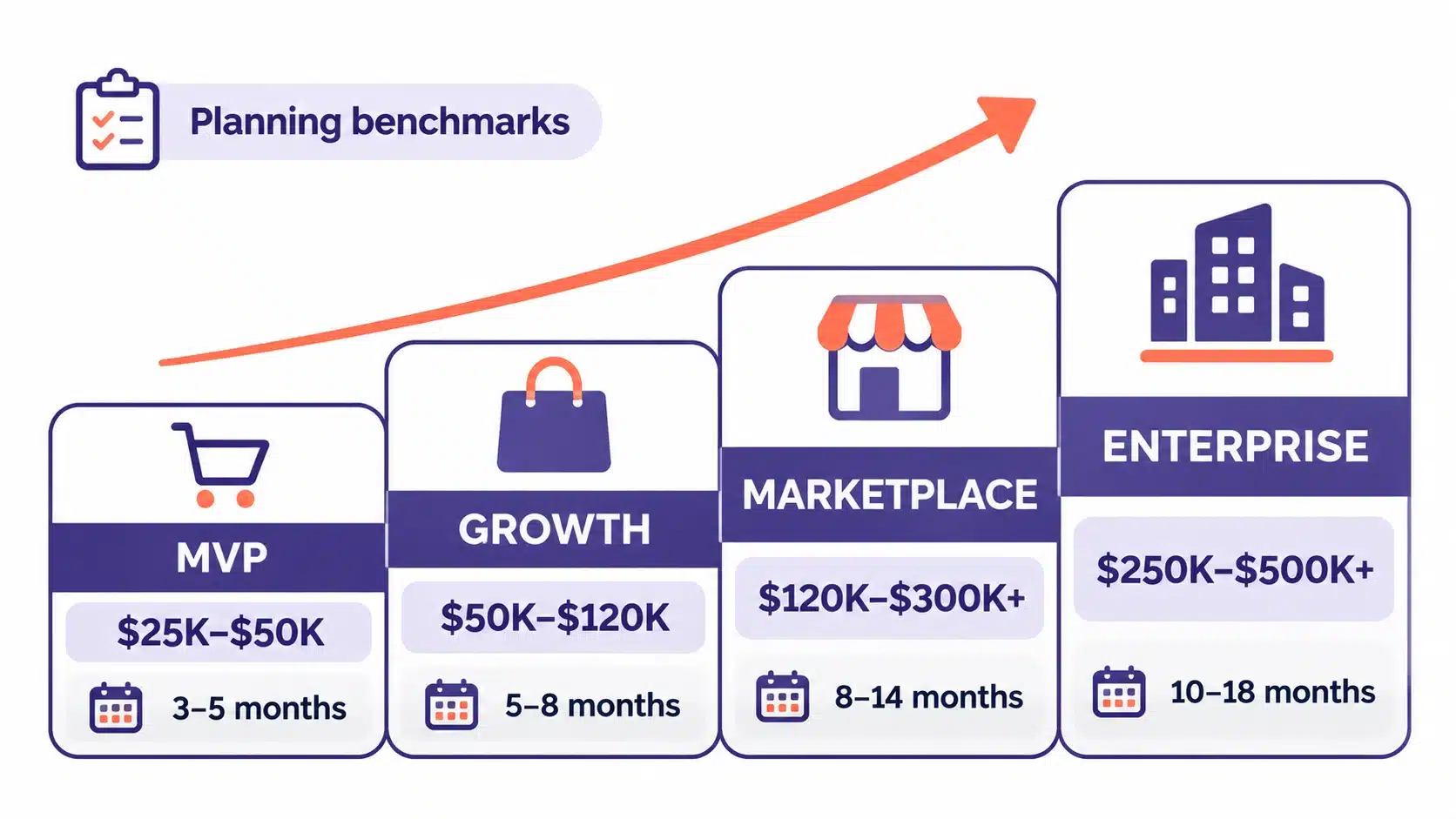
Mobile commerce implementation costs depend on the channels, platforms and functionality a business needs.
Improving an existing mobile website generally requires a different investment from launching a dedicated shopping application or building a custom commerce platform.
The complexity of product catalogs, payment workflows, inventory management, fulfillment and third-party integrations also affects the overall budget.
For businesses planning a dedicated mobile application, the following ranges provide useful starting benchmarks.
| Implementation level | Typical scope | Estimated cost | Typical timeline |
| Focused mobile commerce MVP | Product catalog, search, cart, checkout, one payment gateway, order tracking and basic administration | $25,000 to $50,000 | 3 to 5 months |
| Growth-ready mobile commerce app | Custom UX, loyalty, reviews, returns, analytics and several integrations | $50,000 to $120,000 | 5 to 8 months |
| Marketplace or omnichannel app | Buyer and seller workflows, commissions, payouts, store inventory and advanced administration | $120,000 to $300,000+ | 8 to 14 months |
| Enterprise commerce platform | Multiple regions or brands, ERP and POS integrations, AI and high-scale infrastructure | $250,000 to $500,000+ | 10 to 18 months |
These figures are planning benchmarks for dedicated mobile commerce products, not fixed quotations. Mobile website optimization, PWA implementation and existing platform customization require separate estimates based on the current infrastructure and scope.
A complete mobile commerce application also needs backend services, administration tools, analytics, integrations, security testing, deployment and ongoing support.
Building separate native applications for iOS and Android typically increases development costs by 30% to 50% compared with a cross-platform approach.
What Influences Mobile Commerce Implementation Costs?
Several business and technical factors determine the final investment.
- Business model: A single-brand store is generally simpler than a multi-vendor marketplace, which requires seller onboarding, commissions, payouts and dispute management.
- Platform selection: Existing commerce platforms can reduce the need to develop core store functionality, while custom infrastructure requires additional engineering.
- Integrations: Connections to ERP systems, CRMs, shipping carriers, tax engines and payment gateways increase implementation and testing effort.
- Catalog complexity: Product variations, bundles, multiple currencies and location-based availability add backend and search requirements.
- Advanced capabilities: AI recommendations, AR try-on and visual search introduce additional data, evaluation and privacy requirements.
- Team and delivery model: In-house, freelance, agency and offshore teams have different rates and management overhead. Businesses should compare total project costs rather than hourly rates alone.
A realistic budget should also account for different implementation workstreams. As a rough planning guide, discovery takes 5% to 10%, design 10% to 15%, mobile development 25% to 35%, backend and administration another 25% to 35%, integrations 10% to 20%, and QA and release 15% to 20%.
For a broader understanding of application development budgets, see Simpalm’s guide on how much it costs to make an app.
What Costs Should Businesses Expect After Implementation?
The initial implementation budget is only one part of the total cost of mobile commerce.
Businesses should plan for recurring expenses associated with maintaining their platforms, supporting transactions and improving the customer experience.
Common post-launch costs include:
- Maintenance and updates: Annual maintenance commonly runs 15% to 25% of the original application development cost, depending on complexity and support requirements.
- Cloud and third-party services: Hosting, databases, search, email, SMS, analytics and payment processing fees increase with usage.
- Platform and operating system compatibility: Websites and applications require updates as browsers, iOS, Android and third-party platforms change.
- Security upkeep: Dependency updates, security patches and periodic testing help protect customer and transaction data.
- Continuous improvement: New features, performance optimization and customer experience experiments help businesses respond to changing needs.
Before implementation, businesses should establish baseline metrics for mobile conversion rate, average order value, repeat purchase rate and install-to-first-purchase rate where applications are involved.
Reviewing these metrics after each major release helps teams connect technology investments with measurable business outcomes.
Security and Compliance Considerations in Mobile Commerce
Customers need confidence that their personal and payment information is protected before completing an online purchase.
Mobile commerce businesses handle sensitive information across multiple systems, including storefronts, payment gateways, customer accounts, APIs and third-party integrations.
The following security considerations help reduce common risks.
Payment Data Protection
Handling raw card details directly increases security responsibilities and compliance requirements.
Businesses should use PCI DSS-compliant payment gateways such as Stripe, Braintree or Adyen and implement payment tokenization so raw card numbers do not need to pass through or remain on their own systems.
Account Takeover and Credential Security
Weak passwords and reused credentials can expose customer accounts to unauthorized access.
Businesses should support secure authentication practices, including multi-factor authentication for sensitive activities and biometric login where supported.
Additional safeguards such as login rate limits, suspicious activity detection and secure password recovery can help reduce account takeover risks.
Secure API Communication
Mobile commerce platforms rely on APIs to exchange information between storefronts, backend services and third-party systems.
Businesses should use token-based authentication, validate incoming requests, encrypt traffic with TLS and apply rate limits to protect API endpoints.
They should also review access permissions and monitor API activity for suspicious behavior.
Customer Data Protection
Customer information stored on mobile devices, servers and third-party platforms needs appropriate protection.
Businesses should collect only the information required for their services, encrypt sensitive data and use secure storage mechanisms for authentication tokens and session information.
Access controls and session expiration policies can further reduce exposure if a device is lost or compromised.
Privacy and Regulatory Compliance
Mobile commerce businesses may need to comply with regulations such as GDPR and CCPA, depending on where they operate and which customers they serve.
They should provide appropriate consent mechanisms, explain how customer data is used and offer required data access or deletion options.
Payment-related operations must also maintain the relevant PCI DSS security controls.
Security should be considered during platform selection and implementation rather than treated as a final testing activity.
Common Mobile Commerce Challenges and How to Address Them
Even well-established retailers can face challenges when managing mobile commerce operations. These issues often affect customer satisfaction, conversion rates and business efficiency.
Here are some common problems and practical ways to address them.
High Mobile Cart Abandonment
Customers may leave their carts because of unexpected charges, lengthy checkout forms or limited payment options.
How to address it: Simplify checkout, offer guest purchasing, display shipping costs early and support relevant digital wallets. Use analytics to identify the exact steps where shoppers abandon their purchases.
Slow Shopping Experiences
Large images, unnecessary scripts and inefficient backend requests can make mobile storefronts slow.
How to address it: Optimize images, reduce unnecessary scripts, implement caching and monitor page performance. Test important shopping journeys across different devices and network conditions.
Complicated Product Discovery
Customers may struggle to find products when categories, filters and search functions are poorly organized.
How to address it: Improve category navigation, add relevant product filters and introduce search autocomplete. Review customer search behavior to identify missing products and common discovery problems.
Poor Personalization
Generic product recommendations and irrelevant promotional messages can reduce customer engagement.
How to address it: Use browsing and purchase data to create relevant recommendations and segment customers based on their preferences. Review recommendation performance regularly rather than relying on assumptions.
Inventory and Order Synchronization Problems
Businesses operating across websites, applications, marketplaces and physical stores may struggle to maintain consistent product availability and order information.
How to address it: Establish a reliable source of truth for inventory and orders. Integrate commerce channels with centralized inventory and order management systems, and monitor synchronization failures.
Payment and Customer Trust Concerns
Customers may hesitate to purchase when payment methods are unfamiliar or security information is unclear.
How to address it: Integrate trusted payment gateways, explain payment and return policies clearly and use secure authentication. Make order confirmations and transaction information easy to access.
How to Build and Improve Your Mobile Commerce Strategy?
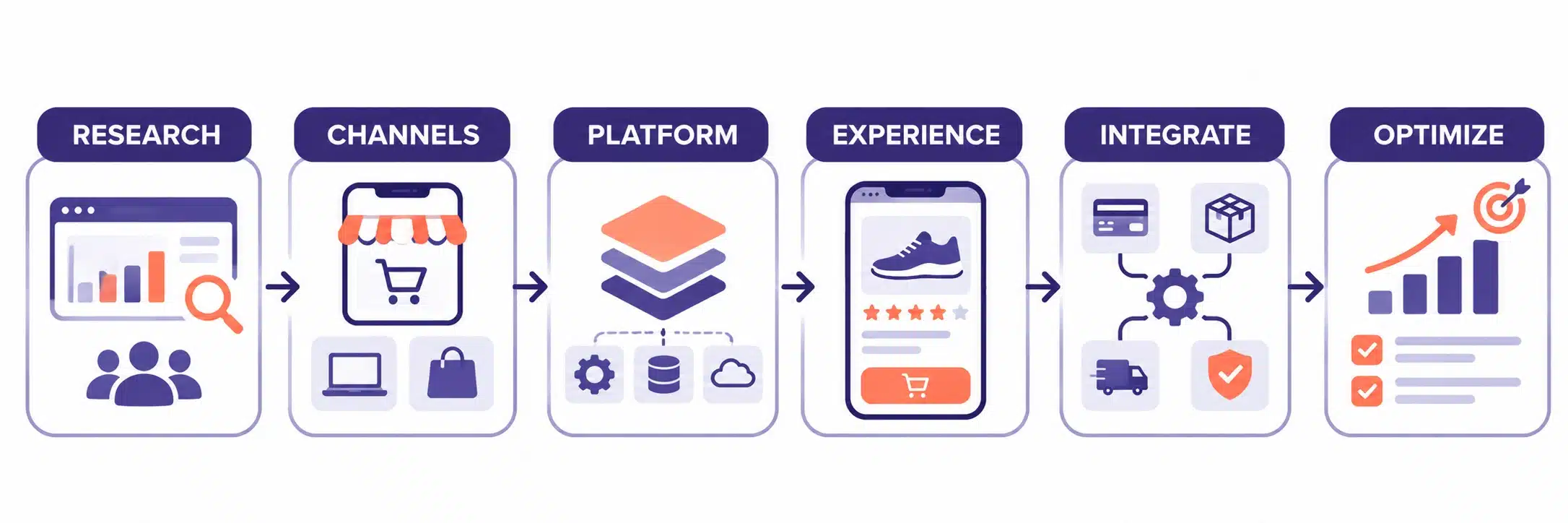
A successful mobile commerce strategy starts with customer needs and business objectives, not a list of technologies.
Businesses should identify where mobile shoppers experience friction, choose suitable commerce channels and prioritize improvements based on their potential impact.
The following steps provide a practical implementation approach.
1. Understand Customer Shopping Behavior
Review website analytics, purchase history, customer feedback and device usage to understand how shoppers interact with your business.
Identify the products customers search for, where they abandon purchases and which channels generate repeat orders.
These findings help determine whether the business needs website optimization, a PWA, a dedicated application or a combination of channels.
2. Choose the Right Commerce Channels
Select the channels that match customer behavior and business requirements.
For example, a retailer with strong organic search traffic may benefit from improving its mobile website first. A grocery business with frequent repeat purchases may gain more value from a dedicated shopping application.
Avoid investing in additional channels unless they address a clear customer or operational need.
3. Select a Suitable Commerce Platform
Evaluate platforms based on catalog complexity, inventory management, payment requirements, integrations and expected growth.
Businesses with straightforward requirements may be able to use an existing platform. Marketplaces and enterprise retailers may need custom infrastructure or headless commerce architecture.
Consider long-term maintenance and integration requirements before finalizing the platform.
4. Prioritize the Customer Shopping Experience
Start with the elements that have the greatest influence on purchasing decisions.
Improve navigation, product information, search, checkout, payment options and order tracking before investing in advanced features.
A reliable purchase journey provides a stronger foundation for personalization, loyalty programs and other engagement initiatives.
5. Integrate Payments, Inventory and Fulfillment
Mobile commerce channels need accurate information about product availability, pricing, transactions and order status.
Connect the storefront with payment gateways, inventory systems, shipping services and order management tools.
Test these integrations early to identify API limitations, synchronization issues and operational dependencies.
6. Measure Performance and Continuously Optimize
Track metrics that connect the mobile shopping experience with business outcomes.
Useful metrics include:
- Mobile conversion rate.
- Cart abandonment rate.
- Average order value.
- Repeat purchase rate.
- Customer acquisition cost.
- Customer lifetime value.
- Page loading performance.
- Install-to-first-purchase rate for mobile applications.
Review these metrics regularly and use the findings to prioritize future improvements.
Mobile commerce should be treated as an ongoing business initiative rather than a one-time technology project.
Final Thoughts
Mobile commerce is about making it easier for customers to discover products, complete purchases and maintain relationships with businesses through their mobile devices.
A successful strategy goes beyond launching a shopping application. It considers the complete customer journey, from product discovery and payment to order fulfillment, customer support and repeat purchases.
Businesses should begin by understanding customer behavior, selecting suitable commerce channels and removing friction from the shopping experience. They can then introduce technologies such as AI personalization, digital wallets and augmented reality where these capabilities offer measurable value.
For businesses that need a dedicated mobile shopping experience, the right development approach also matters. Simpalm has delivered mobile and web products for around 17 years, using native Swift and Kotlin, Flutter, React Native and PWA approaches.
Our team helps businesses evaluate their commerce requirements, select suitable technologies and build scalable digital products through our e-commerce development services.
Frequently Asked Questions
Q1. What is mobile commerce (mCommerce)?
Ans. Mobile commerce refers to buying and selling products or services through smartphones and tablets. It includes mobile websites, shopping applications, progressive web apps and social commerce channels. Customers can use these channels to browse products, make payments, track orders and access loyalty programs.
Q2. What is the difference between mobile commerce and e-commerce?
Ans. E-commerce covers buying and selling products or services through digital channels, including desktop computers and mobile devices. Mobile commerce is a part of e-commerce that focuses specifically on transactions and shopping experiences through smartphones and tablets.
Q3. What are the different types of mobile commerce?
Ans. Common types of mobile commerce include mobile-optimized shopping websites, progressive web applications, dedicated shopping applications and social commerce. Businesses can also support mobile payments, digital wallets and conversational shopping experiences through these channels.
Q4. How much does it cost to implement mobile commerce?
Ans. Costs depend on the chosen channel, platform, integrations and customization requirements. A dedicated cross-platform mobile commerce MVP may cost around $25,000 to $50,000, while growth-ready applications can range from $50,000 to $120,000. Marketplace and enterprise solutions can cost considerably more. Businesses should also account for hosting, security, maintenance and third-party service expenses.
Q5. What features should a mobile commerce platform have?
Ans. A mobile commerce platform should support simple navigation, product search, detailed product pages, secure payments, streamlined checkout and order tracking. Depending on business requirements, it may also include personalized recommendations, push notifications, loyalty programs, subscriptions and customer support tools.
Q6. Which platform is best for mobile commerce?
Ans. The right platform depends on the business model and technical requirements. Shopify and BigCommerce suit businesses looking for managed commerce infrastructure, while WooCommerce works well for businesses using WordPress. Adobe Commerce supports more complex enterprise requirements, and custom platforms provide greater control for marketplaces and specialized commerce workflows.
Q7. Is a mobile commerce application necessary for every online store?
Ans. No. A mobile-optimized website may be sufficient for businesses that primarily attract customers through search engines, advertisements and social media. A dedicated application becomes more valuable when customers make frequent purchases, use loyalty programs or benefit from features such as push notifications, saved preferences and biometric authentication.
Q8. How can businesses improve mobile commerce conversions?
Ans. Businesses can improve mobile conversions by simplifying checkout, displaying delivery costs early, supporting preferred payment methods and improving product discovery. Faster page loading, relevant product recommendations and transparent return policies can also make customers more confident about completing purchases.