
 Design
 App Development
 Web Engineering
 AI Services
 Cloud
Cloud Staffing
 Startups
 Health / Fitness
 Education
 Social
 Nonprofit
 Fintech
 Construction
 Logistics
 Government
 Travel/Hospitality
 HR Software
 About Simpalm
 Our News
 Client Testimonials
 Careers
 Our Blog
 Awards
 Resources
 Information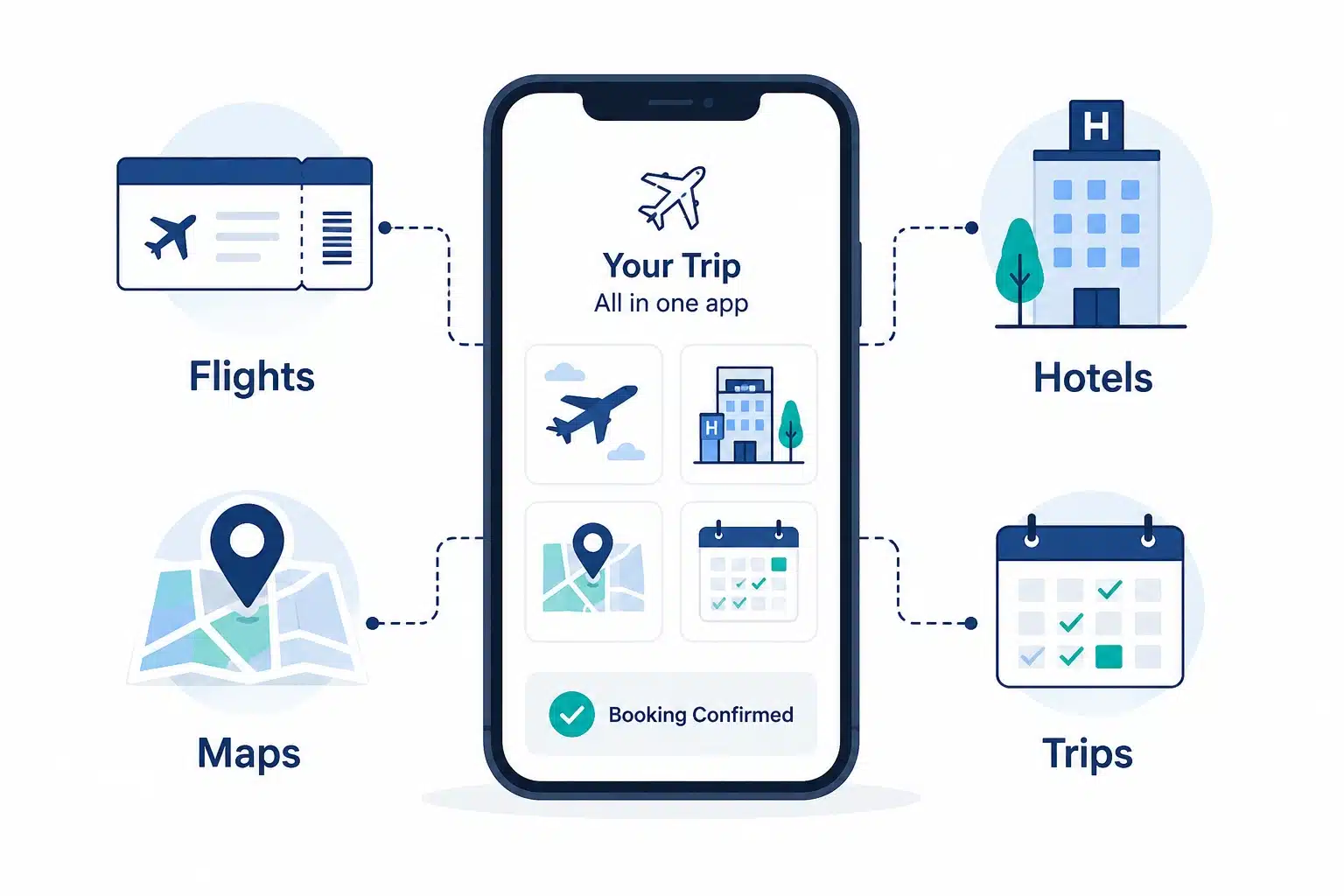
Key Takeaways
- The global travel app market is growing fast, with hundreds of millions of travelers now booking flights, hotels, and activities directly through mobile apps.
- Travel apps are not one product. Booking platforms, itinerary planners, navigation tools, and price trackers each solve a different problem and need a different feature set.
- The features that matter most remove friction at the exact moment a traveler needs them, such as offline access when signal drops or real-time alerts when a flight gets delayed.
- Compliance is often the most overlooked part of travel app development. Payment security, data privacy laws, and accessibility rules all shape how the app must be built.
- Cost and timeline depend heavily on how many third-party systems the app needs to talk to, since travel apps rely on live data more than almost any other app category.
________________________________________________________________________________________
Planning a trip used to mean phone calls to travel agents, printed boarding passes, and folders full of confirmation emails. Today, a single app can search flights, book a hotel, build a full itinerary, and warn a traveler about a gate change before the airport even announces it. Apps like Expedia handle the booking side, Citymapper handles navigation once travelers land, Hopper tracks prices for deal hunters, and TripIt turns scattered confirmations into one clean schedule. Travel apps now shape more travel decisions than any other single tool.
This guide covers why the travel app market is worth entering right now, the main types of travel apps and how to choose between them, the features that actually move the needle, the tech stack behind a modern travel app, the development process, compliance rules you cannot skip, realistic costs, the team you need, and tips for keeping users coming back after launch.
What is a Travel App?
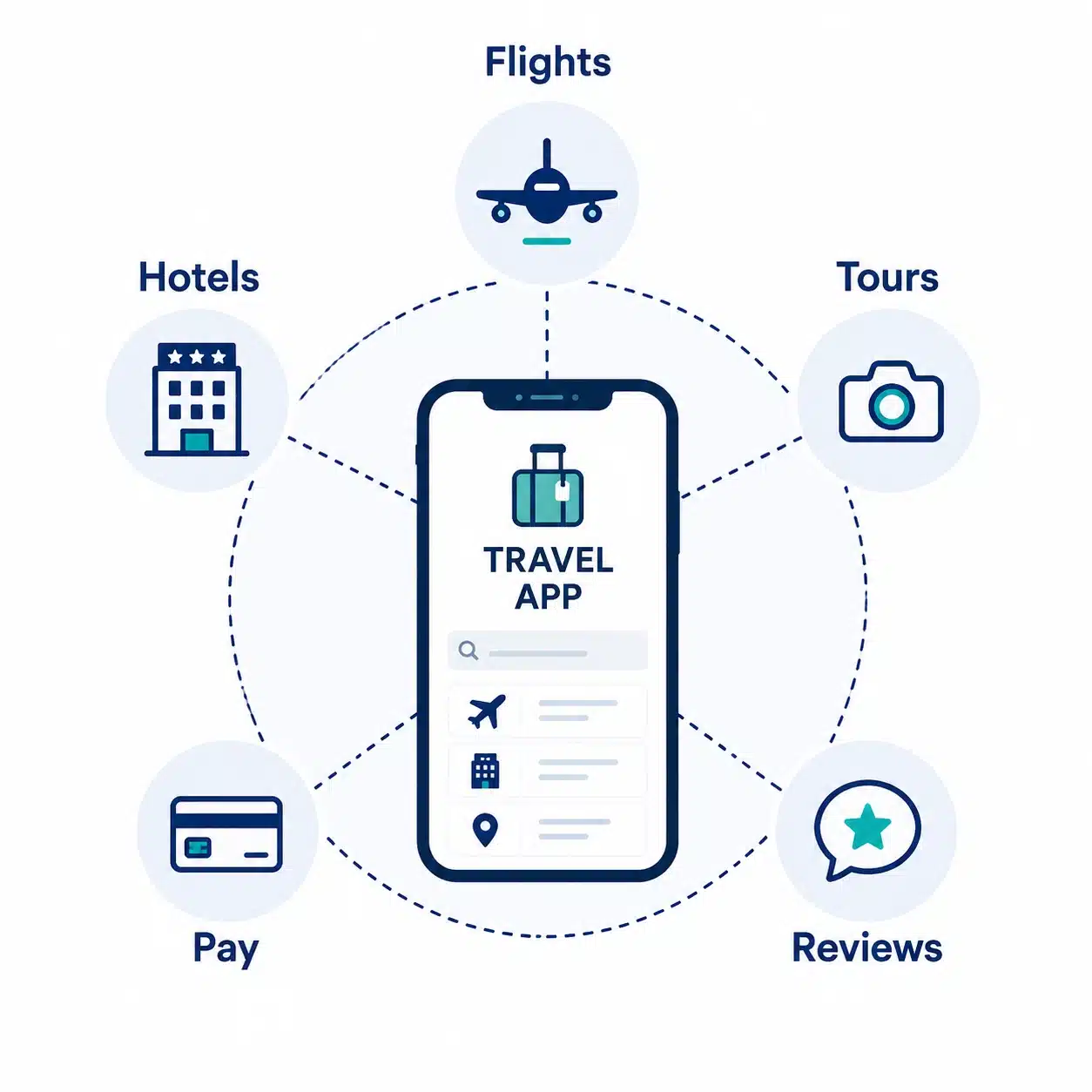
A travel app helps people plan, book, and manage trips from one place. That includes searching for flights and hotels, comparing prices, making a reservation, and keeping track of everything once the trip begins.
Behind the simple interface sits a web of live connections. A travel app pulls real-time flight and hotel data from providers such as Amadeus or Sabre, processes payments through Stripe, and displays maps via Google Maps or Mapbox. When a user searches for a flight, the app checks prices across multiple sources, confirms seat availability, and prepares to process a secure payment the moment the user taps book.
This is what makes travel apps harder to build than many other app categories. The app is only as reliable as the data flowing into it. If a hotel’s availability feed is a few minutes out of date, or a flight status update arrives late, the experience breaks down fast. Getting real-time synchronization right is what separates a trustworthy app from one users abandon after the first bad booking experience.
Understanding the Travel App Market in 2026
Travel apps are no longer a nice-to-have for travel companies. They have become the default way people book and manage trips.
More than 900 million people used a travel app in 2024, and international tourism crossed roughly 1.4 billion arrivals the same year, well past pre-pandemic levels. Market researchers project the global travel and tourism app market to grow from around 650 billion dollars in 2024 to over 3.5 trillion dollars by 2034, a compound annual growth rate above 18 percent. That kind of growth happens when an entire industry shifts its default behavior, and travel booking has clearly shifted toward mobile.
For founders, airlines, hotel groups, and travel startups, this growth presents a real business opportunity in several ways. Here are the key driving factors making apps an opportunity for travel businesses:
- Direct revenue instead of commission losses – Third-party booking platforms typically take 15 to 30 percent of every booking. A branded app that lets customers book directly keeps nearly all of that revenue.
- Stronger brand loyalty – A well-designed app with a consistent identity becomes something travelers remember and return to.
- Multiple ways to make money – Commissions, subscriptions, freemium models, and advertising can all coexist inside one app.
- Better data for smarter decisions – Every search and booking
- generates behavioral data that supports dynamic pricing and personalized recommendations.
- Room to specialize – Niche categories such as RV travel or pet-friendly stays face far less competition, and a focused app can build deep loyalty within a smaller audience.
| Pro tip: Do not try to compete head-on with giants like Expedia or Booking.com on breadth. Winning apps usually pick one part of the travel journey- planning, booking, navigation, or a specific niche- and do it better than anyone else before expanding. |
The Core Types of Travel Apps
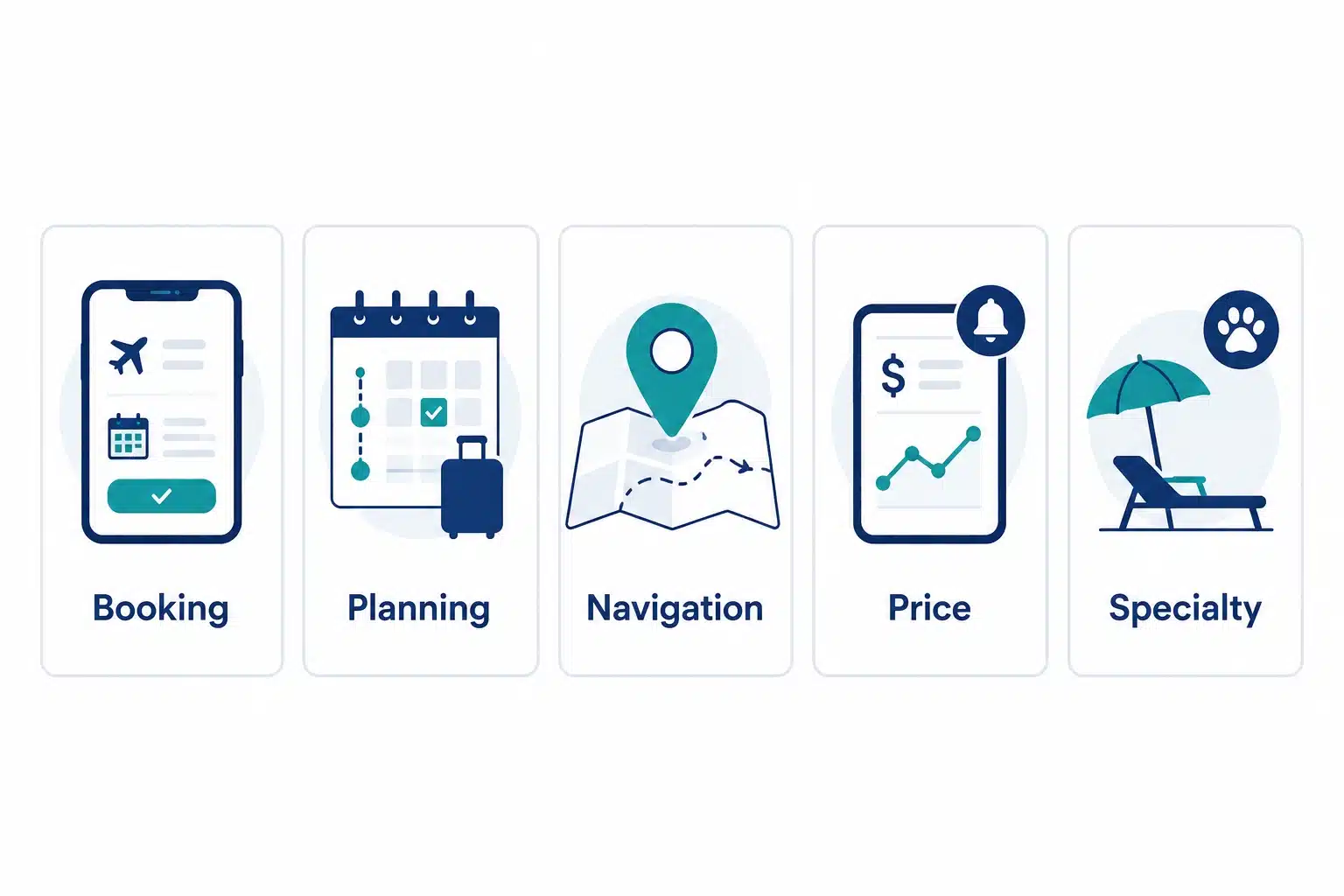
A travel app is not one single platform with few specific problems. It is a sequence of problems, from finding a flight to navigating a foreign city to remembering where you parked. Each type of travel app solves one part of that sequence particularly well.
- Travel planning and itinerary apps – pull scattered bookings out of email and into one organized schedule, syncing with a calendar and letting companions collaborate. TripIt is the clearest example.
- Booking apps – are centralized platforms for flights, hotels, cars, and tours, built around price comparison and secure checkout. Expedia is the best-known example.
- Experience and local activity apps – curate tours and local guides, backed by reviews and AI recommendations. GetYourGuide turned local discovery into a browsable catalog.
- Accommodation apps – focus on hotels, apartments, and unique stays with detailed filters. Booking.com is the standard reference.
- Transportation and navigation apps – handle real-time routing across walking, transit, and rideshare. Citymapper is the go-to example.
- Price monitoring apps – track fares and alert users to deals, sometimes predicting whether to book now or wait. Hopper popularized this model.
- Specialty travel apps – serve a specific audience, such as hikers or RV travelers. AllTrails shows how a focused niche can build loyalty broader apps struggle to match.
Which Type Should You Build? A Simple Decision Framework
Most founders make the mistake of trying to build a bit of everything: planning, booking, navigation, and community, all inside one app. That usually leads to a bloated first version that does nothing particularly well. Three questions can help narrow the decision.
Who is the app really for?
A business traveler needs itinerary tools far more than deal alerts. A budget backpacker cares more about price tracking than premium hotel filters. Define the primary user before choosing features.
Where does your revenue come from?
Booking and accommodation apps monetize through commissions. Planning apps often rely on subscriptions or freemium upgrades. Price tracking apps work well with subscriptions paired with affiliate revenue.
How much data access do you already have?
Booking apps depend on deep integrations with providers like Amadeus or Sabre, which take time to negotiate. Planning or navigation apps can often launch faster since they rely more on public APIs like Google Maps. If speed to market matters most, this question often decides the category.
Once you have picked a primary type, the next decision is which features actually belong in your first version.
Popular Features for a Travel App
Every feature should solve a real problem a traveler faces at a specific moment, whether that is comparing flights at 11 pm before a trip or trying to find a gate change announcement while running through an airport.
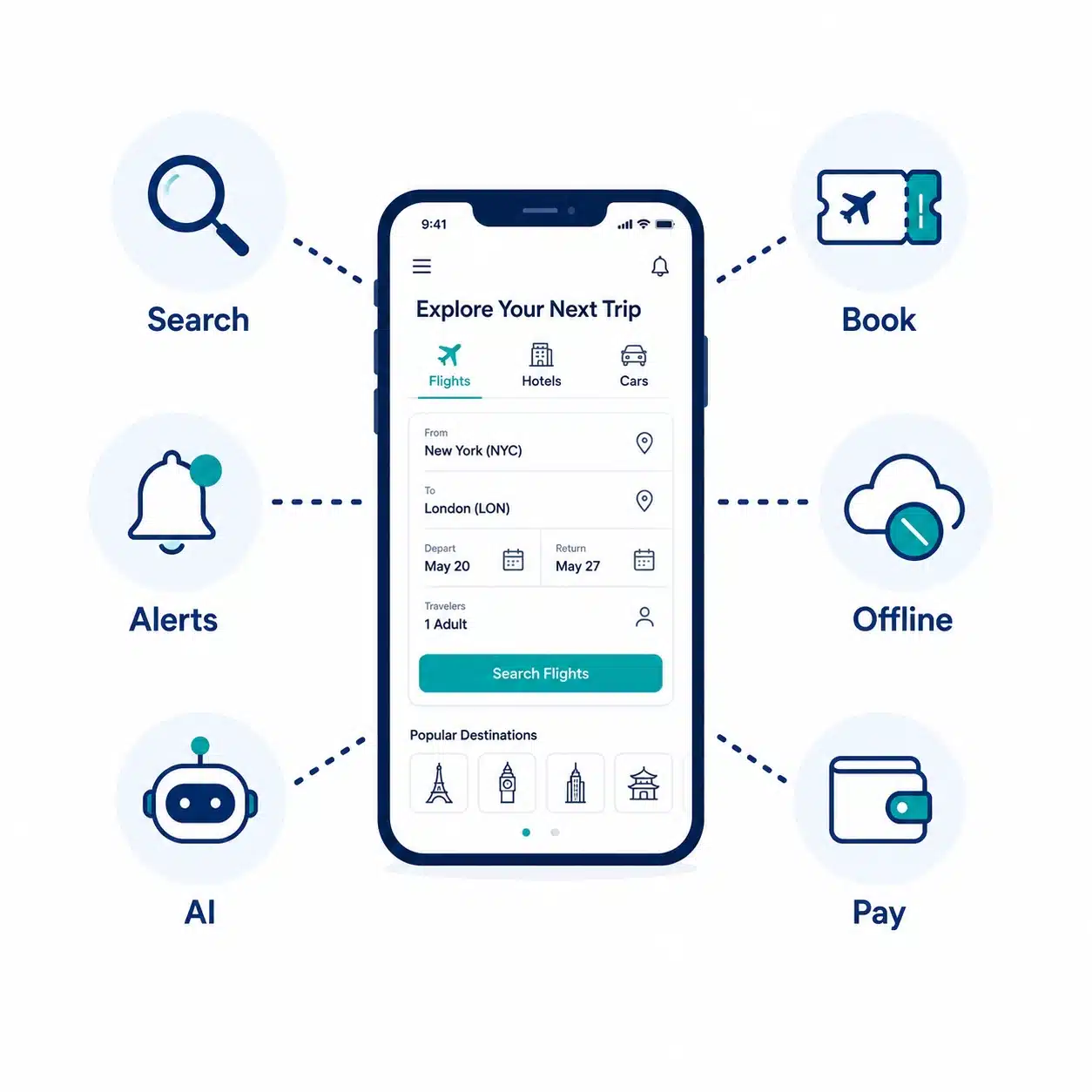
Below are the features that matter most, grouped by what they actually do for the user.
Core Features
- User profiles: Secure sign-in unlocks personalization from the first use. Profiles store passport details, payment methods, and trip history, speeding up every future booking, and business travelers benefit from automatic policy checks.
- Comprehensive search and filters: A weak search function is one of the fastest ways to lose a user. Filters for price, dates, stops, and amenities need to feel instant and precise.
- Booking and reservation management: One-tap booking for flights, hotels, cars, and tours, with clear fare rules shown upfront, builds trust and reduces support requests.
Trip Organization Features
- Travel itineraries: Consolidating every booking into one daily schedule, with calendar sync and the ability to invite companions, turns a chaotic inbox into a clear plan.
- Real-time updates and notifications: Flight delays, gate changes, and safety alerts need to reach the user instantly. This feature does more for user trust than almost any other.
- Offline access: Signal drops on planes and in remote areas. Letting users download itineraries, maps, and bookings ahead of time, with automatic sync once connection returns, turns a frustrating moment into a reason to trust the app more.
| Pro tip: Build offline mode and real-time notifications early, even in a minimum viable product. These two features shape user trust more than almost anything else, and retrofitting them later is far more expensive than designing for them from the start. |
Trust and Engagement Features
- User reviews and recommendations: Verified reviews with real photos and honest ratings help new users make fast, confident decisions.
- In-app communication: Direct messaging between travelers and providers cuts down on phone support costs while giving users a fast path to a human.
- Secure payments: Supporting Apple Pay, Google Pay, and major cards, along with real-time currency conversion, reduces checkout drop-off.
- Cost calculators and budget tools: Showing full costs upfront, including taxes and insurance, builds trust and leads to fewer refund requests.
AI-Powered and Advanced Features
- AI trip planning: Letting users describe a trip in plain language and getting a complete itinerary back saves hours of research and gives users a reason to return.
- AR and VR previews: Letting users step inside a hotel room or destination virtually before booking builds confidence for expensive reservations.
- Sustainability tools: Carbon footprint calculators and eco-friendly suggestions appeal strongly to younger travelers.
- Multi-language and multi-currency support: Real-time translation and local currency pricing open the app to international markets.
- AI chat support: A chat assistant that handles flight changes and basic troubleshooting around the clock reduces support costs.
Features by App Type
| Feature | Booking App | Planning App | Navigation App | Price Tracker |
| Real-time search and filters | Yes | Optional | No | Yes |
| Itinerary organization | Optional | Yes | No | No |
| Offline maps and access | Optional | Yes | Yes | No |
| AI trip planning | Optional | Yes | No | Optional |
| Price alerts and prediction | Optional | No | No | Yes |
Tech Stack for Travel App Development
A modern travel app is built on a stack that can handle live data, fast search, and secure payments without breaking under peak traffic during holiday booking surges.
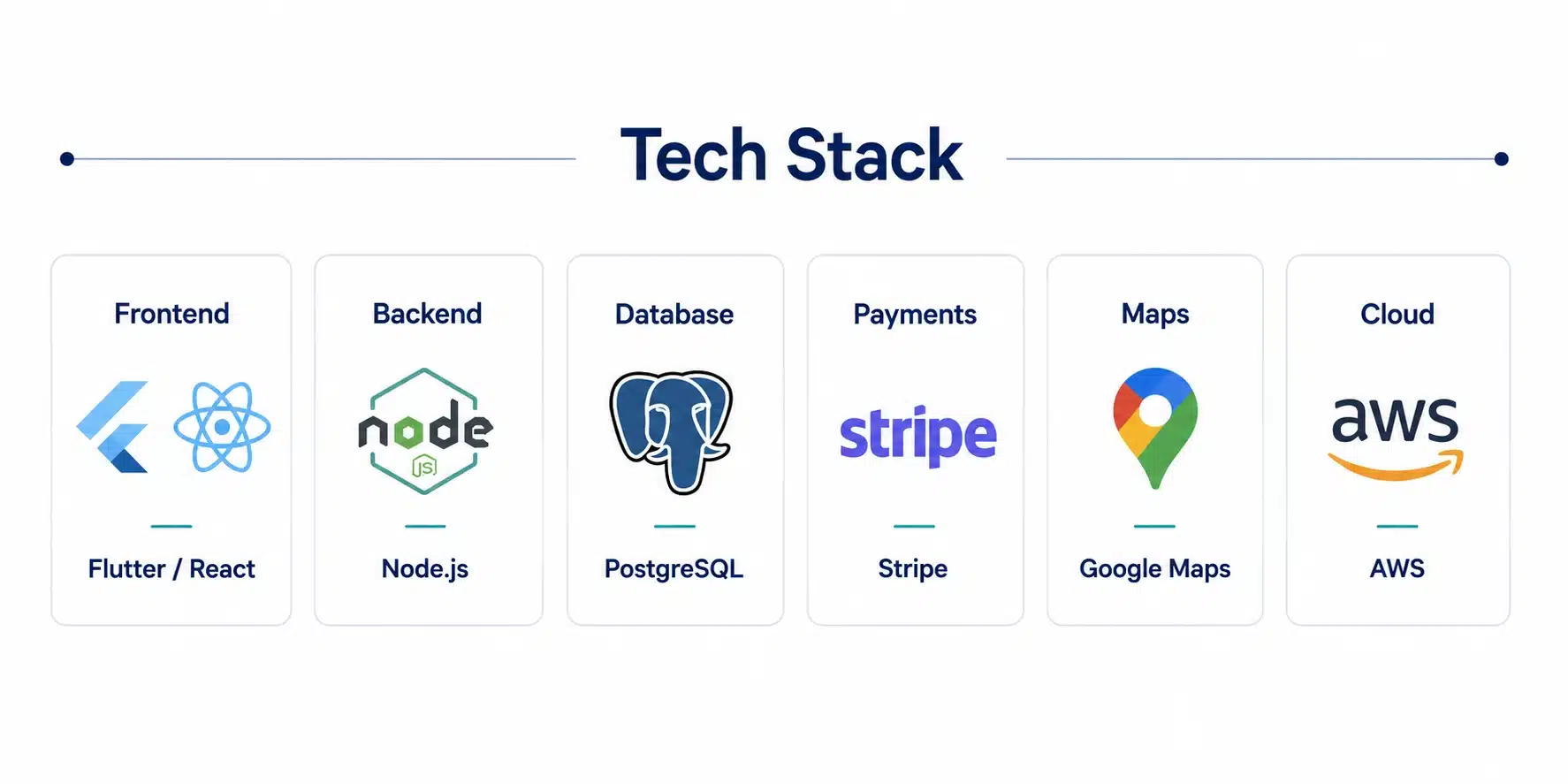
On the frontend, React works well for a responsive web experience for comparing flights and hotels. For mobile, Flutter allows a single codebase to power both iOS and Android, keeping features like offline itineraries consistent across platforms. Our cross-platform app development team typically recommends this approach for travel apps launching on both platforms without doubling the budget.
On the backend, Node.js or Python frameworks like Django handle the business logic needed to keep flight prices and booking status in sync. PostgreSQL stores structured booking data reliably, while Redis speeds up repeated searches during high-traffic periods.
The integration layer is where travel apps get complex. Flight and hotel data typically comes from Amadeus or Sabre. Payments run through Stripe or PayPal. Maps rely on Google Maps or Mapbox, often with vehicle-specific routing for categories like RV travel. Push notifications typically run through Firebase Cloud Messaging.
| Layer | Recommended Technology | Purpose |
| Mobile Frontend | ReactNative or Flutter | Cross-platform iOS and Android from one codebase |
| Web Frontend | React | Responsive desktop planning and comparison |
| Backend | Node.js / Python (Django) | API logic, booking orchestration, authentication |
| Database | PostgreSQL | Structured booking and user data |
| Travel Data APIs | Amadeus, Sabre | Flight and hotel pricing, availability |
| Payments | Stripe, PayPal | Secure checkout, currency conversion |
| Maps | Google Maps, Mapbox | Navigation, routing, points of interest |
| Notifications | Firebase Cloud Messaging | Real-time alerts across platforms |
Step-by-Step Travel App Development Process
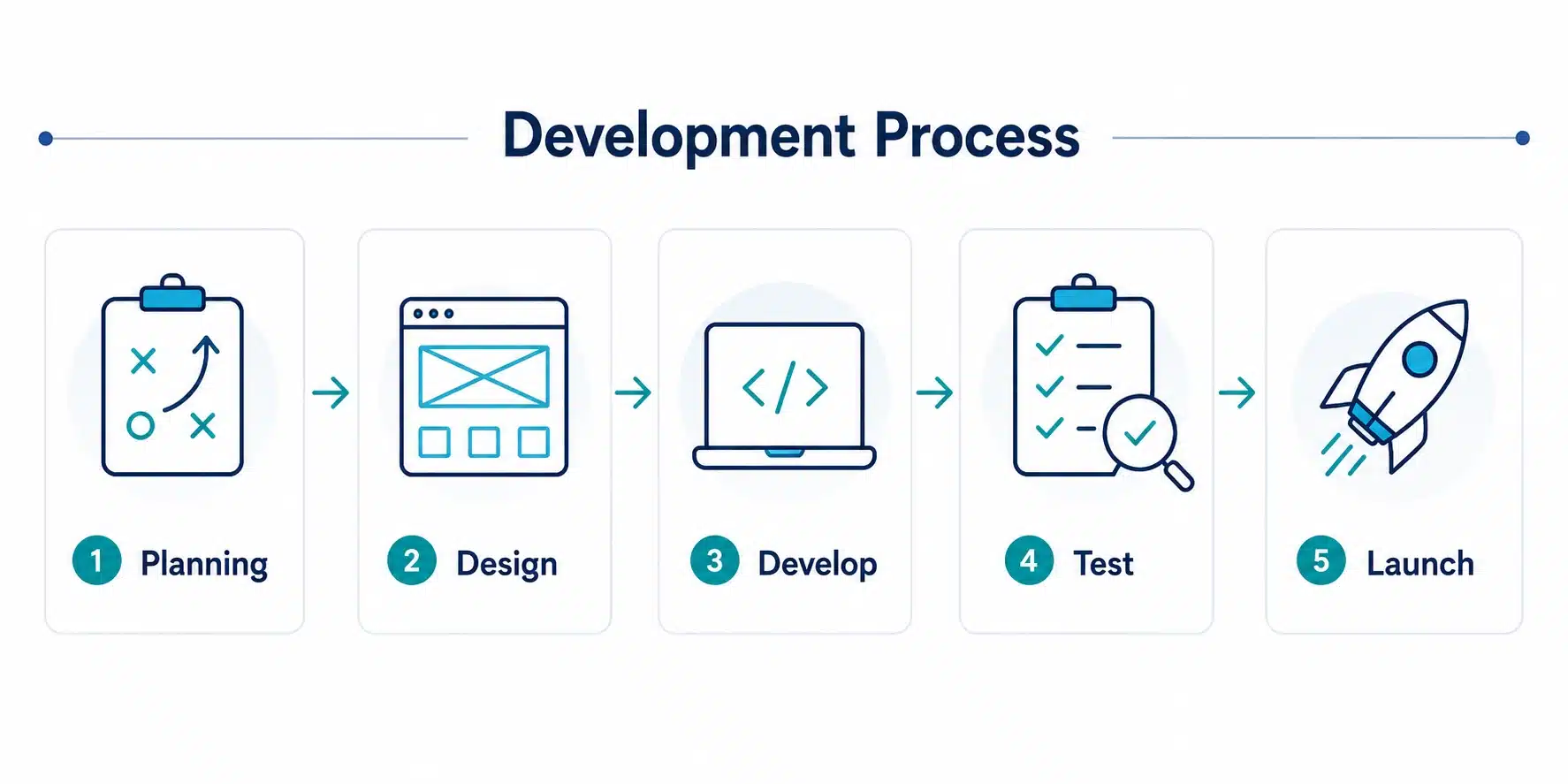
Here’s a step-by-step development process that professional developers follow to build a user-friendly travel app
Step 1: Discovery and Market Research
Everything starts with understanding who the app is for and what problem it solves better than existing options. This phase includes competitor analysis and identifying required third-party APIs. By the end, you should have a rough technical architecture, a list of integrations, and a realistic timeline.
Step 2: UX and UI Design
Travel apps are often used in a hurry, sometimes with poor signal and a stressed user trying to catch a flight. Design needs to prioritize speed and clarity. Wireframes map out the core paths: search, filter, book, and organize, and get tested against real booking scenarios before any code is written.
Step 3: MVP Development
This is where the biggest technical challenges show up. The backend needs to handle real-time synchronization across multiple data sources while the frontend delivers instant search results and smooth navigation. Most successful travel apps launch with three or four core features rather than everything at once.
Step 4: Testing and Quality Assurance
Travel apps cannot afford to fail mid-trip, so testing covers API reliability, offline functionality, load testing for peak booking periods, and a wide range of real devices. Beta testing with actual travelers often catches usability issues internal testing misses, particularly around checkout flow.
Step 5: Launch and Post-Launch Support
After launch, the work does not stop. Flight schedules and hotel rates change daily, and app store reviews often surface issues internal testing never caught. Most teams plan for 15 to 25 percent of the annual development budget toward ongoing maintenance.
Pro tip: Launch with a narrow, well-tested feature set rather than a broad, half-finished one. A booking app that handles search, booking, and itinerary flawlessly will outperform a bloated app that does ten things adequately.
Compliance, Privacy, and Legal Considerations
Travel apps handle sensitive personal and financial data, and skipping compliance planning is one of the most expensive mistakes a founder can make. A travel app typically processes passport information, payment details, and location data, all of which come with legal obligations.
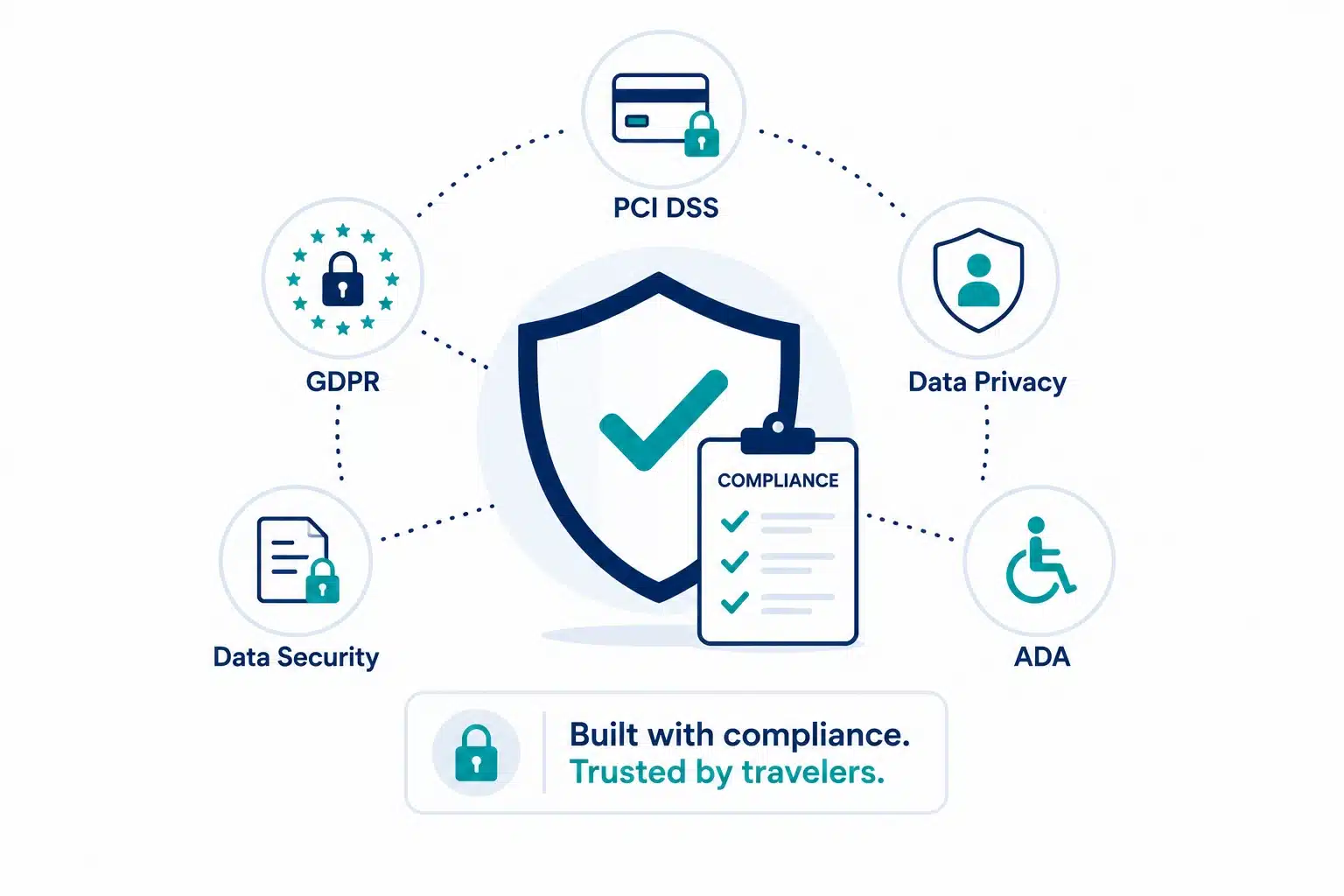
Following are the key frameworks that are crucial for a travel app:
- PCI DSS compliance: Any app processing card payments directly must meet Payment Card Industry Data Security Standards. Most teams reduce this burden by using a payment processor like Stripe that handles compliance at the infrastructure level.
- GDPR for European users: GDPR requires explicit consent for data collection, clear disclosure of what is stored, and an easy way for users to request deletion. Apps storing passport numbers need to think carefully about retention.
- Data residency requirements: Some countries require citizen data to be stored on local servers rather than abroad, which matters more for travel apps since international travelers generate data across many jurisdictions.
- Accessibility standards: Apps distributed in the United States should account for ADA-related expectations, and apps sold through Apple or Google must meet each platform’s accessibility guidelines.
- Vendor agreements: Every third-party integration should come with a clear data handling agreement. A travel app is only as compliant as its weakest vendor relationship.
Building compliance into the architecture from the beginning is far less expensive than retrofitting it after launch, particularly once real user data is already flowing through the system.
How Much Does Travel App Development Cost?
Travel app costs vary widely based on complexity, the number of integrations required, and how many platforms you launch on.
| App Tier | What You Get | Estimated Cost | Timeline |
| Basic MVP | Core search, simple booking, single platform | $30,000 to $60,000 | 3 to 5 months |
| Mid Tier | Real-time APIs, itinerary tools, chat, both platforms | $60,000 to $150,000 | 5 to 9 months |
| Advanced | AI recommendations, AR previews, multi-language, full compliance | $150,000 to $250,000+ | 9 to 14 months |
Third-party integrations are usually the single biggest cost driver. Connecting to Amadeus or Sabre for flight and hotel data, along with payment processors and mapping services, typically adds fifteen to forty thousand dollars in licensing and development work. Backend infrastructure that handles real-time pricing across multiple sources also adds meaningful cost, particularly when the app needs to scale for peak booking periods.
Design complexity matters too. Simple wireframes stay affordable, but features like interactive maps with custom routing or AR previews push costs toward the higher end.
Where to Optimize Without Cutting Corners
Choosing cross-platform development with Flutter instead of separate native apps typically saves 30 to 40 percent compared to native development. Starting with a single platform and expanding once the concept proves out is another practical way to control early costs. Leaning on established payment and mapping providers rather than building custom infrastructure also avoids unnecessary spend.
Who Do You Need on Your Team?
Building a travel app well requires a specific mix of skills beyond general app development experience.
A product manager with travel or e-commerce experience understands booking flows and regulatory pieces specific to travel. Backend engineers with API integration experience are essential, since most complexity lives in synchronizing data across external providers. A UI/UX designer familiar with mobile-first, fast-paced flows ensures the app stays usable for distracted travelers. A QA engineer with API and load testing experience is critical given how much the app depends on external data staying accurate. A compliance or legal consultant should be involved early rather than brought in right before launch.
Smaller teams do not need every role filled from day one, but skipping backend API expertise or compliance guidance almost always leads to expensive rework later.
Post-Launch: Retention and Growth Tips
Getting a travel app launched is only half the challenge. Most users only need the app a few times a year around actual trips, so keeping the app relevant between trips requires deliberate effort.
Personalized recommendations based on past trips give users a reason to open the app even when they are not booking. Loyalty programs help convert occasional users into regulars. Timely notifications, such as a price drop on a route the user searched before, keep the app present in a traveler’s mind without becoming annoying. Regularly updating features based on real user behavior keeps the product improving in the direction users actually want.
Tracking the right metrics matters too. Booking conversion rate and repeat booking rate tell you far more about long-term health than daily active users alone, since travel apps are naturally used in bursts around trip planning.
Conclusion
Travel app development sits at the intersection of complex live data, strict compliance requirements, and a user base that expects everything to work flawlessly. The apps that succeed share a few clear traits.
- They choose one part of the travel journey to solve exceptionally well rather than trying to cover everything at once.
- They treat real-time reliability and offline access as core requirements from the very first version, not features to add later.
- They plan for compliance, payment security, and data privacy from the start, since retrofitting these after launch is far more expensive and risky.
Choosing the right type of travel app, building the right features for that type, and getting the technical foundation right from day one will determine whether your app becomes the tool travelers open before every trip, or one they delete after the first frustrating booking experience.
If you are ready to move from planning to building, working with an experienced mobile app development company that understands travel-specific challenges, from API integrations to offline reliability, can save significant time and budget compared to learning these lessons mid-project.
Frequently Asked Questions
Q1. How long does it take to build a travel app?
A simple MVP typically takes three to five months from discovery to launch. A mid-tier app with deeper integrations usually takes five to nine months. Advanced apps with AI features can take nine to fourteen months. Timelines depend heavily on how many external data providers the app needs to connect with.
Q2. What type of travel app should I build first?
This depends on your target user and revenue model. Booking apps work well if you can secure strong provider relationships and want commission-based revenue. Planning or navigation apps can often launch faster since they rely less on complex booking integrations. Niche apps in categories like RV travel or hiking face less competition and can build strong loyalty within a smaller audience.
Q3. Do travel apps need to be compliant with data privacy laws?
Yes. Any travel app handling European users needs to follow GDPR requirements around consent and data deletion. Apps processing payments directly need to meet PCI DSS standards, though using an established payment processor typically handles most of this requirement. Additional local data privacy laws may apply depending on your target markets, so early legal review is worth the investment.
Q4. What features matter most for a travel app’s first version?
Search and filters, booking management, and basic itinerary organization form the core of almost every successful travel app MVP. Real-time notifications and offline access are also worth including early, since they shape user trust more than almost any other feature. Advanced features like AI trip planning can typically wait for a later version.
Q5. Should I build my travel app for iOS, Android, or both?
Starting with a single platform can reduce early costs and speed up launch. Cross-platform frameworks like Flutter let you launch on both iOS and Android from one codebase, which is usually more cost-effective than building two separate native apps if you know you need both platforms from day one.