 Design
 App Development
 Web Engineering
 AI Services
 Cloud
 Staffing
 Startups
 Health / Fitness
 Education
 Social
 Nonprofit
 Fintech
 Construction
 Logistics
 Government
 Travel/Hospitality
 HR Software
 About Simpalm
 Our News
 Client Testimonials
 Careers
 Our Blog
 Awards
 Resources
 Information
Key Takeaways
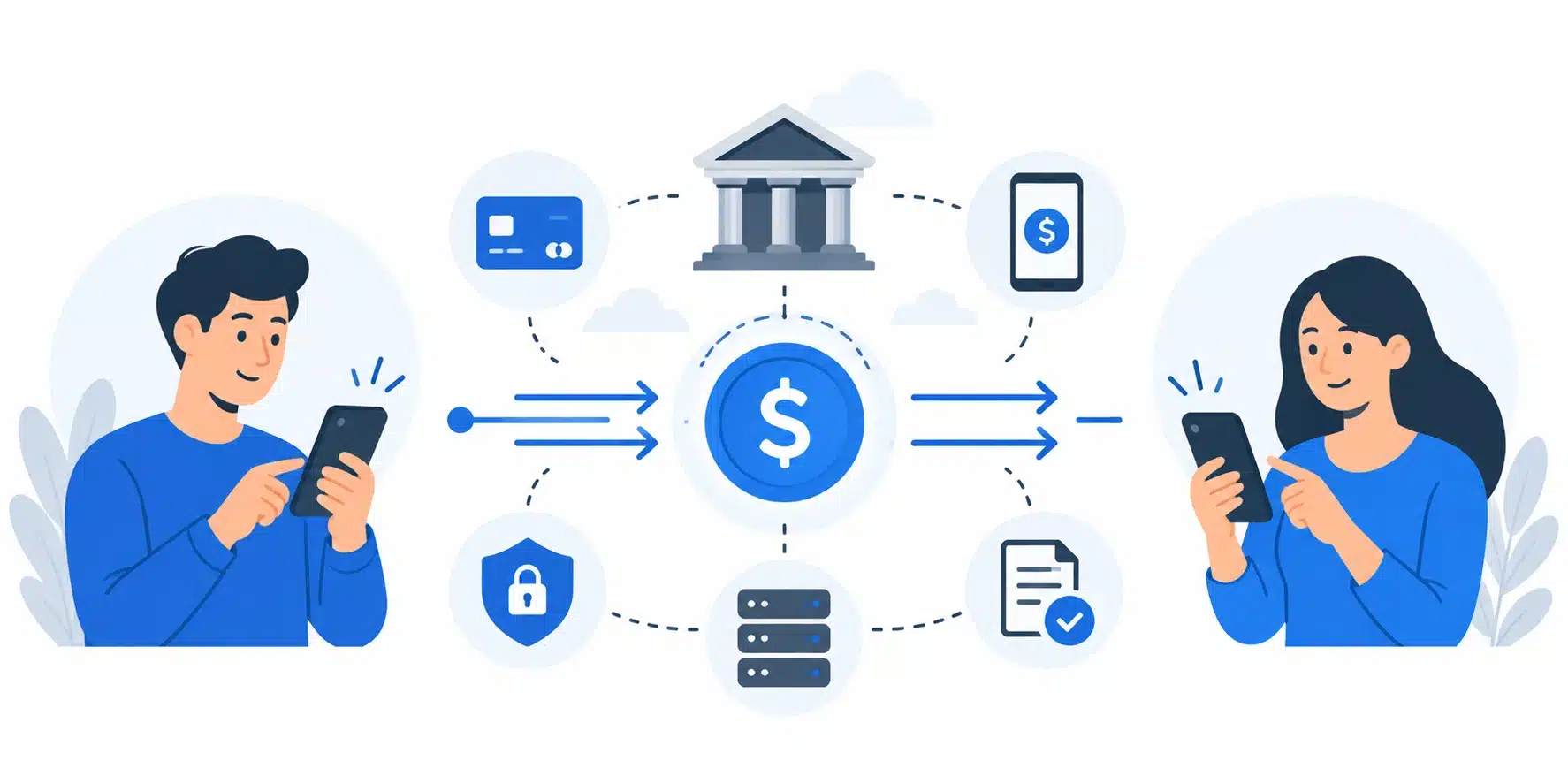
- P2P transfer volume keeps climbing. Statista projects continued growth in P2P payment adoption in the United States, with nearly half of consumers preferring app-based transfers over cash or checks.
- Fraud liability works differently in P2P than on cards. Most P2P transfers are treated as authorized push payments, which means chargeback protections that credit card users take for granted often do not apply.
- The compliance path you choose early shapes everything downstream, from how fast you can launch to how much control you have over the user experience.
- Build versus buy is the highest leverage decision most founding teams make, and getting it wrong either burns runway on infrastructure nobody sees or locks the product into a vendor’s roadmap.
_________________________________________________________________________________________
Peer-to-peer payments have quietly become the default way people move small amounts of money. Splitting a dinner bill, paying a freelancer, sending rent to a roommate- none of it involves a bank teller anymore. It happens inside an app, in seconds, without anyone thinking twice.
That speed is also the risk. Zelle alone moved more than a trillion dollars in payments in a single recent year, and the Federal Trade Commission reported that consumers lost more than $12.5 billion to fraud in 2024, with bank transfers and payment apps accounting for more reported losses than any other payment method. Founders building in this space are not just building a mobile interface. They are building a financial system that has to move money correctly, every time, while staying ahead of people actively trying to break it.
This guide covers the decisions that actually determine whether a P2P payment app survives contact with real users and real regulators: choosing the right app model, picking payment rails and a compliance path, deciding whether to build or buy infrastructure, and designing a product that earns trust from the first transaction.
Which P2P App Model Fits Your Business?
Every P2P payment app fits into one of three structural models, and the choice shapes your regulatory exposure, your engineering scope, and how much control you have over the user experience.

Wallet based model: the model behind PayPal and Venmo, they can transfer money from multiple sources like Bank and Credit card and also hold user balances inside the app itself. Users load money in, send it to each other, and can leave funds sitting in an internal wallet before cashing out. This gives a startup the most control over user experience and the richest transaction data, but it also means the company is directly responsible for safeguarding customer funds, which usually triggers money transmitter licensing in every state where users transact.
Bank based P2P: the model behind Zelle, move money directly between linked bank accounts without holding a balance in between. There is no wallet to protect and no float to manage, which significantly reduces regulatory scope. The tradeoff is that the bank partner controls settlement speed and much of the underlying experience, leaving less room for product differentiation. UPI
Platform Specific P2P: Apple Cash, Google Pay transfer (in countries like India), WhatsApp Pay, Facebook. these models sit inside a larger app people already use for something else, like messaging or marketplace transactions. Payments are a feature, not the product. This works well when a company already has an engaged user base and wants to add monetization or retention value rather than compete as a dedicated payments app.
A useful check for founders: if you cannot describe the one narrow payment scenario your app solves better than a general-purpose app, you are probably building a standalone wallet you do not actually need.
Most successful P2P products start in a specific niche, such as gig worker payouts or marketplace settlement, before expanding into broader use cases.
Choosing the Right Payment Network

The interface is the easy part. What actually moves the money is the underlying payment networks and this choice determines settlement speed, cost per transaction, and how much of the banking system you can reach.
| Rail | Typical Settlement Time | Relative Cost | Best Fit |
| Standard ACH | 1 to 3 business days | Lowest per transaction cost | High volume, non-urgent transfers like recurring payments |
| Same-day ACH | Same business day | Low, slightly higher than standard ACH | Time-sensitive transfers where instant settlement is not required |
| RTP (Real Time Payments network) | Seconds, 24/7/365 | Higher per-transaction cost | Consumer P2P transfers where speed drives adoption |
| FedNow | Seconds, 24/7/365 | Higher per-transaction cost, growing bank participation | Similar use cases to RTP, increasingly available as more banks connect |
| Card network push-to-card | Minutes | Highest per-transaction cost | Instant cash out features, often monetized as a premium option |
Most P2P apps end up using more than one rail. Standard ACH handles bulk settlement and cash out because it is cheap, while RTP, FedNow, or card push cover the instant transfer experience users expect, usually as a paid upgrade over the free, slower default. Building support for multiple rails from day one adds real complexity, so many teams start with ACH plus one instant option and expand once volume justifies it.
Compliance Path: License, Bank Partner, or BaaS
This decision determines almost everything else about how fast a startup can launch and how much control it retains over the product.

- Getting your own money transmitter license means applying for licensure in every state where your users transact, since money transmission is regulated at the state level rather than through a single federal license. This gives a company full control over its compliance program, but it typically takes months to over a year per state and requires maintaining minimum net worth, surety bonds, and an internal compliance team. It makes sense for companies with the runway to treat licensing as a long-term moat.
- Partnering with a chartered bank, sometimes called a sponsor bank relationship, lets the startup operate under the bank’s existing license. The bank holds regulatory responsibility and the actual funds, while the startup builds the app on top of the bank’s rails. This launches faster than direct licensing but comes with less flexibility, since the bank sets risk tolerance and often has approval rights over changes that touch money movement.
- Using a banking-as-a-service (BaaS) platform sits between these two options, packaging a bank partnership, compliance tooling, and payment infrastructure into a single API. It is usually the fastest path to a working product and is why most early-stage P2P startups choose it, though it comes with platform fees and less customization than owning the full stack.
For most startups without a fintech regulatory team already in place, a BaaS platform is the practical starting point, with room to migrate toward a direct bank relationship or full licensing once volume justifies it. Teams navigating this alongside broader regulatory questions may find it useful to review common fintech compliance and infrastructure challenges before committing to a path.
Build vs Buy: Choosing Your Payment Infrastructure

Once the compliance path is set, the next major decision is how much of the payment infrastructure to build in-house versus buy from a vendor.
- Building custom infrastructure means writing the ledger, transaction processing logic, and settlement reconciliation yourself, on top of a bank or BaaS connection. This gives full control over the product roadmap and avoids per-transaction platform fees that eat into margins at scale, but it also means owning every edge case in failed transfers and spending engineering hours on plumbing instead of differentiating features.
- Buying from a payment orchestration or BaaS platform means using a vendor’s pre-built ledger, KYC tooling, and transaction APIs, and putting engineering time into the user-facing app instead. This is dramatically faster and lower risk early on, since the vendor has already solved problems like duplicate transaction handling. The tradeoff shows up later: vendor fees scale with volume, and the startup is dependent on the vendor’s roadmap.
A practical framework: if the core value proposition is the payment experience itself, such as instant settlement for a specific industry, custom infrastructure eventually becomes worth building. If payments support a broader product, buying almost always makes more sense. Many startups buy first and revisit the decision once monthly volume reaches a scale where vendor fees outweigh the cost of an internal team, a similar calculation to choosing a payment gateway for any transaction-based product, just with higher regulatory stakes.
Core Features Your P2P App Needs
A P2P app succeeds or fails on a small number of flows working flawlessly, not on how many features it ships.
- Fast onboarding with progressive KYC: Collect only what is needed to let a user transact at low limits, then request more verification as volume increases. Asking for a full ID scan before a five-dollar payment kills conversion.
- Frictionless send and receive: Users should pick a recipient by phone, email, or username, enter an amount, and confirm in three taps or fewer. Every added screen measurably reduces completion rates.
- Real-time balance and transaction history: Users need to see exactly where their money is, including pending transfers that have not settled yet.
- Instant notifications: Both sender and recipient should get confirmation the moment a transfer initiates and again when it completes, since ambiguity about whether a payment went through erodes trust fast.
- Multiple funding and cash out options: Linked bank accounts, debit cards, and stored balance should all work as funding sources, with clear, upfront fees for any instant cash out.
- Biometric and multi-factor authentication: Fingerprint or face recognition for app access, paired with step-up authentication for unusual transactions.
- In-app dispute initiation: A visible, easy-to-find way to flag a transaction as unauthorized or incorrect, without hunting through settings menus.
This is the part of P2P payment app development that gets the least attention in most planning conversations, and it deserves more.
Credit card transactions are protected by chargeback rights built into card network rules. If a card is used fraudulently, the cardholder can typically dispute the charge and recover their money while the network investigates. P2P transfers usually do not work this way. Most P2P payments are classified as authorized push payments, meaning the account holder personally approved the transfer, even if a scammer tricked them into doing so. Because the transaction was authorized, Regulation E protections that cover unauthorized transactions often do not apply, and banks are not legally required to refund the money.
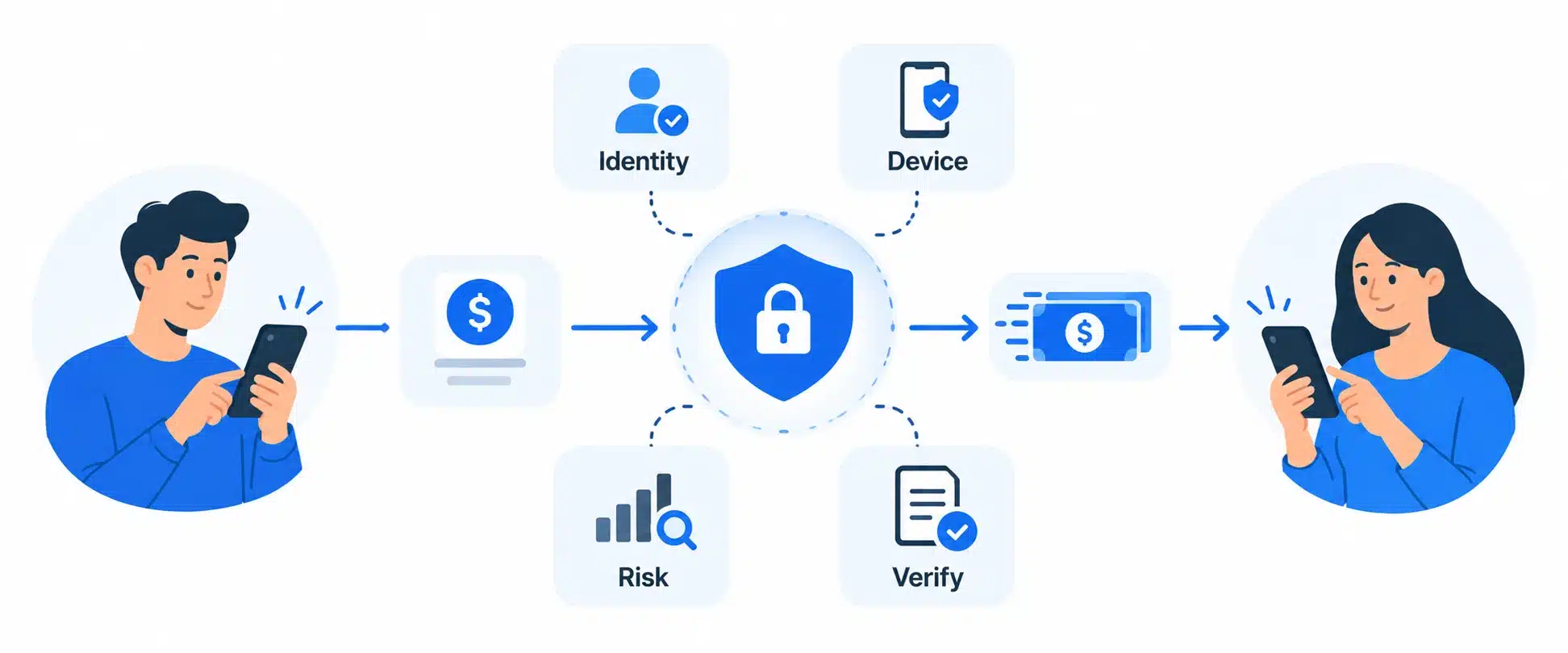
This is not a minor compliance footnote. It is the reason P2P fraud losses have grown so quickly and why regulators are paying closer attention to the space. The FTC’s fraud data shows Americans reported losing more money to scams involving bank transfers and payment apps than any other payment category in 2024. For a startup, this means fraud prevention cannot be layered on after launch. It has to shape onboarding, transaction limits, and the warning language shown before a user confirms a transfer.
Practical steps that reduce exposure include clear, unavoidable warnings before sending money to a new recipient for the first time, short delays or step-up verification for unusually large or rapid transfers, and device fingerprinting to flag account takeover attempts before funds move. None of these eliminate fraud, but they meaningfully reduce the volume of scams that slip through.
Designing a Dispute Flow for Irreversible Transfers
Because most P2P transfers cannot be reversed once they settle, the dispute experience has to do more work than a typical customer support flow.
The first job is triage. Users need to categorize what happened quickly, whether it is a transfer sent to the wrong recipient, a suspected scam, or an unauthorized transaction from a compromised account, since each path requires different handling and urgency. A generic support form buried three menus deep is not sufficient when speed genuinely affects whether money can be recovered.
The second job is setting honest expectations. Rather than implying a dispute automatically means recovered funds, the flow should clearly explain what is and is not possible given how the transaction settled, with a realistic timeline for any investigation. Users who understand the process, even when the news is not good, report higher trust than users left guessing.
The third job is evidence collection built into the flow itself, letting users attach screenshots and describe the recipient interaction without leaving the app. This data also feeds fraud detection models, helping the platform recognize similar patterns before they affect the next user.
Common Development Challenges and Practical Fixes
Challenge: Regulatory timelines outpace engineering timelines. Teams often plan a six-month build cycle without accounting for a bank partnership or licensing process that runs just as long, or longer, in parallel.
The fix is starting compliance conversations with a bank partner or BaaS provider the same week as the technical architecture phase, not after the app is built.
Challenge: Fraud controls get bolted on right before launch. Security added late tends to be reactive, catching only the fraud patterns the team already anticipated.
The fix is treating identity verification and transaction monitoring as core architecture decisions made during initial system design, not features added during a pre-launch review.
_________________________________________________________________________________________
Challenge: Instant transfer expectations outpace the chosen rail. A team that builds entirely on standard ACH will find users expecting Venmo-like instant transfers, and retrofitting a faster rail later means reworking core transaction logic.
The fix is deciding on at least one instant settlement option before writing the first line of transaction processing code.
_________________________________________________________________________________________
Challenge: Scaling infrastructure breaks quietly before it breaks loudly. Early success can mean volume outpaces what a vendor’s rate limits or a custom ledger was built to handle, and the first sign is often delayed settlements rather than outright errors.
The fix is load testing throughput well beyond current projections and alerting on settlement timing, not just failures.
P2P Payment App Development Cost Breakdown
Cost scales primarily with feature complexity, the number of payment rails supported, and how much compliance infrastructure the team builds versus buys.
A basic P2P app with a single funding source, standard ACH settlement, and core send and receive functionality typically costs between $40,000 and $90,000, usually relying on a BaaS platform to avoid building compliance infrastructure from scratch. A mid-complexity app adding instant transfers, multiple funding sources, and richer fraud detection generally runs between $90,000 and $180,000. A fully featured platform supporting multiple rails, custom fraud modeling, or a path toward direct bank partnership can exceed $200,000, particularly with an in-house compliance team rather than a vendor.
Beyond initial build cost, ongoing expenses include BaaS or gateway transaction fees, cloud infrastructure that scales with volume, and compliance operations like transaction monitoring and periodic audits. Teams estimating a broader mobile build alongside the payment layer can review a general breakdown of mobile app development costs to see how design and third-party integrations affect total investment.
Monetization Models for P2P Payment Apps
Most successful P2P apps combine two or three of these models, keeping the core send and receive experience free while charging for speed, convenience, or business features.
- Instant transfer fees: Free standard transfers that settle in one to three business days, paired with a small fee for instant cash out.
- Merchant and business transaction fees: A percentage fee charged when a business accepts payment through the platform, often 1 to 3 percent depending on funding source.
- Premium subscription tiers: Monthly or annual plans offering higher limits, priority support, or spending analytics.
- Interchange revenue: Earnings from a branded debit card tied to the wallet, generated each time a user spends their balance elsewhere.
- Float-based revenue: Interest earned on aggregate balances held before cash out, which requires banking partnerships and added regulatory consideration.
Charging for the core transfer experience too early is one of the fastest ways to stall adoption, since free peer-to-peer transfer is the baseline users expect.
Realistic Development Timeline and Team Structure

A lean P2P MVP built on a BaaS platform typically takes four to seven months from kickoff to launch, while a version involving direct bank partnership negotiations or licensing work can extend to twelve months or more, largely due to regulatory timelines rather than engineering effort.
The first phase, usually four to six weeks, covers compliance path selection, rail selection, and core architecture decisions. The build phase, typically twelve to twenty weeks depending on scope, covers the mobile app, backend transaction logic, and integration with the chosen banking or BaaS partner. The final phase, four to six weeks, covers security testing, edge case handling for failed transactions, and a limited rollout before full launch.
A minimum viable team includes a product lead who owns the payment flow end to end, mobile and backend engineers, a compliance advisor familiar with money transmission regulation, and a security specialist focused on fraud prevention. Many early-stage teams supplement this core group with an external banking or BaaS partner rather than hiring compliance staff internally, often the more capital-efficient choice before the product has proven demand.
Key Metrics to Track After Launch
Launch is the point where assumptions get tested against real behavior, and the right metrics reveal problems long before they show up as support tickets or churn.
- Transaction success rate tracks the percentage of initiated transfers that complete without error, and a rate below the high nineties usually points to integration issues that need immediate attention.
- Time to settlement measures how long transfers actually take against what the app promises, since a gap between promised and actual timing erodes trust quickly.
- Dispute rate per transaction volume flags whether fraud controls are keeping pace with growth, often showing up weeks before it becomes a larger incident.
- Fraud loss as a percentage of transaction volume most directly affects unit economics and regulatory standing, and should be tracked against industry benchmarks.
- Cash out and funding source distribution shows which rails users actually rely on, which should inform where engineering investment goes next.
Final Thoughts
Building a P2P payment app is fundamentally a systems and trust problem wearing a mobile interface. The teams that get it right treat compliance path, payment rails, and fraud liability as core product decisions made early, not operational details handled after the app is designed. They start narrow, prove that one transfer flow works reliably at scale, and expand from there.
The infrastructure choices covered here, from BaaS versus direct licensing to build versus buy, are not one-time decisions either. They are choices a company should expect to revisit as transaction volume grows and the economics of owning more of the stack start to shift. What stays constant is the need for a system that handles money correctly under pressure and communicates clearly with users when something goes wrong. Teams weighing these tradeoffs while scoping a build often benefit from talking through architecture and compliance options with a partner who has shipped fintech applications with this level of regulatory complexity before committing to a specific vendor or licensing path.
Frequently Asked Questions
Q1. What is the difference between P2P fraud protection and credit card fraud protection?
Credit card transactions carry chargeback rights that let a cardholder dispute unauthorized charges and typically recover their money while the network investigates. Most P2P transfers are treated as authorized push payments, meaning the sender approved the transaction even if deceived into doing so, so Regulation E protections for unauthorized transactions often do not apply. This is why P2P apps need to invest heavily in pre-transaction warnings and behavioral monitoring rather than relying on post-transaction recovery.
Q2. Should I build custom payment infrastructure or use a vendor?
For most early-stage teams, using a banking-as-a-service or orchestration vendor is the faster, lower-risk path, since it avoids building a ledger and compliance infrastructure from scratch before the product has proven demand. Building custom infrastructure becomes worth it once volume is high enough that vendor fees materially affect margins, or once the payment experience itself becomes the company’s core competitive advantage rather than a supporting feature.
Q3. How much does it cost to build a P2P payment app?
A basic app with a single funding source and standard settlement typically costs between $40,000 and $90,000, particularly on a BaaS platform that handles compliance infrastructure. Adding instant transfers and stronger fraud detection pushes cost to between $90,000 and $180,000, while a fully featured platform with multiple rails and custom compliance infrastructure can exceed $200,000. Ongoing costs include transaction fees, cloud infrastructure that scales with volume, and continued compliance operations.
Q4. How do P2P apps monitor for fraud without slowing down legitimate transactions?
Effective fraud monitoring layers several signals, combining identity verification at onboarding, device fingerprinting during transactions, and velocity rules that flag unusual patterns like rapid repeated transfers to new recipients. Most platforms use risk-based friction, letting low-risk transactions move through instantly while flagged transactions get an added verification step rather than an outright block. This catches a meaningful share of fraud without adding friction to the legitimate transfers that make up daily activity.